
Biology: Fertilization and Mitotic Division in Reproduction
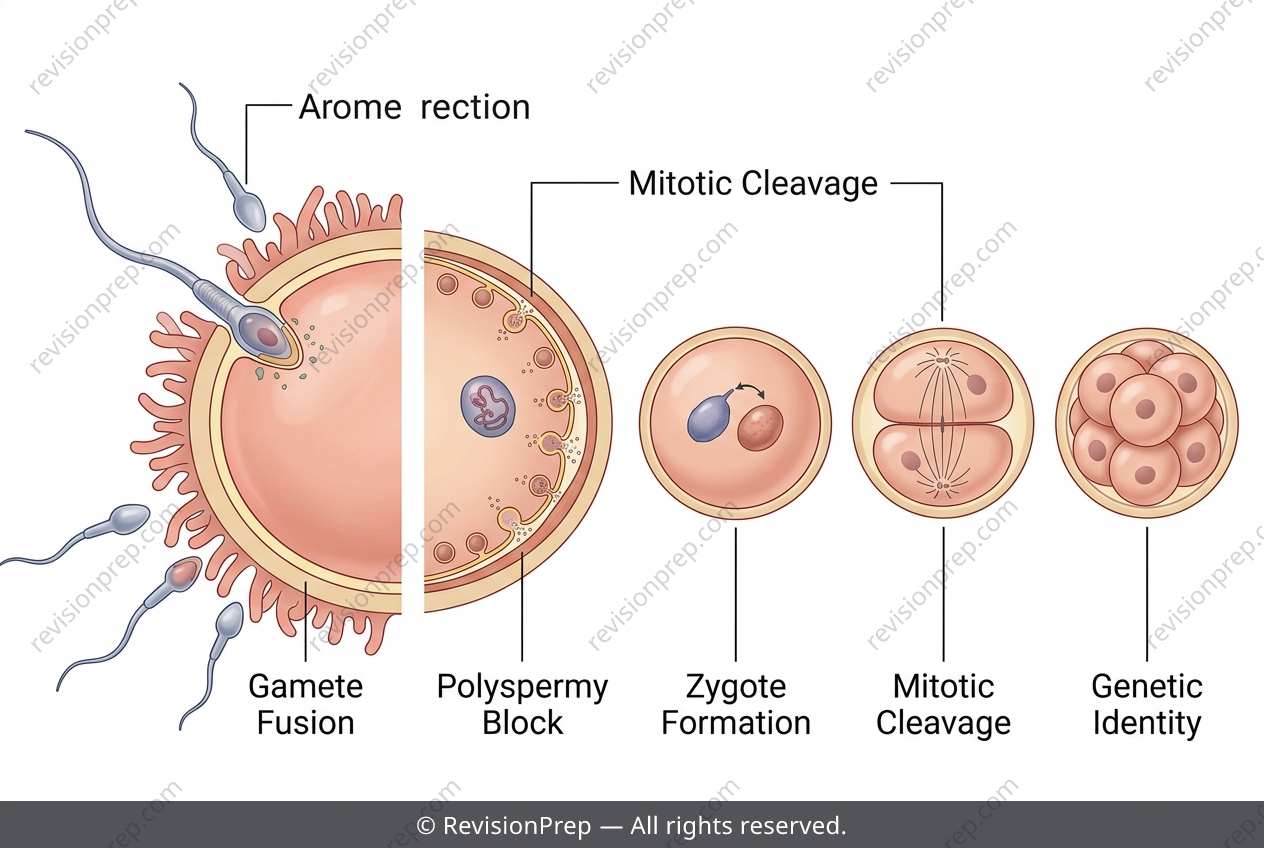
Fertilisation marks the moment a sperm cell and an egg cell join, merging two haploid nuclei into a single diploid zygote. This process is the foundation of sexual reproduction, restoring the full chromosome number and initiating a new organism’s developmental journey. Without this precise fusion of genetic material, no offspring could form, and the unique combination of parental traits would never exist. Once the sperm enters the egg, the immediate internal event is the fusion of the two nuclei—combining their genetic material into one complete set. This is distinct from the mere entry of the sperm; the key step is the union of chromosomes. Following this, the zygote begins a series of mitotic divisions, forming a ball of cells. Each division relies on the exact copying of DNA before the cell splits, ensuring every resulting cell carries an identical genetic blueprint to the original zygote. This mechanism—copy, then divide—preserves genetic consistency across all somatic cells, allowing a single fertilised egg to grow into a complex, multicellular organism while maintaining the same inherited information throughout.
Start practising IB questions today
150,000+ IB-styled questions, criteria-mapped and instantly accessible.