
Biology: From Lungs to Leg Muscles: Tracing Oxygen’s Path in Circulation
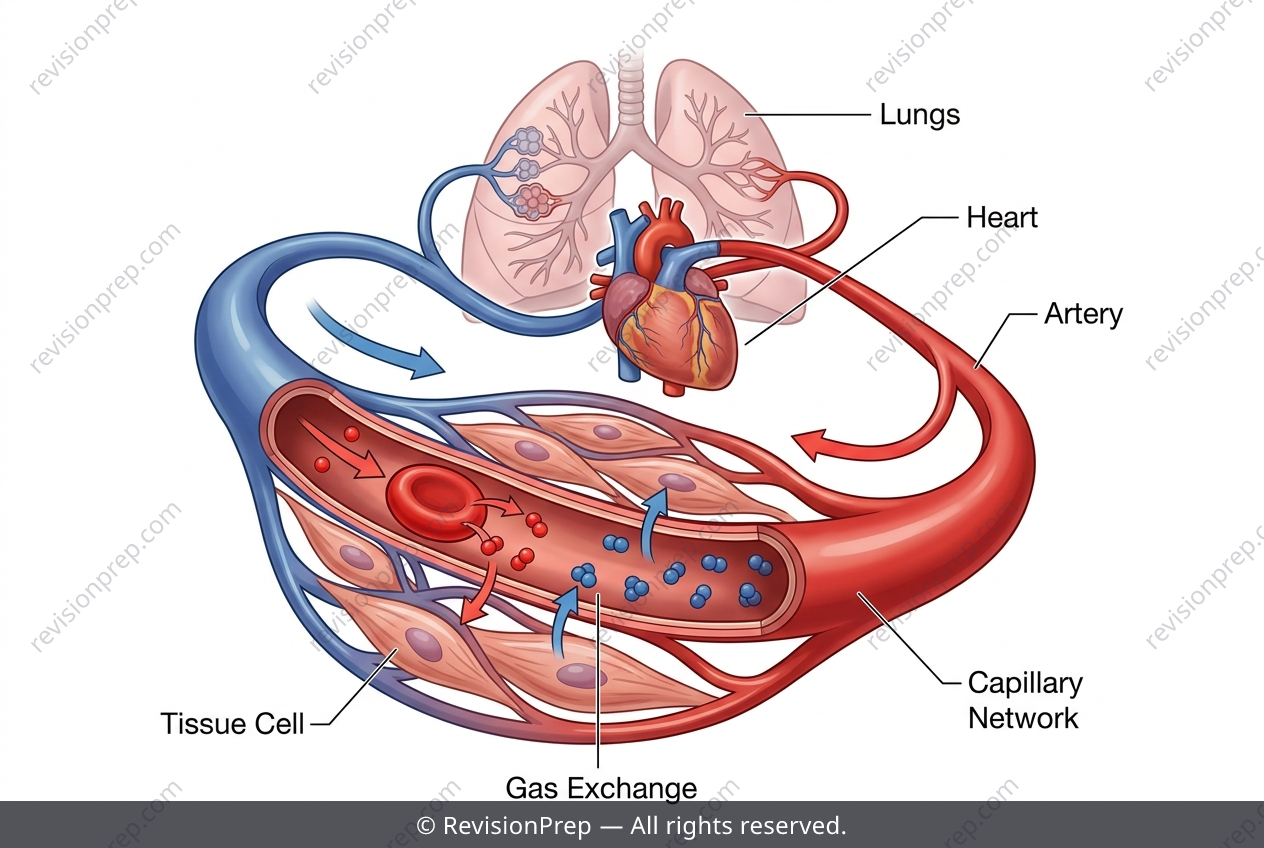
Every heartbeat is a delivery system, and the journey of a single red blood cell from the lungs to a working muscle is the perfect map of that system. This topic—systemic circulation and cellular gas exchange—explains how oxygen moves from the air you breathe into the mitochondria of your leg muscles, powering every step you take. It is the core link between the respiratory and circulatory systems, and understanding its precise route is essential for grasping how organisms maintain homeostasis under changing demands. The path is a one-way loop: oxygen binds to hemoglobin in the lungs, then travels through the pulmonary vein to the heart’s left side, which pumps it into a systemic artery. That artery branches into capillaries—the microscopic exchange zones—where oxygen diffuses down its concentration gradient into surrounding muscle cells. There, it fuels aerobic respiration, producing ATP. The now-deoxygenated blood returns via veins to the heart, completing the cycle. The key relationship is the structural match: thick-walled arteries for pressure, thin-walled capillaries for diffusion, and valves in veins for low-pressure return.
Start practising IB questions today
150,000+ IB-styled questions, criteria-mapped and instantly accessible.