
Biology: From Muscle to Leaf, Same Powerhouse
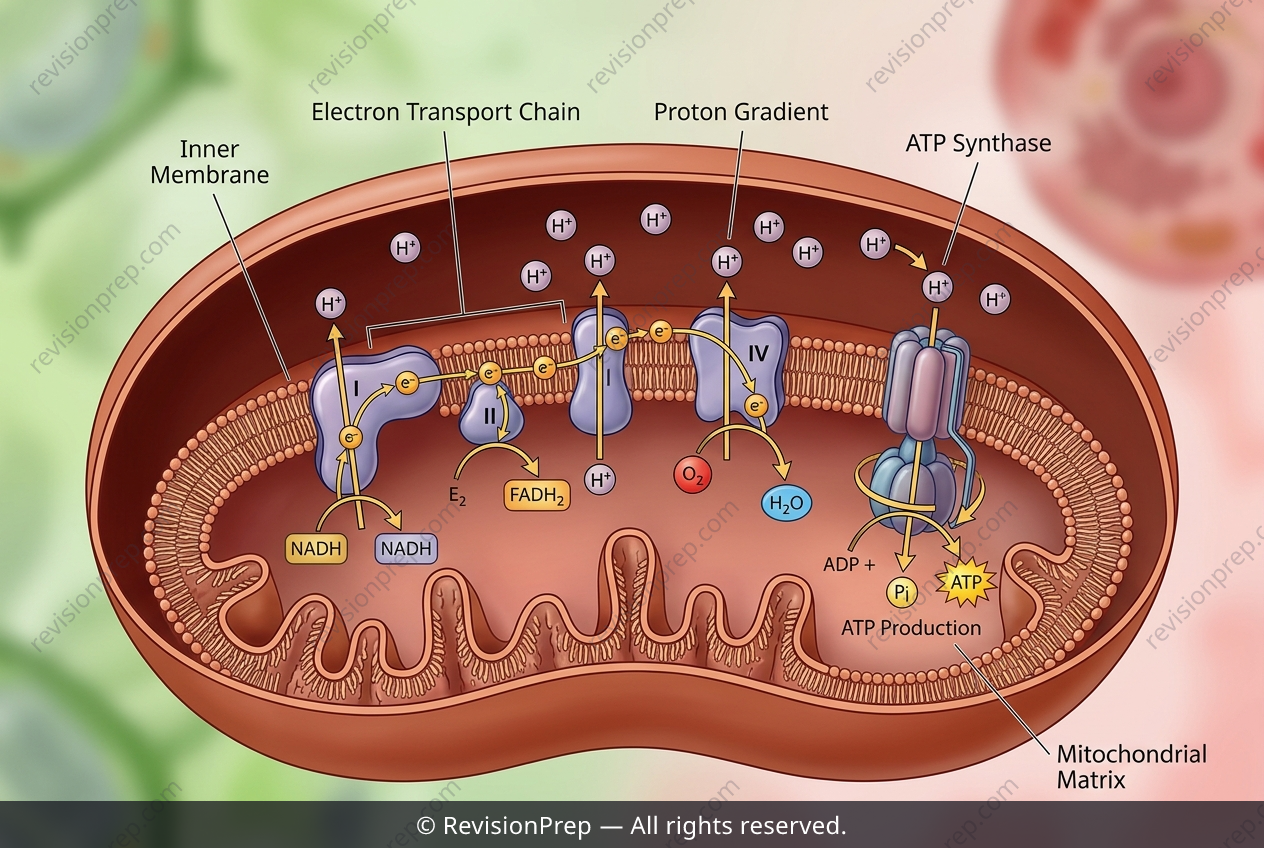
Oxidative phosphorylation is the final, most efficient stage of cellular respiration, and its machinery is a universal feature of eukaryotic life. At its core, this process is about harnessing the energy stored in reduced electron carriers—NADH and FADH₂—to drive the synthesis of ATP, the cell’s primary energy currency. This occurs not in the cytoplasm, but within the highly folded inner mitochondrial membrane, where a series of protein complexes form the electron transport chain. The elegance of this system lies in its coupling: as electrons are shuttled down the chain, their energy is used to pump protons into the intermembrane space, creating an electrochemical gradient. This gradient then flows back through ATP synthase, a molecular turbine, to phosphorylate ADP into ATP. Because this mechanism is identical in a human muscle cell and a plant mesophyll cell, any disruption to the protein complexes embedded in that inner membrane—whether in a runner’s leg or a leaf’s chloroplast-adjacent mitochondria—directly halts the production of ATP via this chemiosmotic pathway. The universality of this design underscores why mitochondria are considered the powerhouses of all eukaryotic cells, regardless of the organism’s kingdom.
Start practising IB questions today
150,000+ IB-styled questions, criteria-mapped and instantly accessible.