
Biology: Gas Exchange: Red Blood Cell Structure Explained
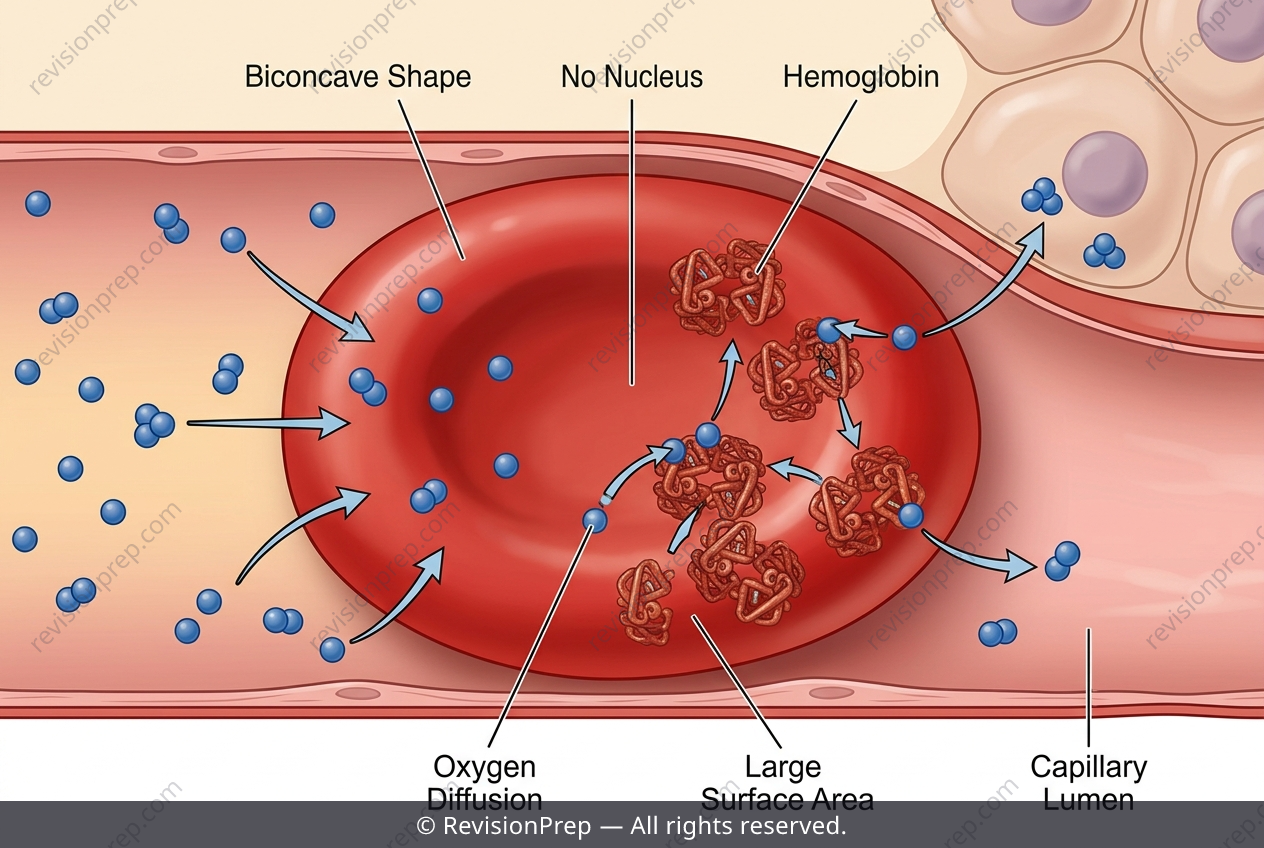
Cellular specialization is one of biology’s most elegant themes, and few cells demonstrate it as dramatically as the red blood cell. Its entire structure is a study in functional sacrifice: a biconcave disc that maximizes surface area, and a missing nucleus that frees up precious internal volume. These two features are not random—they are precise adaptations for a single, vital task: moving oxygen from the lungs to every tissue in the body. The relationship between structure and function here is direct and quantitative. A larger surface area means more oxygen molecules can diffuse across the cell membrane simultaneously, accelerating the rate of uptake. Meanwhile, the absence of a nucleus creates extra space, which is packed with haemoglobin—the protein that chemically binds oxygen. More haemoglobin per cell means a higher oxygen-carrying capacity per unit volume of blood. When red blood cell numbers fall, total haemoglobin drops, and the body’s oxygen delivery system becomes a bottleneck. Understanding this trade-off—where every structural choice boosts gas exchange efficiency—reveals why even a single missing organelle can make the difference between adequate and insufficient oxygen supply.
Start practising IB questions today
150,000+ IB-styled questions, criteria-mapped and instantly accessible.