
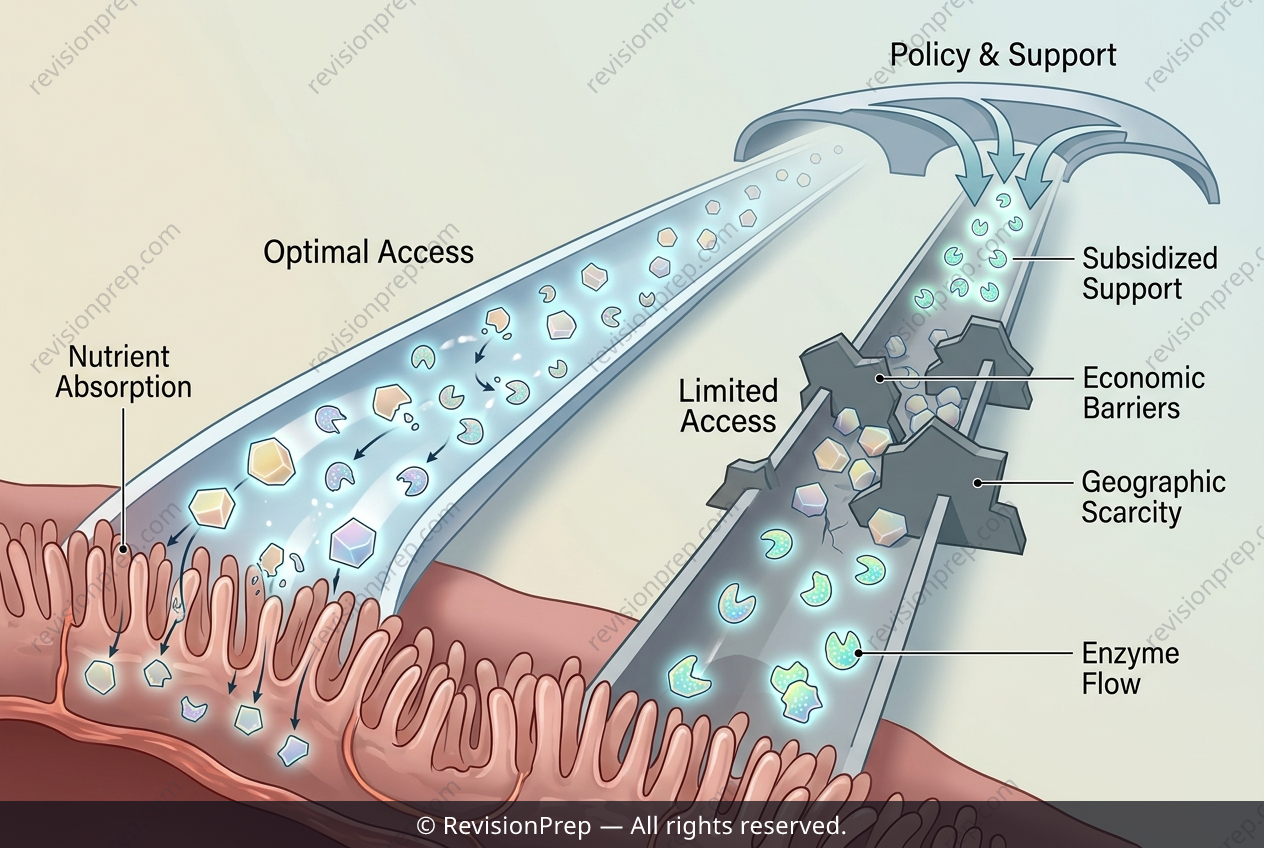
Biology: Health Equity in Digestion: Lactase Access and Socioeconomic Impact
The human digestive system is a finely tuned assembly line, where enzymes act as molecular scissors to break complex foods into absorbable nutrients. Lactase is one such enzyme, specifically responsible for cleaving lactose—the sugar in milk—into glucose and galactose. When the body produces insufficient lactase, undigested lactose ferments in the gut, causing discomfort, and the nutritional value of dairy is lost. This biological mechanism, however, does not operate in a vacuum; it is deeply intertwined with social and economic structures. Understanding this connection moves the discussion from pure biology to health equity. The ability to digest dairy offers clear benefits, such as the absorption of calcium and vitamin D, which are vital for bone density. Yet, for those with lactose intolerance, lactase supplements can bridge the gap—but only if they are affordable and accessible. When these supplements are priced beyond reach in low-income communities, a biological deficiency becomes a social injustice. The unfairness lies not in the genetic variation itself, but in the fact that wealth, not need, determines who can manage it. This creates a feedback loop: limited access to supplements can lead to poorer nutritional outcomes, which in turn can exacerbate existing health disparities, linking individual physiology to broader public health policy and resource allocation.
Start practising IB questions today
150,000+ IB-styled questions, criteria-mapped and instantly accessible.