
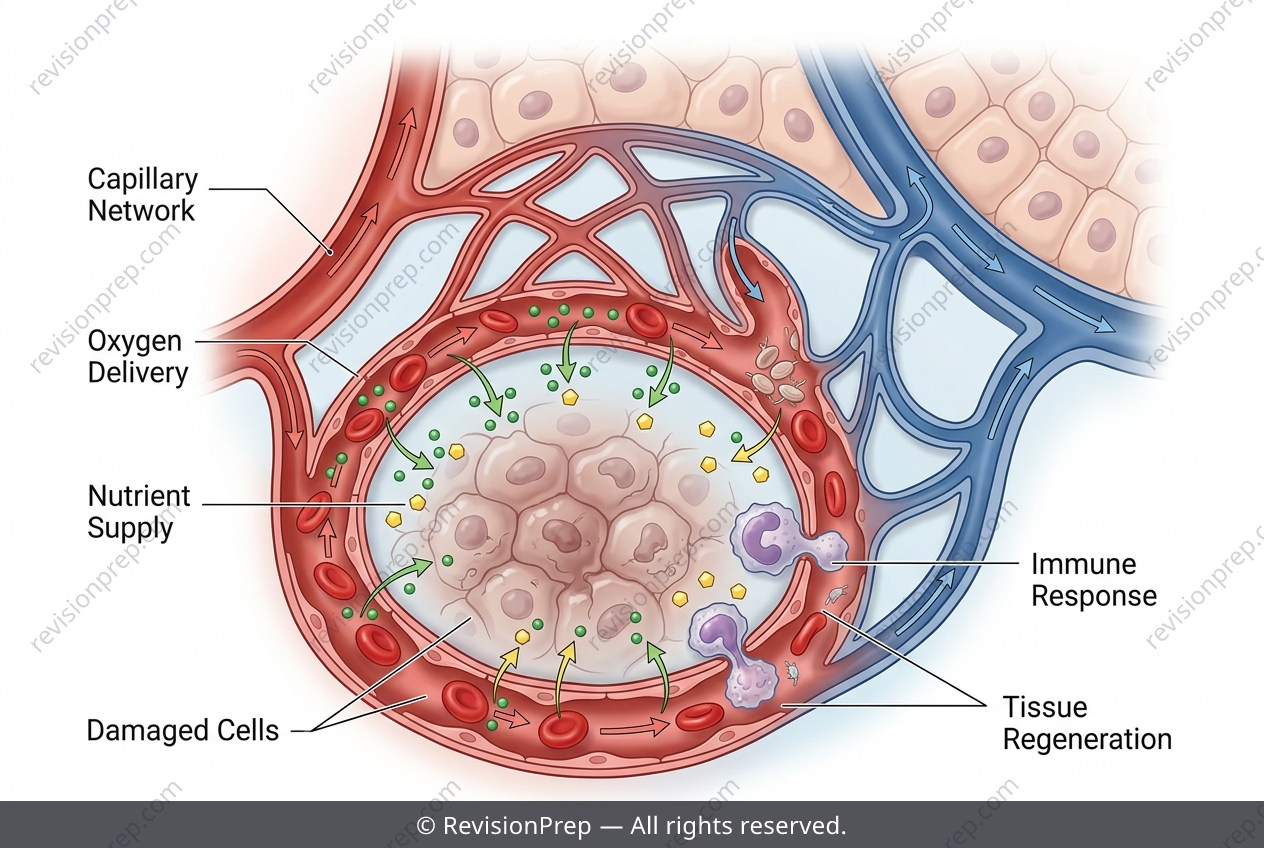
Biology: Homeostasis: Blood’s Role in Tissue Repair
A single scrape on your knee sets off a remarkable chain of events, all orchestrated by your circulatory system. At its core, this is a story of interdependence: blood is not just a red fluid, but a delivery network that carries the essential building blocks—oxygen and nutrients like glucose—to cells that are suddenly in crisis. Without this supply line, the cells at the wound edge cannot perform the energy-intensive work of division and protein synthesis required to rebuild damaged tissue. The relationship is direct and mechanistic. When blood flow is interrupted, the local cells are starved of both the fuel (oxygen for cellular respiration) and the raw materials (amino acids, minerals) needed for repair. Consequently, the wound cannot progress through its healing phases; instead of rebuilding, the exposed tissue becomes vulnerable to infection and the healing process stalls. This simple example reveals a broader biological principle: every system in an organism relies on transport mechanisms to maintain homeostasis, and when that transport fails, the entire local environment falls out of balance.
Start practising IB questions today
150,000+ IB-styled questions, criteria-mapped and instantly accessible.