
Biology: Homeostasis: Dialysis vs. Healthy Kidney Regulation
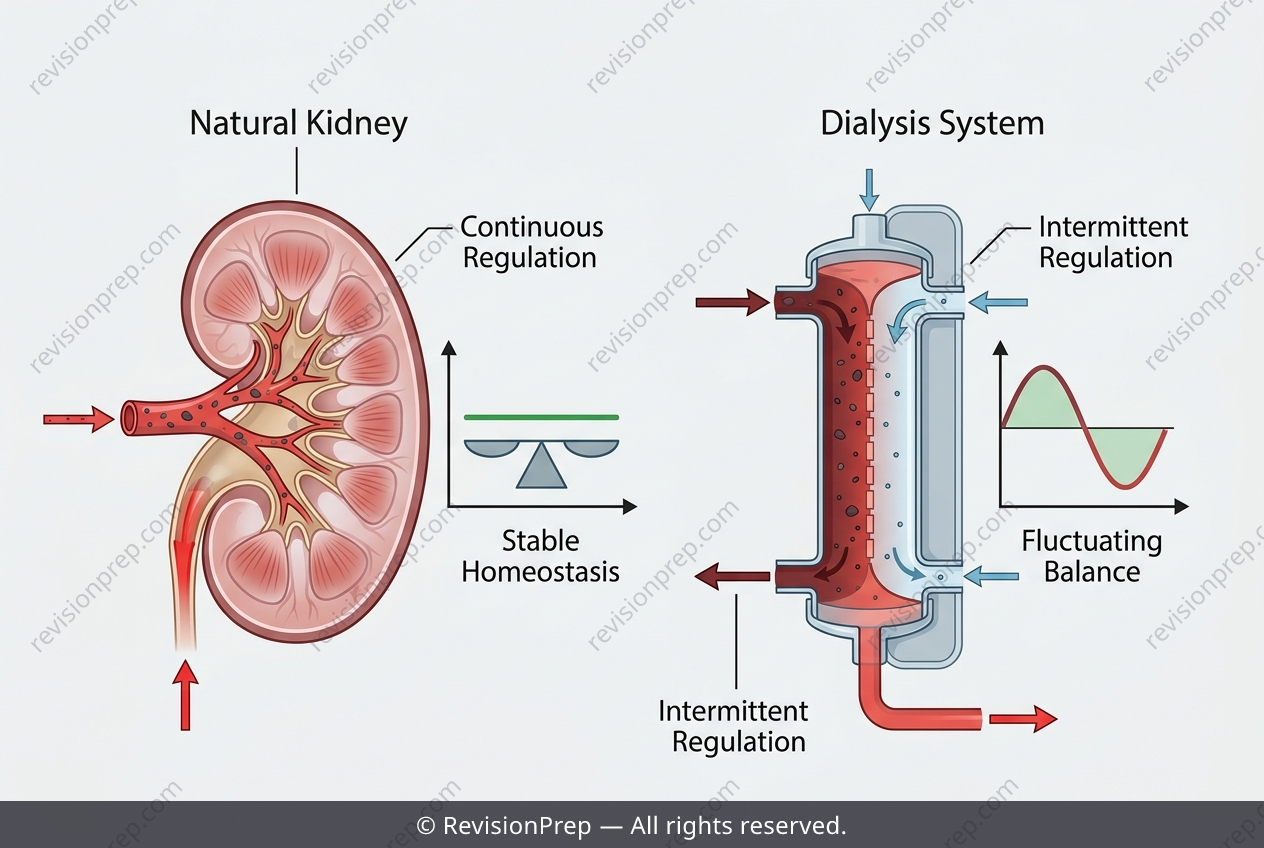
Homeostasis is the body’s relentless effort to keep its internal environment stable—balancing water, ions, and waste concentrations despite constant metabolic and dietary disruption. In excretion, the kidneys are the master regulators, filtering blood continuously through a semipermeable membrane that retains large molecules like proteins and blood cells while allowing small waste products such as urea to pass into urine. This selective permeability is the core mechanism that separates harmful byproducts from useful components, and it is precisely what an artificial kidney—the haemodialysis machine—attempts to replicate. The key relationship here is between filtration rate and regulatory stability. A healthy kidney works 24/7, so waste and fluid levels never drift far from set points. Dialysis, by contrast, runs only three times per week, creating a sawtooth pattern: waste accumulates between sessions, then is abruptly removed. This intermittent cycle means blood composition fluctuates widely, rather than being held steady. Understanding this contrast reveals why continuous, precise control matters—homeostasis is not just about removing waste, but about doing so at a constant, predictable pace that prevents the body’s internal environment from ever swinging out of balance.
Start practising IB questions today
150,000+ IB-styled questions, criteria-mapped and instantly accessible.