
Biology: Homeostasis: How Dialysis Mimics and Falls Short of Real Kidneys
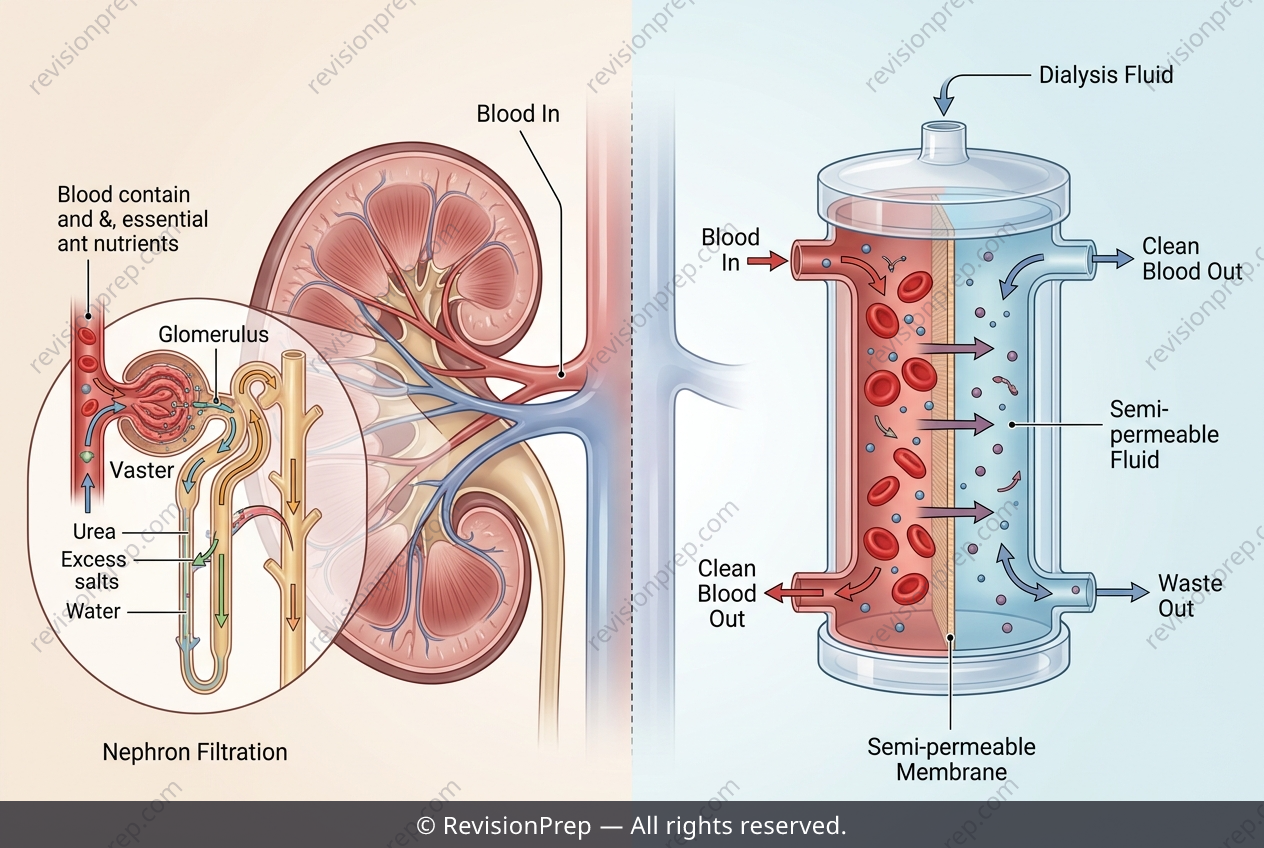
Homeostasis is the body’s relentless balancing act, and excretion is one of its most critical tools—removing metabolic waste before it reaches toxic levels. When kidneys fail, that balance collapses, and artificial filtration steps in to mimic their function. At the heart of this process lies a semi-permeable membrane, the same principle that governs diffusion in every cell: small waste molecules like urea pass through freely, while larger components—blood cells and proteins—are held back. This mechanism is not just a biological curiosity; it’s a lifeline. A dialysis machine channels blood along one side of the membrane, with dialysis fluid on the other, creating a concentration gradient that drives urea and excess water out of the bloodstream. Yet the machine’s design reveals a fundamental limitation: it works in discrete sessions, not continuously. Healthy kidneys filter blood around the clock, adjusting output second by second, whereas dialysis demands hours of treatment, multiple times weekly. Understanding this contrast—between constant physiological regulation and intermittent artificial intervention—illuminates why homeostasis is so elegantly efficient, and why its failure carries such profound consequences.
Start practising IB questions today
150,000+ IB-styled questions, criteria-mapped and instantly accessible.