
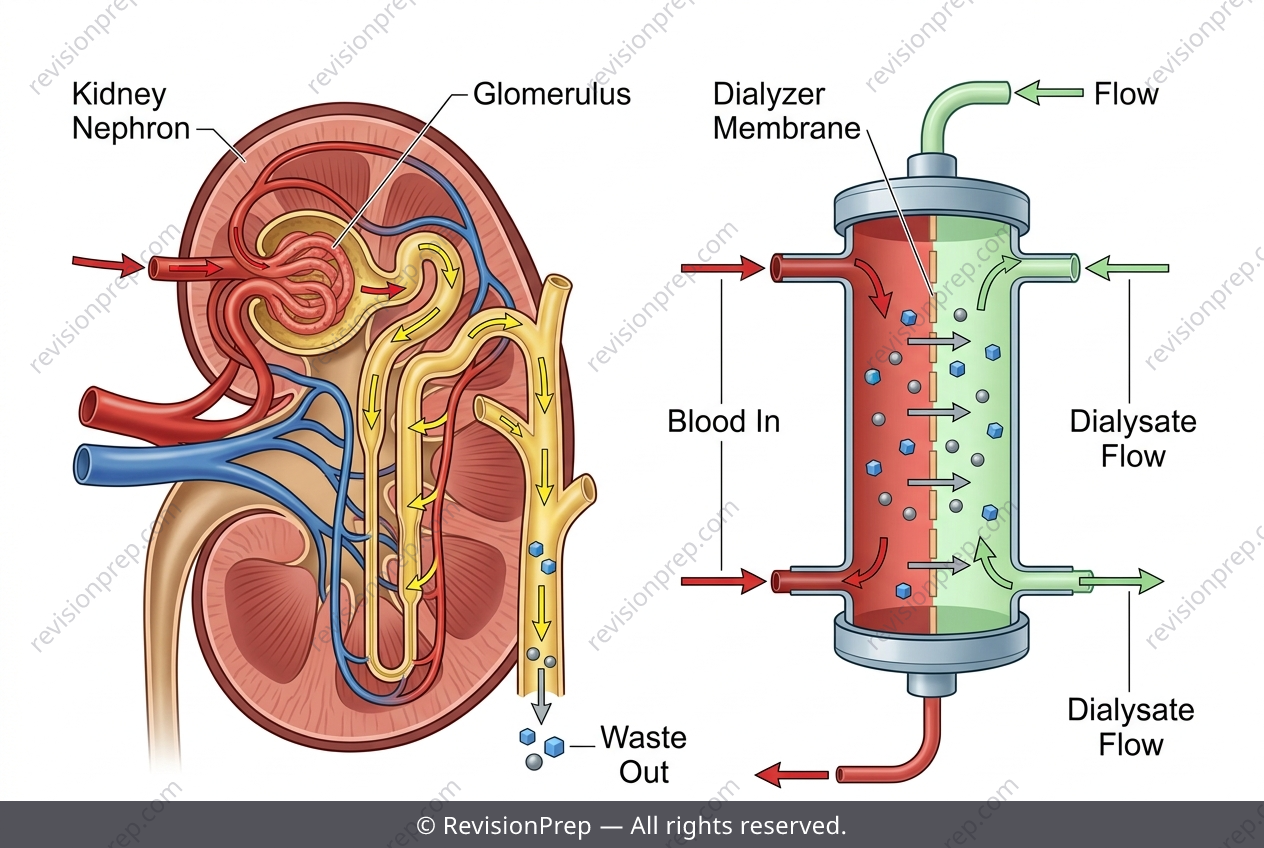
Biology: Homeostasis: How Dialysis Mimics Kidney Function
Homeostasis is the body’s relentless drive to maintain a stable internal environment—balancing water, salts, and waste within narrow limits. When kidneys fail, this equilibrium collapses, and toxic nitrogenous wastes like urea accumulate alongside excess fluid, threatening every cell. This is where artificial intervention steps in: dialysis does not cure, but it substitutes for the lost organ, restoring a functional, if temporary, balance. The core mechanism mirrors natural excretion. Healthy nephrons filter blood, reabsorb what is needed, and secrete waste into urine. A dialysis machine replicates this via a semipermeable membrane and a dialysate fluid. Blood flows one way; dialysate flows the opposite, creating a concentration gradient that draws urea and excess ions out while preserving larger proteins and cells. The cleaned blood returns to the body, and the spent dialysate carries the waste away. Crucially, the schedule—three sessions weekly, each several hours—becomes a structural anchor in the patient’s life, dictating work, travel, and social rhythms. This interplay between biological necessity and practical constraint defines the lived reality of homeostatic regulation, where every artificial session is a deliberate, time-bound rebalancing of the internal sea.
Start practising IB questions today
150,000+ IB-styled questions, criteria-mapped and instantly accessible.