
Biology: Homeostasis: How the Body Responds to Exercise
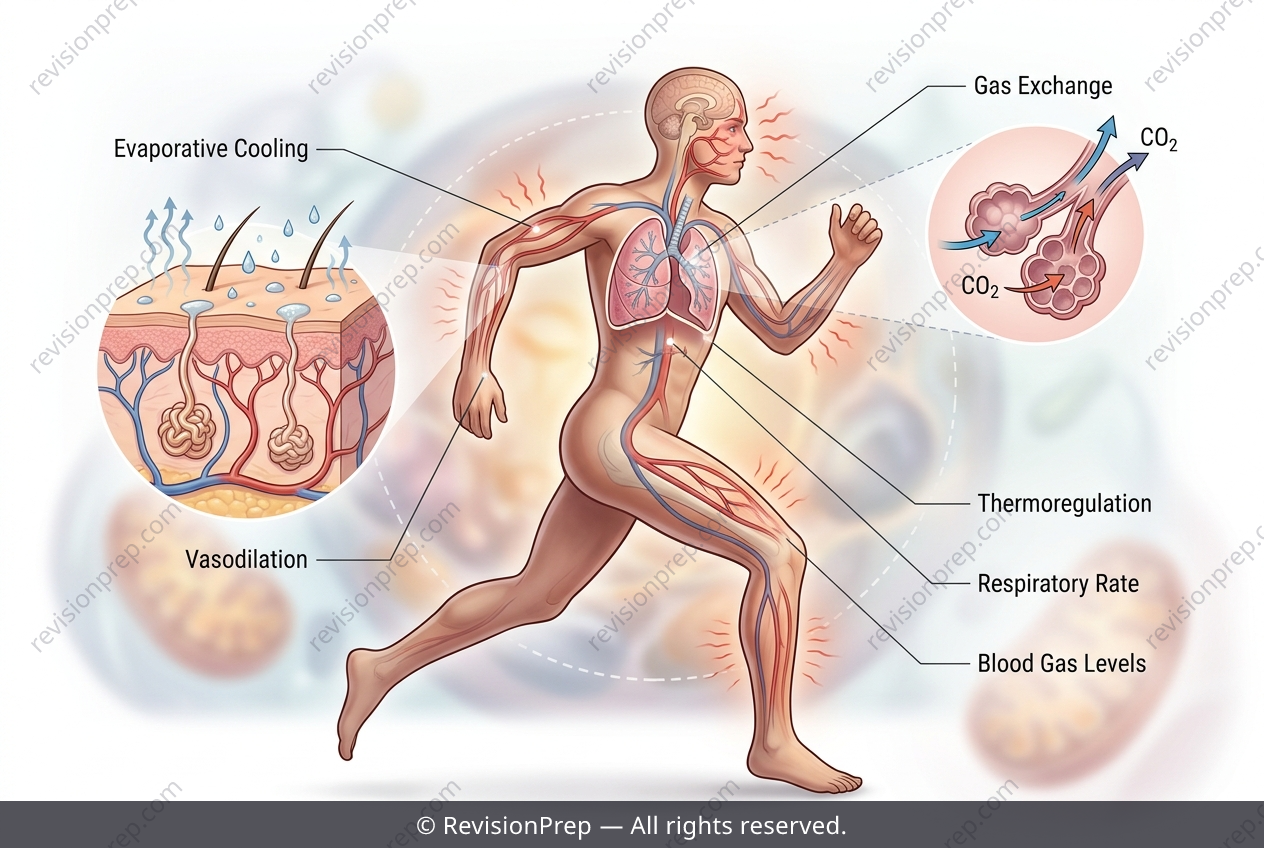
When you run, your body becomes a furnace of activity, and every system pivots to one goal: keeping your internal environment stable. This is physiological homeostasis in action, and it hinges on three coordinated outputs—sweating, flushing, and rapid breathing. Each is a mechanism, not a symptom. Sweat is water released onto the skin; as it evaporates, it physically carries heat energy away, cooling the surface. A flushed face is vasodilation—blood vessels widening near the skin to bring warm blood closer to the air, where heat dissipates. Rapid breathing, meanwhile, is the gas-exchange engine: it multiplies both oxygen intake and carbon dioxide removal per minute. These parts connect through a simple arithmetic of survival. At rest, your lungs shift modest volumes of O₂ and CO₂ per breath; during exercise, both the rate and the volume per breath rise, so the total gas moved per minute climbs dramatically. This extra oxygen fuels increased cellular respiration, while the accelerated CO₂ removal prevents blood pH from dropping. Together, evaporation, vasodilation, and ventilation form a feedback loop that defends your core temperature and blood chemistry—proving that homeostasis is not a fixed state, but a dynamic balancing act.
Start practising IB questions today
150,000+ IB-styled questions, criteria-mapped and instantly accessible.