
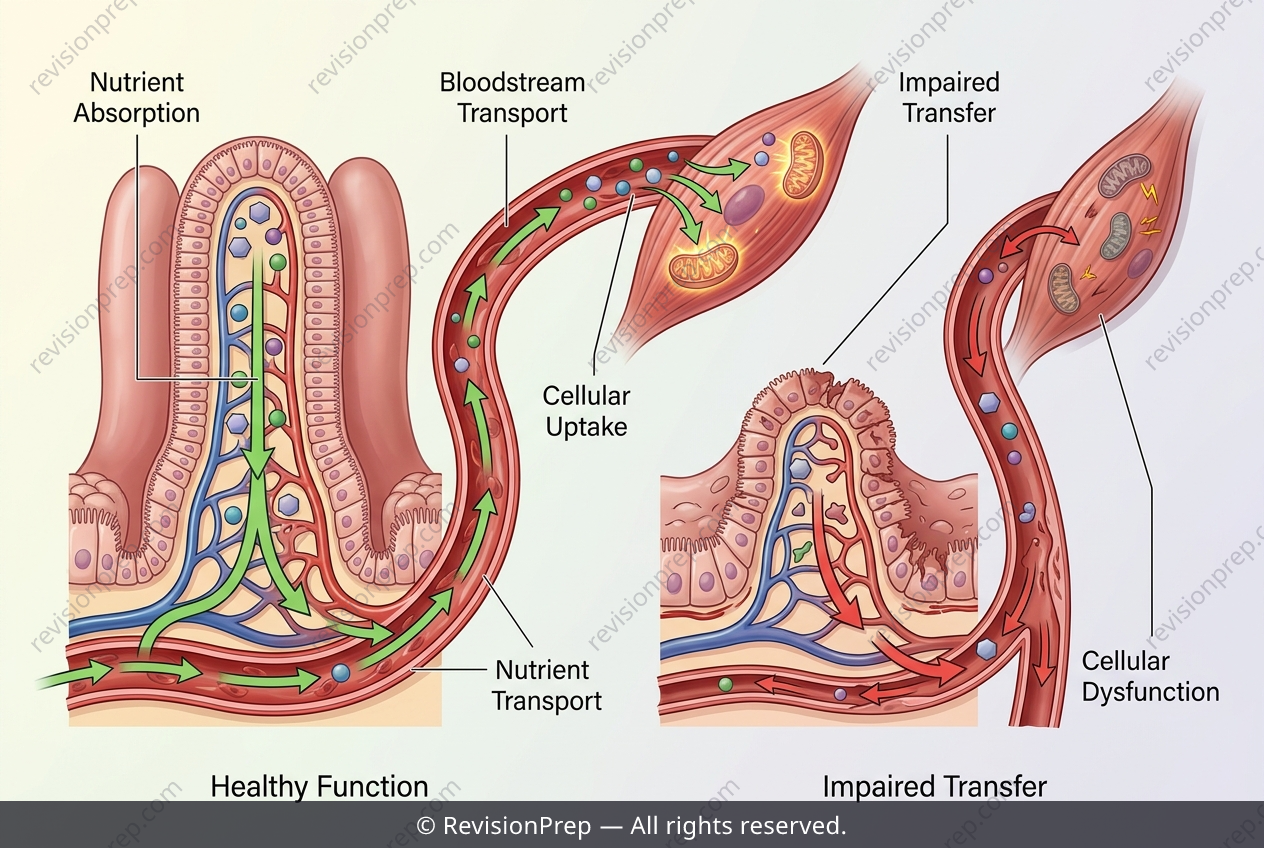
Biology: Inter-System Coordination: Digestive & Circulatory Health Impacts
The digestive system and the circulatory system are, in essence, a delivery partnership. The former is responsible for the mechanical and chemical breakdown of food into absorbable units—amino acids, fatty acids, and monosaccharides—while the latter acts as the transport network, shuttling these nutrients from the intestinal walls to every living cell in the body. This interdependence is not merely a biological detail; it is the fundamental process that fuels cellular respiration and sustains all physiological function. When this coordination fails, the consequences are systemic rather than local. Consider coeliac disease, where an autoimmune response damages the villi of the small intestine. This damage directly compromises the absorptive surface area, meaning that even a nutrient-rich diet cannot yield the iron or vitamins needed for blood health. Consequently, the circulatory system is left with an impoverished cargo—unable to deliver adequate oxygen-carrying haemoglobin to tissues. The result is iron deficiency anaemia, manifesting as profound fatigue and weakness, illustrating how a digestive malfunction directly impairs circulatory delivery and, ultimately, whole-body energy production.
Start practising IB questions today
150,000+ IB-styled questions, criteria-mapped and instantly accessible.