
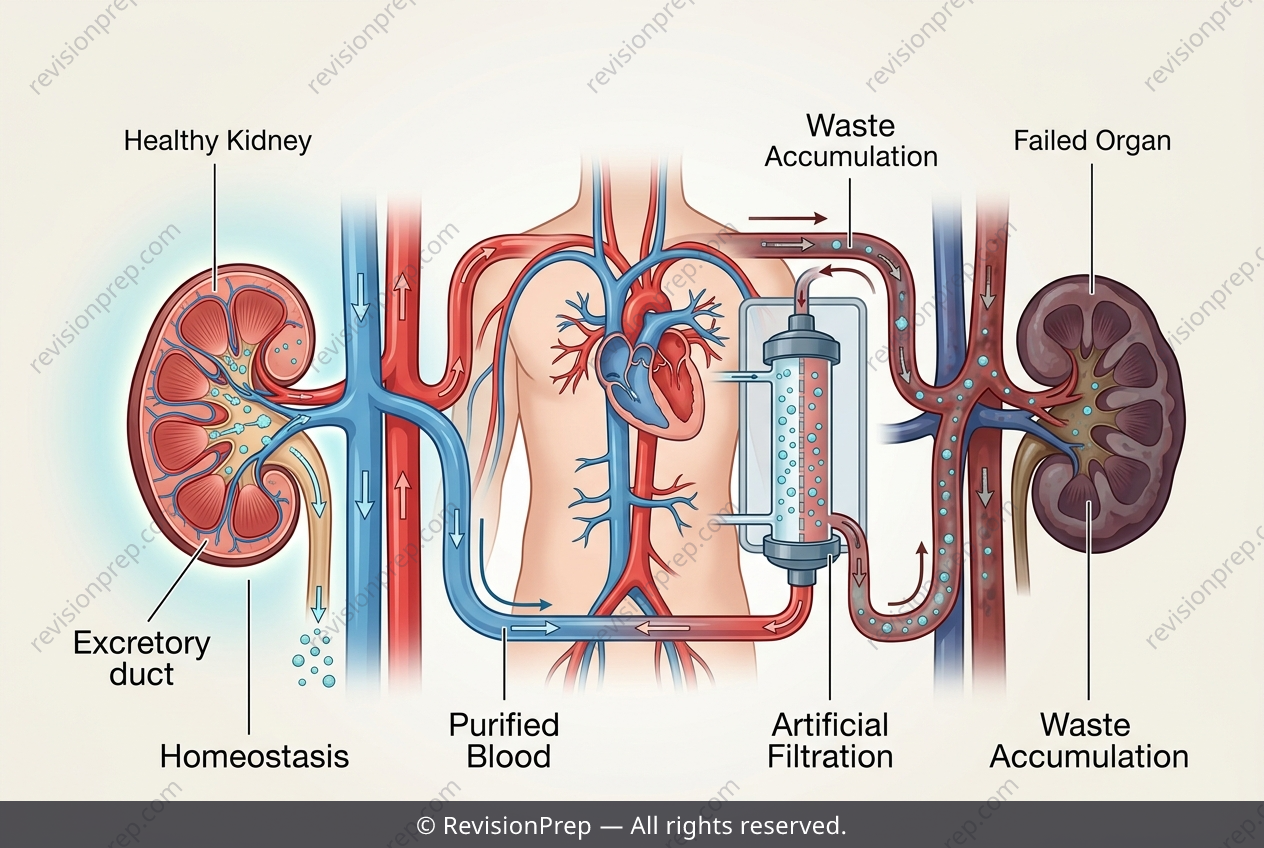
Biology: Kidney Failure: Homeostasis Disruption and Daily Life Impact
When kidneys fail, the body’s built-in filtration system breaks down. These organs normally remove metabolic waste products—like urea and creatinine—and excess fluid from the blood, while balancing electrolytes and pH. Without this function, toxins accumulate in the bloodstream, and fluid builds up in tissues, leading to a condition called uremia. This disruption of homeostasis is not a silent problem; it triggers a cascade of systemic effects, from swelling and fatigue to dangerous imbalances in potassium and calcium. The core challenge is that the body cannot restore this balance on its own. Artificial life support, in the form of dialysis, steps in to perform the kidney’s filtering role mechanically. However, this intervention is not a seamless substitute. It requires a rigid schedule—typically three sessions per week, each lasting three to four hours—during which the patient is tethered to a machine. This time commitment, along with dietary restrictions on fluids, salt, and protein, fundamentally reshapes daily life. The patient’s freedom to work, travel, or even plan a simple day becomes constrained by the machine’s rhythm, illustrating how a loss of internal regulation forces external, life-sustaining compromises.
Start practising IB questions today
150,000+ IB-styled questions, criteria-mapped and instantly accessible.