
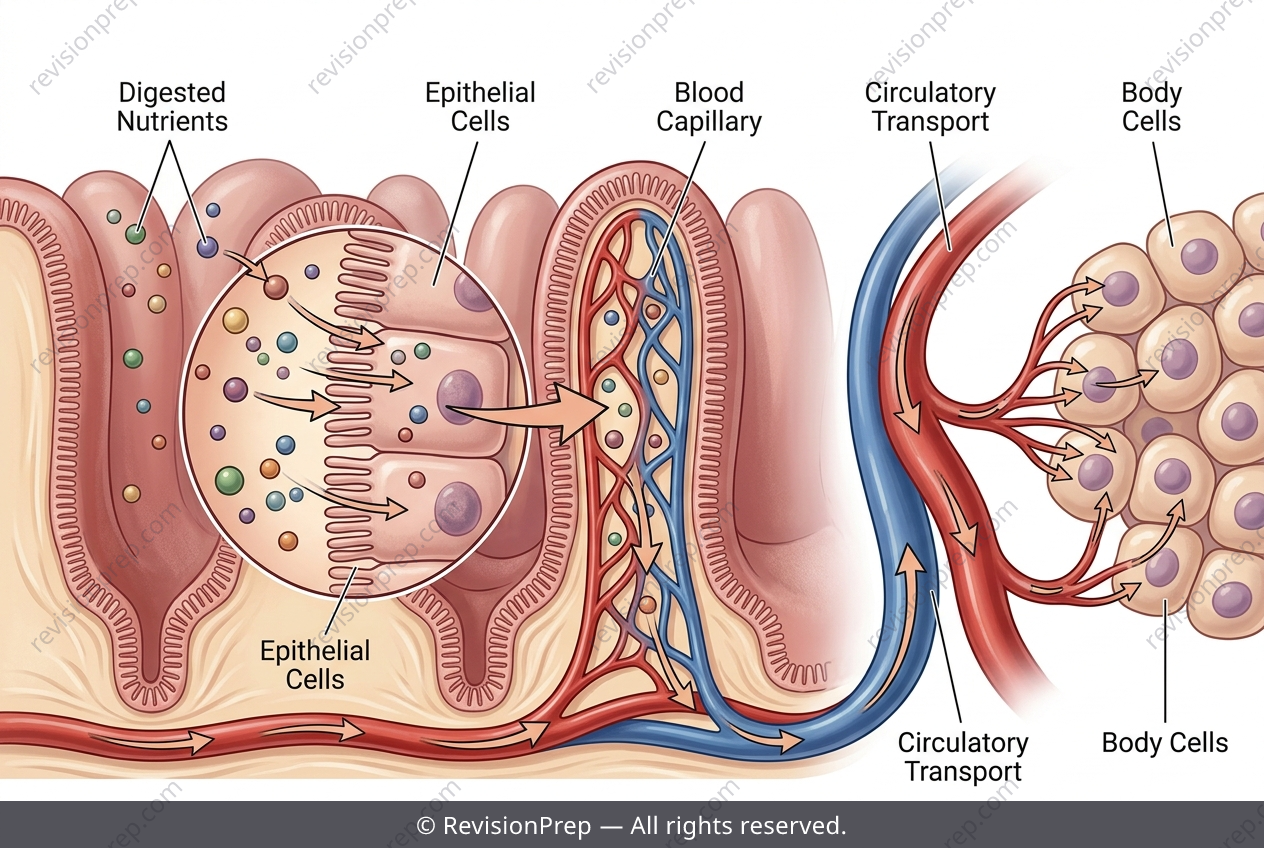
Biology: Nutrient Absorption and Systemic Transport in the Villus
The small intestine is where the complex business of feeding your body truly begins—not with swallowing, but with absorption. At the heart of this process is the villus, a microscopic finger-like projection that maximizes surface area to pull digested nutrients from the gut lumen into the bloodstream. This is the core of interdependence in organisms: the digestive and circulatory systems must work in tandem, converting food into a form that every cell can use. Two key players absorbed across the villus’s epithelial lining are glucose and amino acids. These molecules enter the epithelial cells via diffusion or active transport, then move into the adjacent blood capillary down a concentration gradient—higher inside the cell than in the blood. This gradient is the engine of nutrient delivery. Once in the bloodstream, the circulatory system becomes the transport highway, carrying glucose to cells for respiration (releasing energy) and amino acids for protein synthesis (growth and repair). Without this coordinated flow, from lumen to capillary to cell, the body’s tissues would starve despite a full meal.
Start practising IB questions today
150,000+ IB-styled questions, criteria-mapped and instantly accessible.