
Biology: One Drug, Two Very Different Organelles
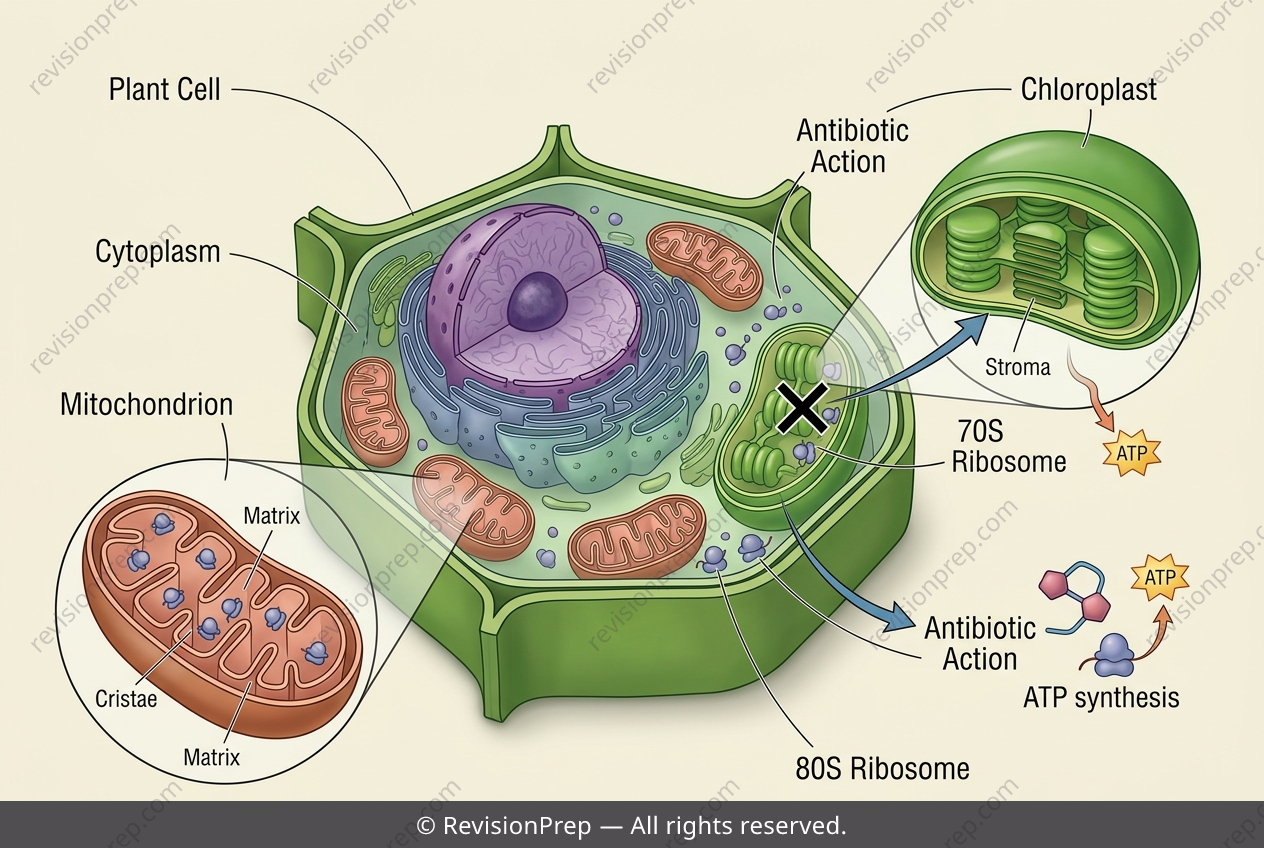
The endosymbiotic theory proposes that mitochondria and chloroplasts originated from free-living bacteria engulfed by ancestral eukaryotic cells, a partnership that reshaped life on Earth. This idea is powerfully supported by the fact that both organelles possess their own 70S ribosomes—structurally identical to those in modern bacteria like E. coli—and are vulnerable to antibiotics that target these prokaryotic ribosomes. Yet, as the data from spinach organelles reveals, the story is more nuanced: while chloroplasts are strongly inhibited by such drugs, mitochondria show only a negligible response. This contrast hinges on organelle autonomy versus genomic integration. Chloramphenicol blocks peptide bond formation on 70S ribosomes, halting synthesis of key photosynthetic proteins (e.g., the D1 protein of Photosystem II) in chloroplasts, thereby crippling ATP production. However, most mitochondrial ATP synthase subunits are encoded by nuclear genes and translated on cytoplasmic 80S ribosomes, which the drug does not affect. Thus, antibiotic sensitivity alone is not definitive proof of endosymbiosis—it must be weighed against the extensive gene transfer that has occurred over evolutionary time, linking organelle function to the host nucleus.
Start practising IB questions today
150,000+ IB-styled questions, criteria-mapped and instantly accessible.