
Biology: Oxygen Slips In, Potassium Waits
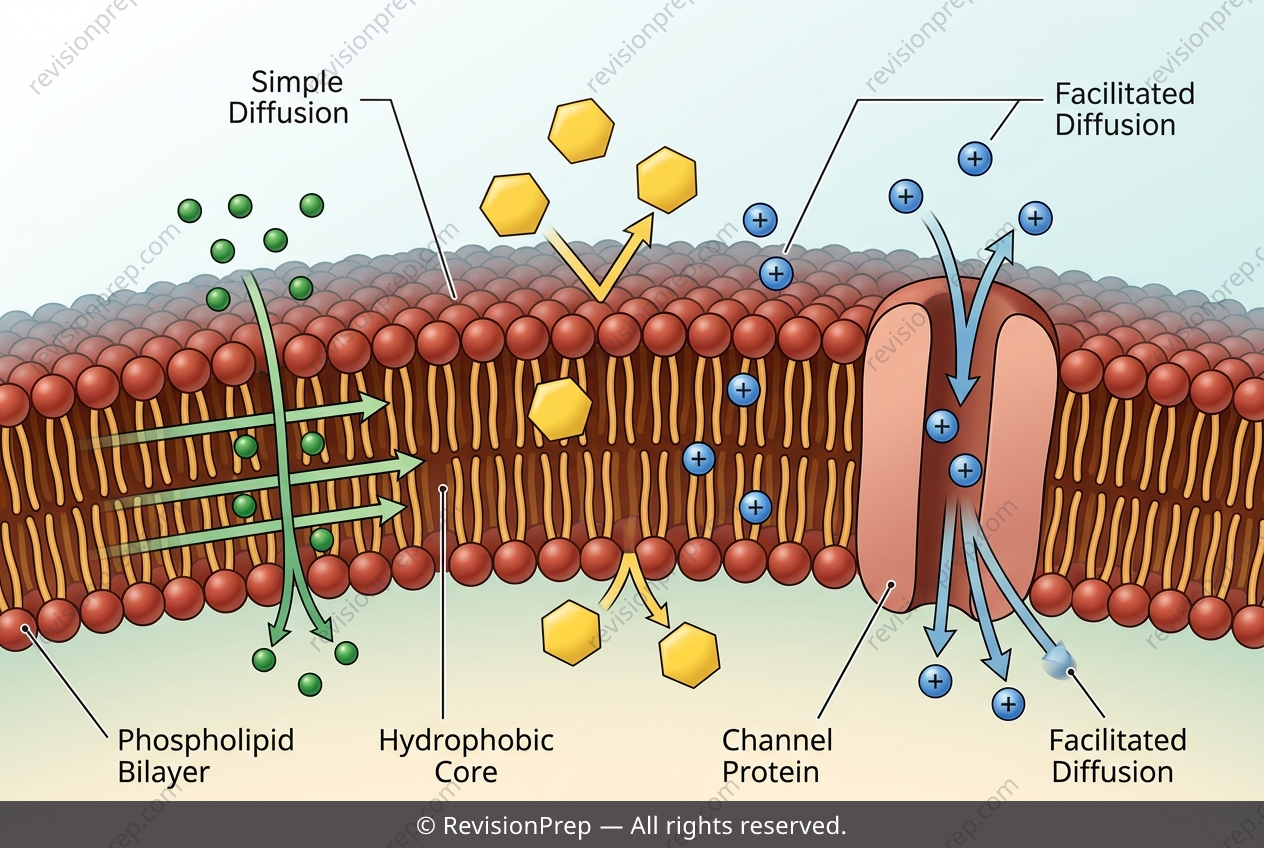
The cell membrane is not a static barrier but a dynamic, fluid mosaic—a sea of phospholipids studded with proteins that governs exactly what enters and leaves the cell. At its heart lies selective permeability: the ability to let some molecules pass freely while blocking others, a property determined by the bilayer’s structure. Small, non-polar molecules like oxygen slip through the hydrophobic core with ease, while charged ions and large polar molecules face a formidable obstacle. This selectivity is not random—it is engineered. The hydrophobic core explains why oxygen diffuses rapidly, but it also explains why potassium ions cannot cross without help. That help comes from the mosaic of integral proteins: specific channels and carriers that act as gated pores, each shaped and charged to match a particular ion or molecule. The dramatic rate increase when a channel is present—calculated as a percentage increase from baseline—reveals how these proteins transform a nearly impermeable barrier into a highly efficient, selective transport system. Understanding this interplay between lipid structure and protein function is essential for grasping how cells maintain homeostasis and respond to their environment.
Start practising IB questions today
150,000+ IB-styled questions, criteria-mapped and instantly accessible.