
Biology: Skeletal Protection: Skull, Ribcage, and Backbone Explained
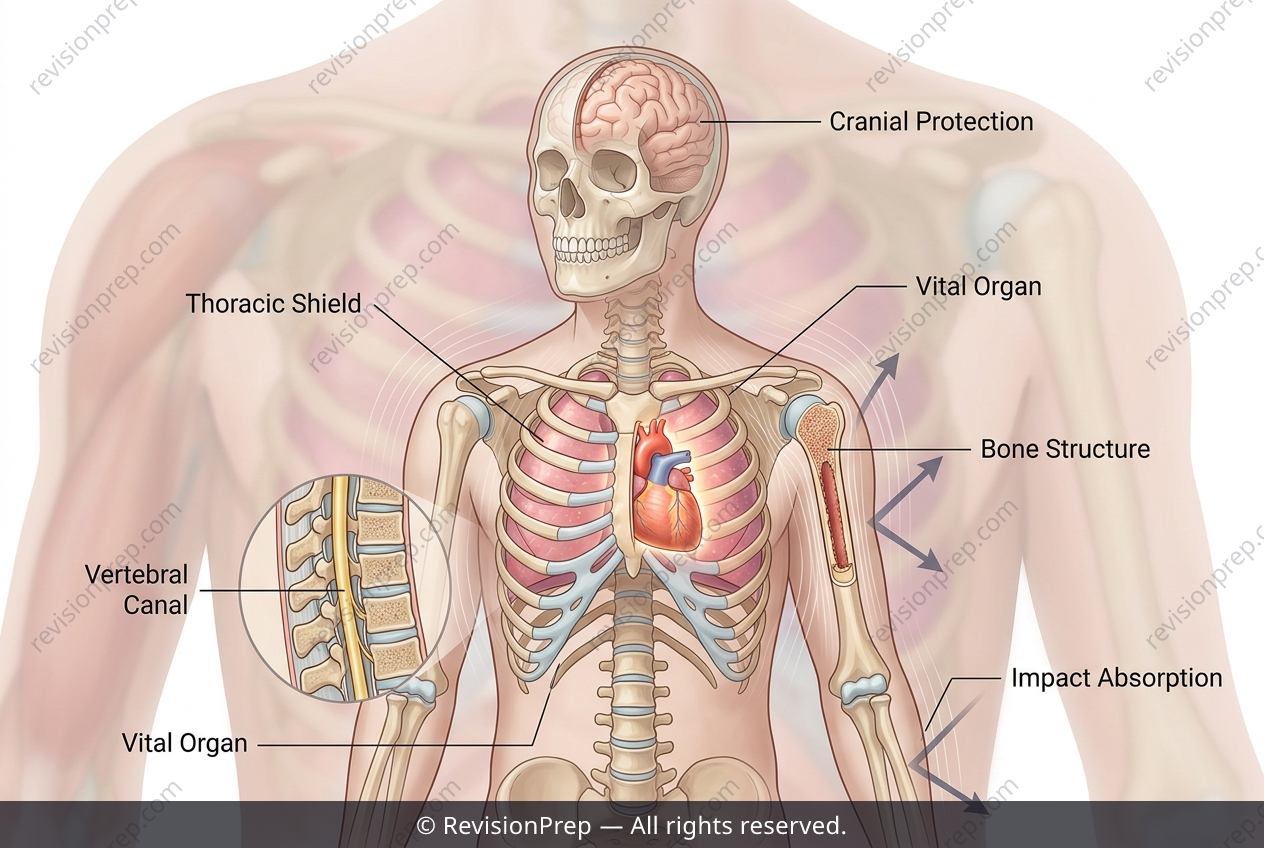
The human skeleton is far more than a rigid frame for movement—it is the body’s built-in armour, a dynamic system of levers and shields that safeguards the organs essential for survival. At its core, this system demonstrates a simple yet profound principle: structural form dictates protective function. The skull, ribcage, and backbone are not random collections of bone; each is precisely shaped to encase a specific vital organ, turning potential vulnerability into robust defence. This protection works through distinct mechanisms. The skull forms a hard, seamless vault that completely encloses the brain, absorbing impact before it reaches delicate neural tissue. The ribcage, a curved cage of bones, wraps around the thoracic cavity, creating a flexible yet strong barrier that shields both the heart and lungs—allowing them to expand and contract while remaining safe from external blows. The backbone, meanwhile, employs a cleverly segmented design: small bones stacked in a column create a central tunnel that surrounds the spinal cord, the body’s information superhighway. This stacked architecture provides both mobility and protection, as each vertebra contributes to a continuous channel that deflects force and prevents damage to the nerve bundle within. Together, these three structures illustrate how the skeleton’s anatomy is intrinsically linked to the survival of the organs it guards.
Start practising IB questions today
150,000+ IB-styled questions, criteria-mapped and instantly accessible.