
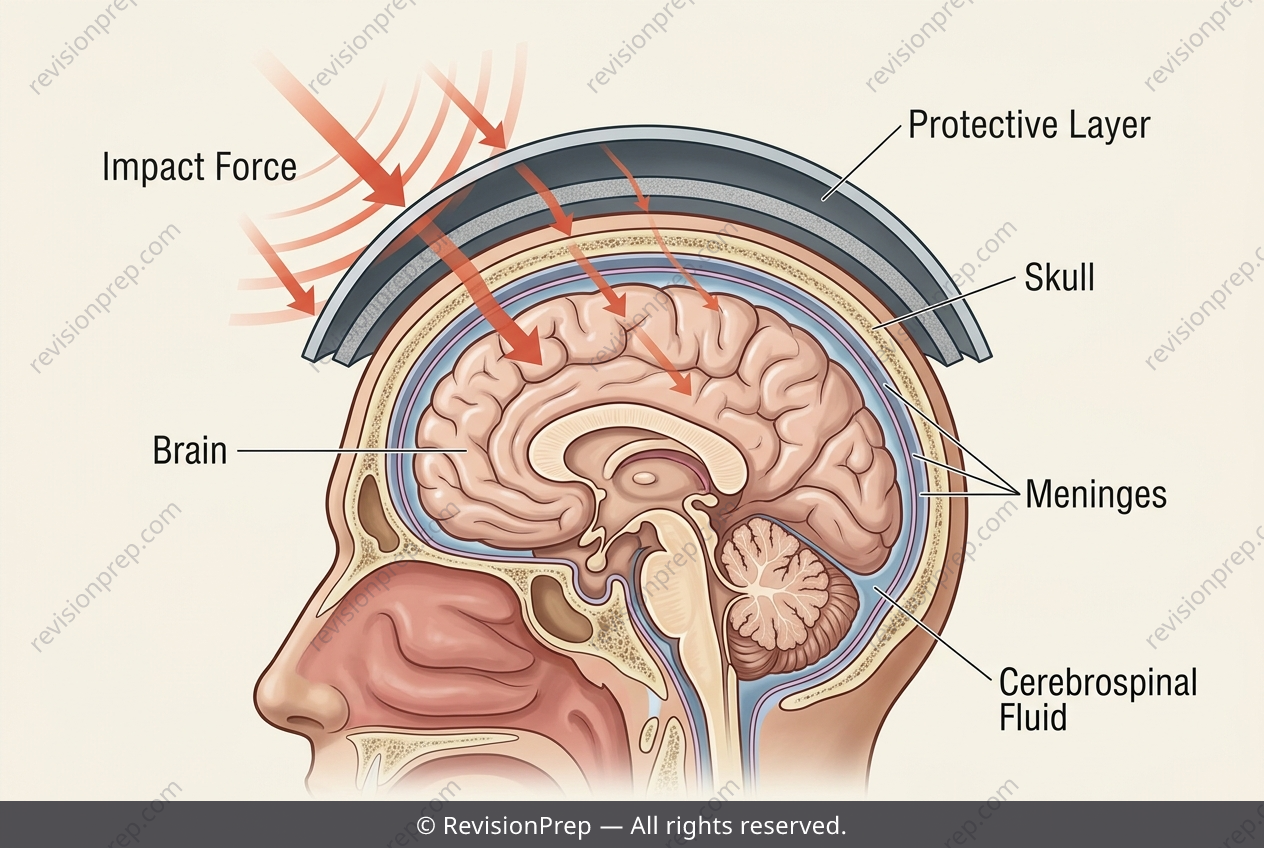
Biology: Skull Biomechanics: How It Protects the Brain in Daily Life
The skull is the body’s built-in crash helmet—a rigid, bony casing that shields the soft, delicate brain from the blunt forces of everyday life. While we rarely think about it, this protective structure is what allows us to fall off a bike, bump into a doorframe, or head a football without catastrophic injury. The core idea here is biomechanical protection: the skull’s hardness and strength act as a physical barrier, absorbing and deflecting impacts before they can reach the vulnerable neural tissue inside. This concept matters because the brain controls everything we do, yet it has the consistency of soft jelly. Without the skull’s intervention, even a minor knock could cause direct damage. The mechanism is simple but elegant: when your head strikes an object, the skull’s rigid outer layer takes the hit, distributing the force across its surface and preventing the impact from transferring straight into the brain. In essence, the hard bone blocks the blow, while the soft brain remains safely cushioned. Understanding this relationship—between external force, a strong shell, and internal fragility—explains why activities like cycling or contact sports require extra protection, and why the skull’s design is a masterpiece of natural engineering.
Start practising IB questions today
150,000+ IB-styled questions, criteria-mapped and instantly accessible.