
Biology: Structure-Function: How the Ribcage Protects and Moves
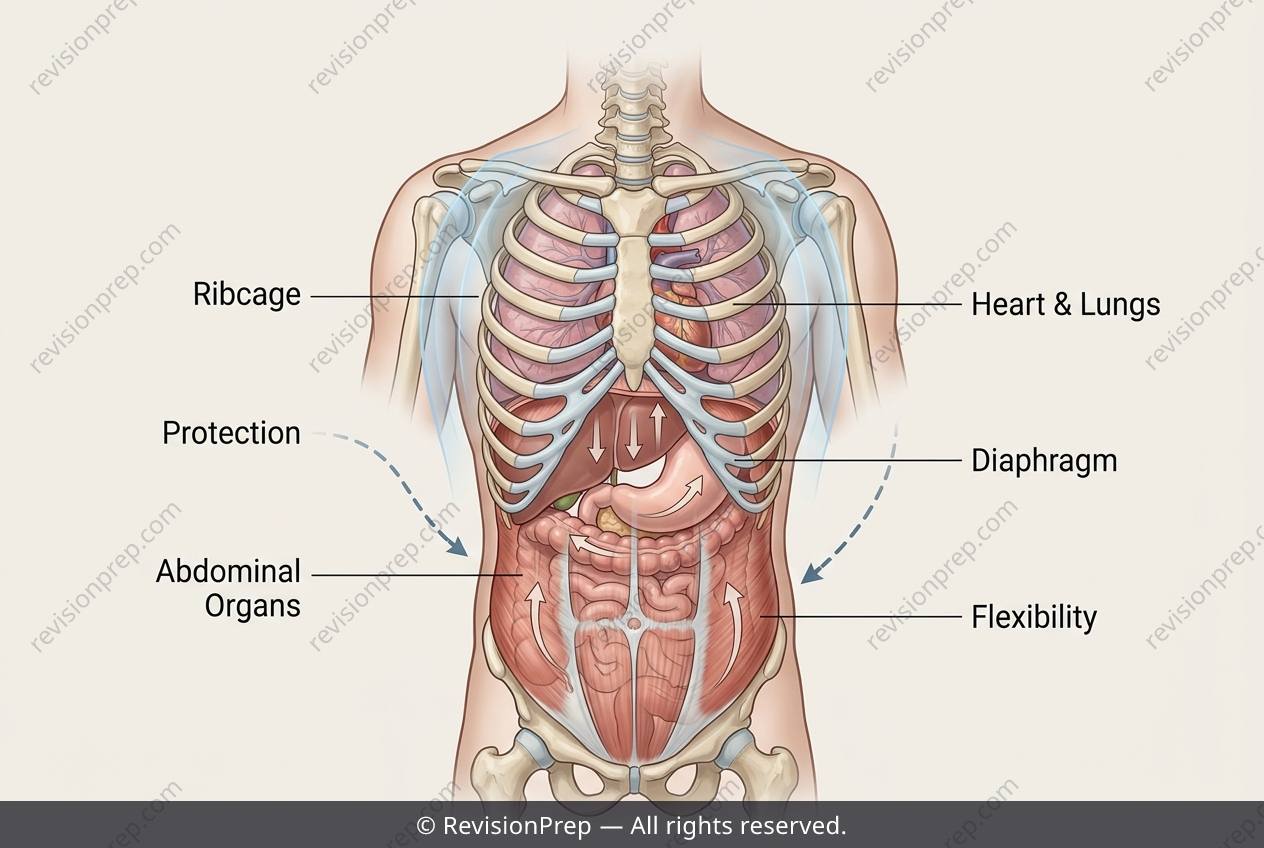
The human skeleton is far more than a static frame—it is a masterclass in biological engineering, where every curve and gap serves a precise purpose. At the heart of this design lies the structure-function relationship, best exemplified by the ribcage: a bony cage that cradles the heart and lungs while leaving the abdomen deliberately exposed. This isn’t an oversight; it’s a compromise between protection and mobility. The ribcage’s rigid, curved bones act as a shock absorber, distributing impact forces across a wide area—think of a rugby collision or a fall—so that a blunt blow to the chest doesn’t crush the vital organs within. Yet, the same logic that demands strength in the thorax demands flexibility in the abdomen. Without bony coverage, the abdominal wall can stretch, compress, and twist freely, enabling the bending, rotation, and deep breathing required for daily life and digestion. This contrast reveals a core biological principle: form follows function, and protection is always balanced against the need to move.
Start practising IB questions today
150,000+ IB-styled questions, criteria-mapped and instantly accessible.