
Biology: Surface Area to Volume Ratio in Digestion for IB Biology
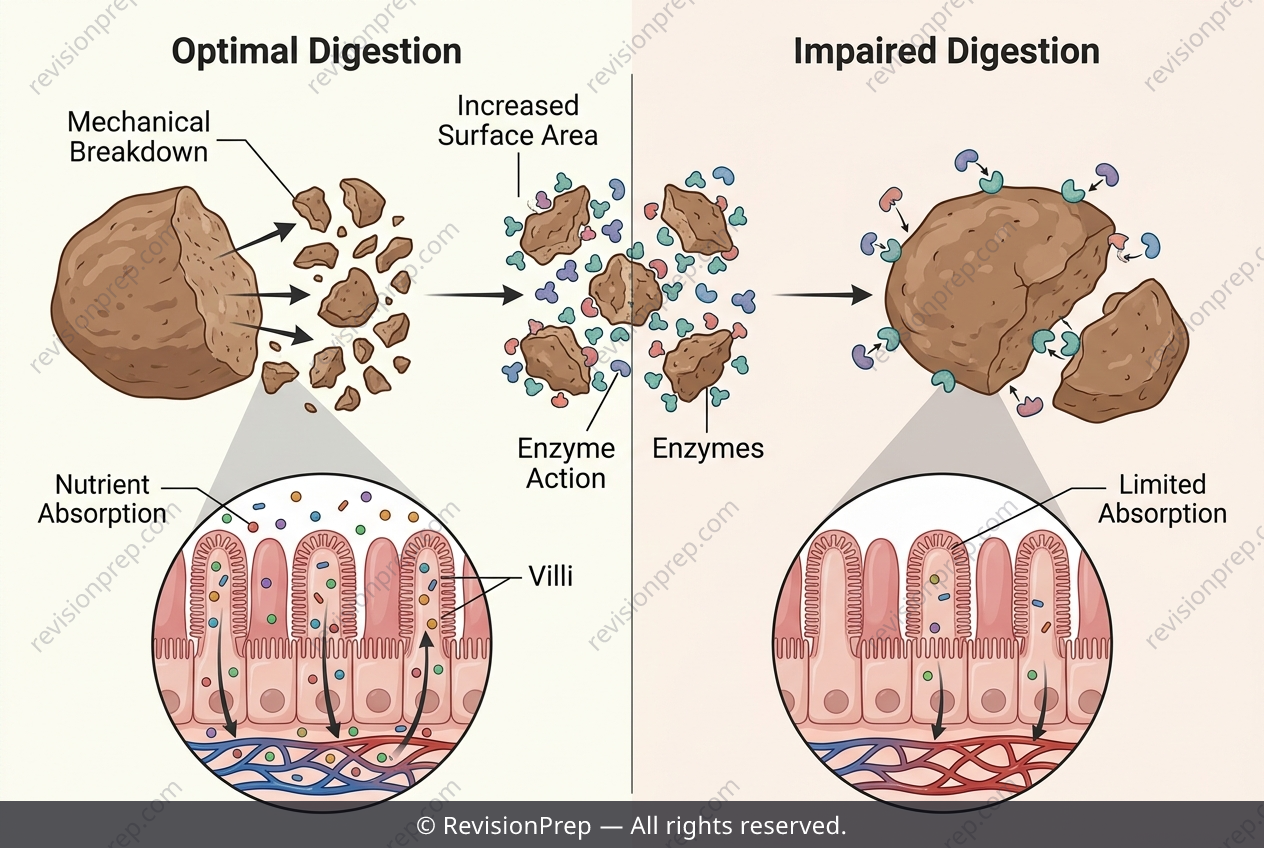
Mechanical digestion begins in the mouth, where chewing physically breaks food into smaller fragments. This process is far more than a simple convenience—it is the first critical step in optimising the body’s ability to extract energy and building blocks from what we eat. By increasing the surface area to volume ratio of food, chewing ensures that digestive enzymes, the biological catalysts that accelerate chemical breakdown, can access a much larger target area. Without this initial size reduction, the subsequent stages of chemical digestion would be severely handicapped. The relationship between particle size and absorption is direct and quantifiable. As food is broken into smaller pieces, the total surface area exposed to enzymes grows exponentially relative to its volume, allowing for faster and more complete hydrolysis of macromolecules into absorbable monomers. When chewing is impossible—such as with a broken jaw—larger food boluses present a reduced surface area, slowing enzymatic action and leaving many nutrients locked inside undigested material. Consequently, the small intestine absorbs fewer amino acids, fatty acids, and simple sugars, diminishing overall nutritional uptake. This principle underscores why mechanical and chemical digestion are inseparable partners in maintaining homeostasis.
Start practising IB questions today
150,000+ IB-styled questions, criteria-mapped and instantly accessible.