
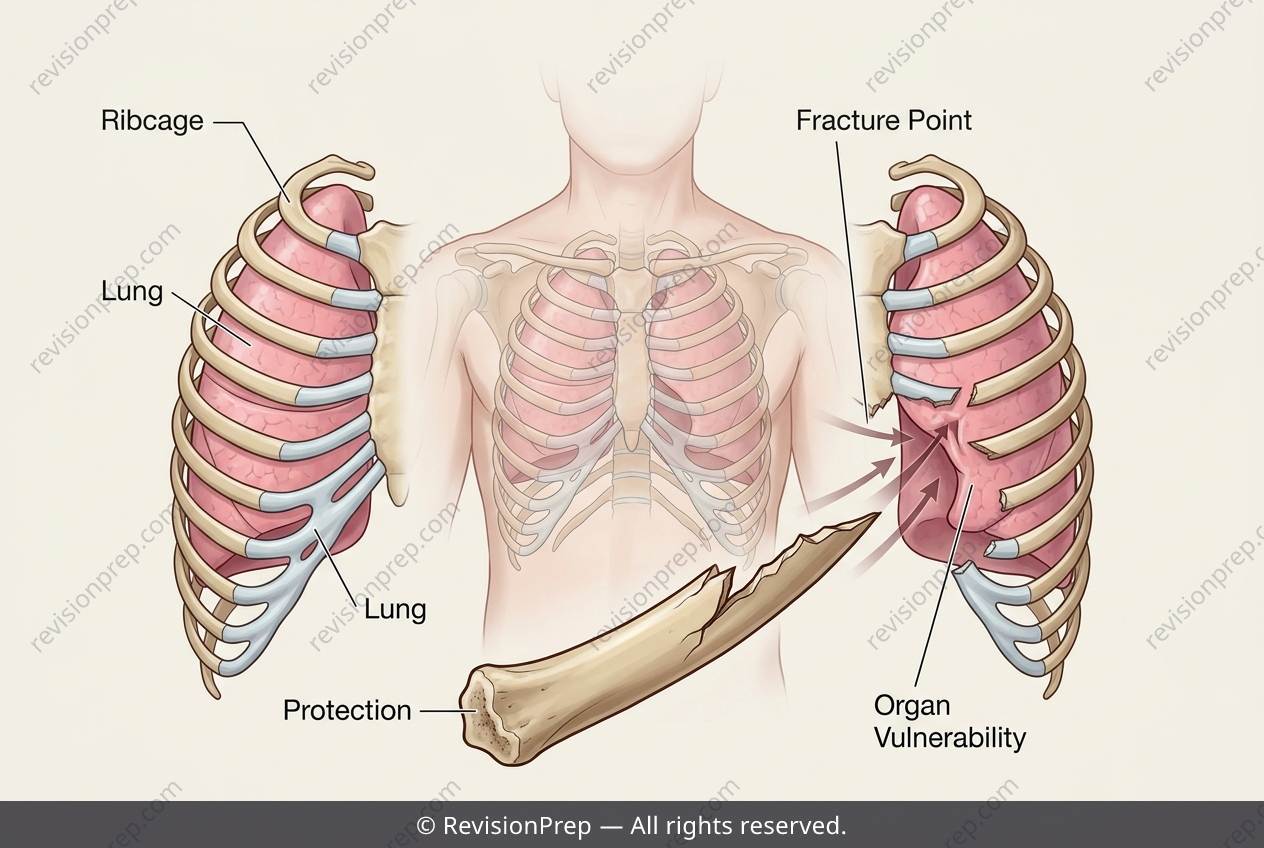
Biology: The Ribcage’s Shielding Role and Why Broken Ribs Risk Lung Damage
The human skeleton is far more than a structural frame—it is a dynamic shield, and nowhere is this more evident than in the ribcage. This bony enclosure does not merely give the chest its shape; it performs a critical protective function, acting as a physical barrier for the lungs, heart, and major vessels. When we breathe, the ribs move in concert with the diaphragm, but their primary role in a clinical context is to absorb impact and safeguard the delicate organs nestled within. However, this protective system has a crucial vulnerability: the very rigidity that shields the lungs can become a source of harm. A broken rib, while a fracture of the protective layer, transforms that shield into a hazard. The sharp, jagged edges of the broken bone can easily puncture, tear, or lacerate the adjacent lung tissue, leading to internal bleeding or a collapsed lung. This direct mechanical relationship—between the skeleton’s protective barrier and the soft, vulnerable organs it surrounds—explains why a simple rib fracture demands immediate attention to the lungs, as the damage is not just to the bone but to the vital structures it was designed to defend.
Start practising IB questions today
150,000+ IB-styled questions, criteria-mapped and instantly accessible.