
Biology: Why Membranes Must Stay Fluid
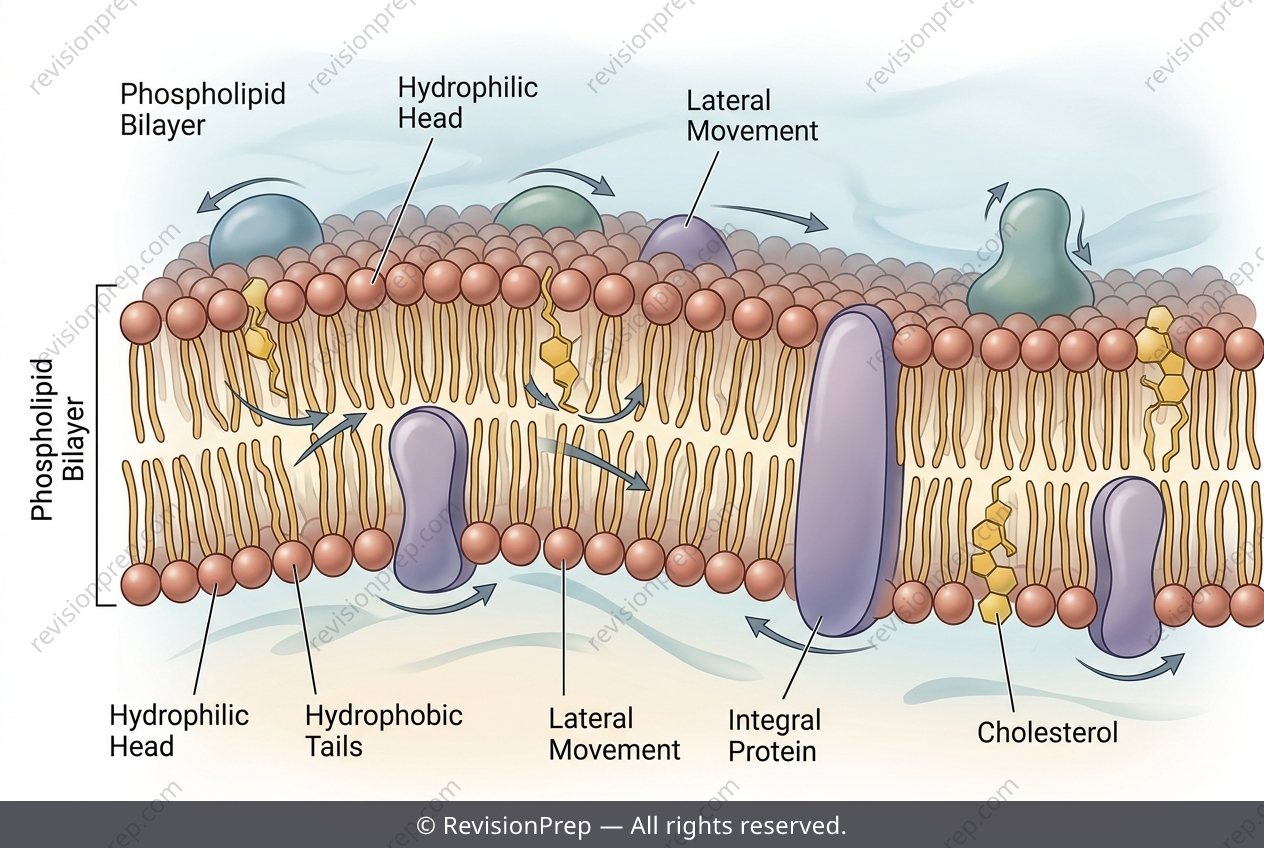
The cell membrane is not a static barrier but a dynamic, shifting mosaic—a concept captured by the fluid mosaic model. At its heart lies the idea that phospholipids and proteins are not locked in place; instead, they drift and rearrange laterally within the bilayer’s plane, much like boats floating on a viscous sea. This fluidity is essential for membrane function, enabling processes like cell signalling, endocytosis, and the redistribution of surface proteins. The classic oil-and-water-plus-detergent demonstration mirrors this beautifully: detergent molecules, being amphipathic (with both hydrophilic and hydrophobic ends), insert themselves at the oil–water interface, temporarily disrupting the separation. This mimics how phospholipids’ dual nature allows them to slide past one another, while the hydrophobic core resists water but permits lateral movement. The temporary mixing and re-separation reflect the membrane’s balance—stable as a barrier, yet flexible enough for components to rearrange. Without this fluidity, membranes would be rigid, and life’s dynamic cellular processes would grind to a halt.
Start practising IB questions today
150,000+ IB-styled questions, criteria-mapped and instantly accessible.