
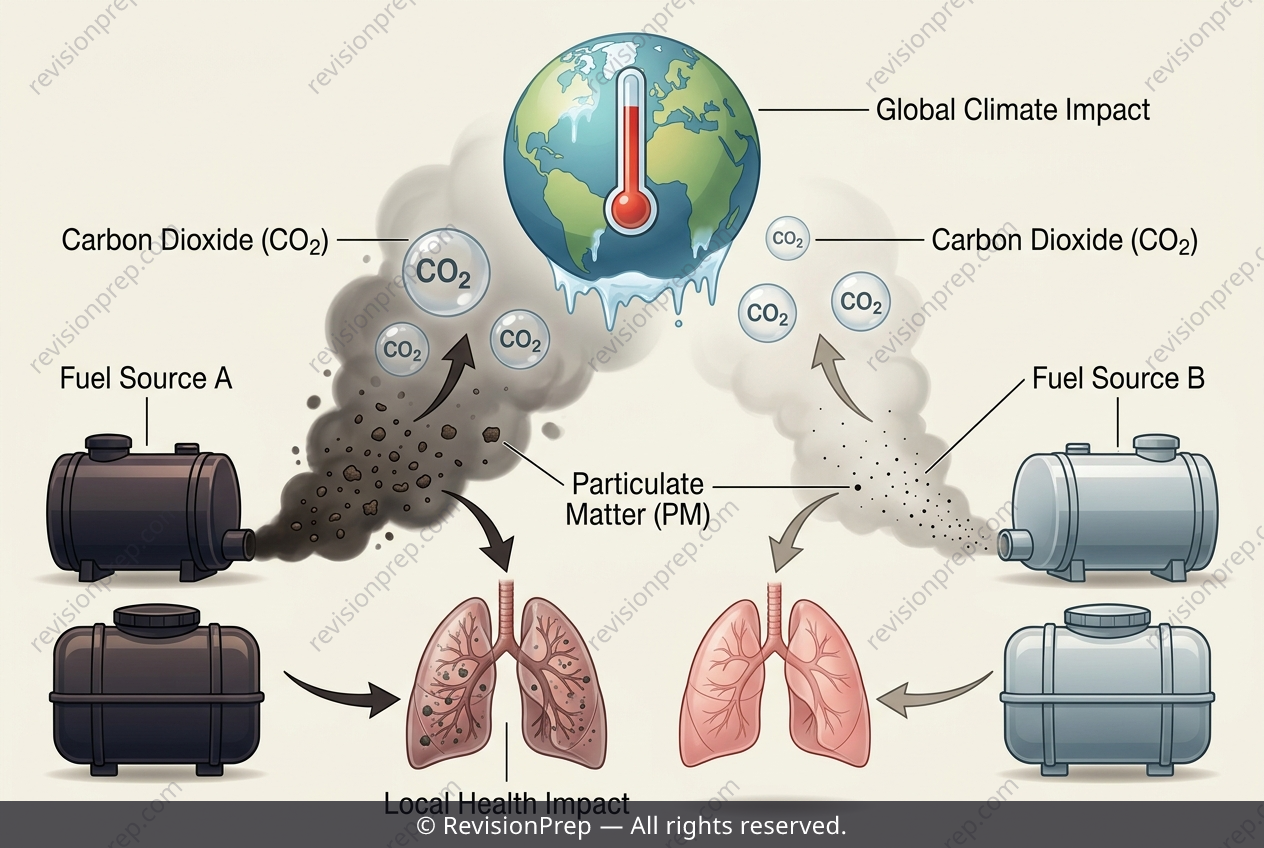
Chemistry: Diesel vs CNG Buses: Mastering Fuel Combustion Environmental Impact
When a fuel burns, it releases energy—but it also releases a chemical fingerprint of gases and particles that shape air quality and climate. The combustion of fuels, whether diesel or compressed natural gas (CNG), is never just a simple reaction; it is a trade-off between energy density, carbon dioxide output, and particulate matter (PM) emissions. This core concept—environmental impact assessment of fuel combustion—asks us to compare fuels not by their raw energy content alone, but by the pollutants they produce per unit of useful work. The key relationship here is that emissions scale directly with fuel consumption: CO₂ per kilometre equals the emission factor (kg of CO₂ per litre or cubic metre) multiplied by the fuel used per kilometre. But a deeper comparison emerges when you divide energy content by CO₂ emission factor, giving the energy delivered per kilogram of CO₂ released—a measure of carbon intensity. CNG, with its lower PM emission factor and slightly better energy-per-CO₂ ratio, appears cleaner on both fronts. However, the full picture also depends on real-world factors like methane leakage and infrastructure, which can offset apparent benefits. Understanding these connections helps evaluate real policy choices, such as replacing a diesel bus fleet.
Start practising IB questions today
150,000+ IB-styled questions, criteria-mapped and instantly accessible.