
Chemistry: Energy Efficiency in Aluminium Recycling for IB Chemistry
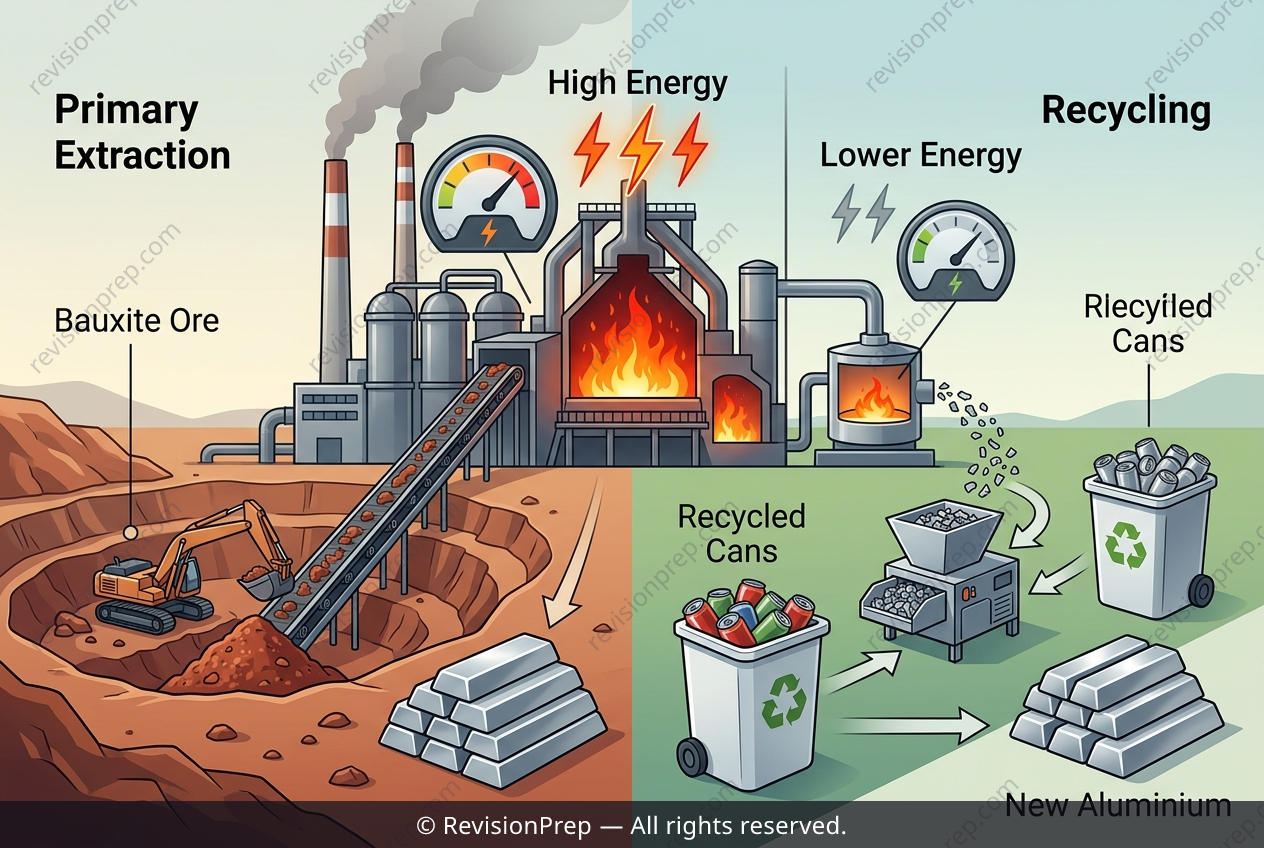
Melting aluminium is a seemingly simple process, yet it sits at the heart of one of chemistry’s most important modern debates: sustainability. At its core, this topic explores how the physical states of matter and the energy demands of industrial processing determine whether a material’s lifecycle is environmentally responsible. The equation Al(s) → Al(l) captures the essence of the change, but the real story lies in what that arrow represents—a transformation that requires no new chemical bonds, only the input of thermal energy to overcome the metallic lattice’s structure. Understanding why this matters requires connecting the microscopic to the global. Melting is a physical change because the chemical composition of aluminium remains identical; only particle arrangement and energy shift, making the process fully reversible. Yet this reversible step is the pivot point for sustainability. When aluminium is recycled, the energy required to reach that molten state is a mere fraction of what is needed to break down bauxite ore through electrolysis. This dramatic energy saving directly translates into reduced fossil fuel combustion, lower greenhouse gas emissions, and conservation of finite mineral reserves. By linking the simplicity of a phase change to the complexity of industrial energy flows, we see how a single chemical principle—state and energy—becomes the foundation for evaluating whether our material choices truly sustain the planet.
Start practising IB questions today
150,000+ IB-styled questions, criteria-mapped and instantly accessible.