
Chemistry: From Acid Rain to Heavy Metals: Water Purification and Health Risks
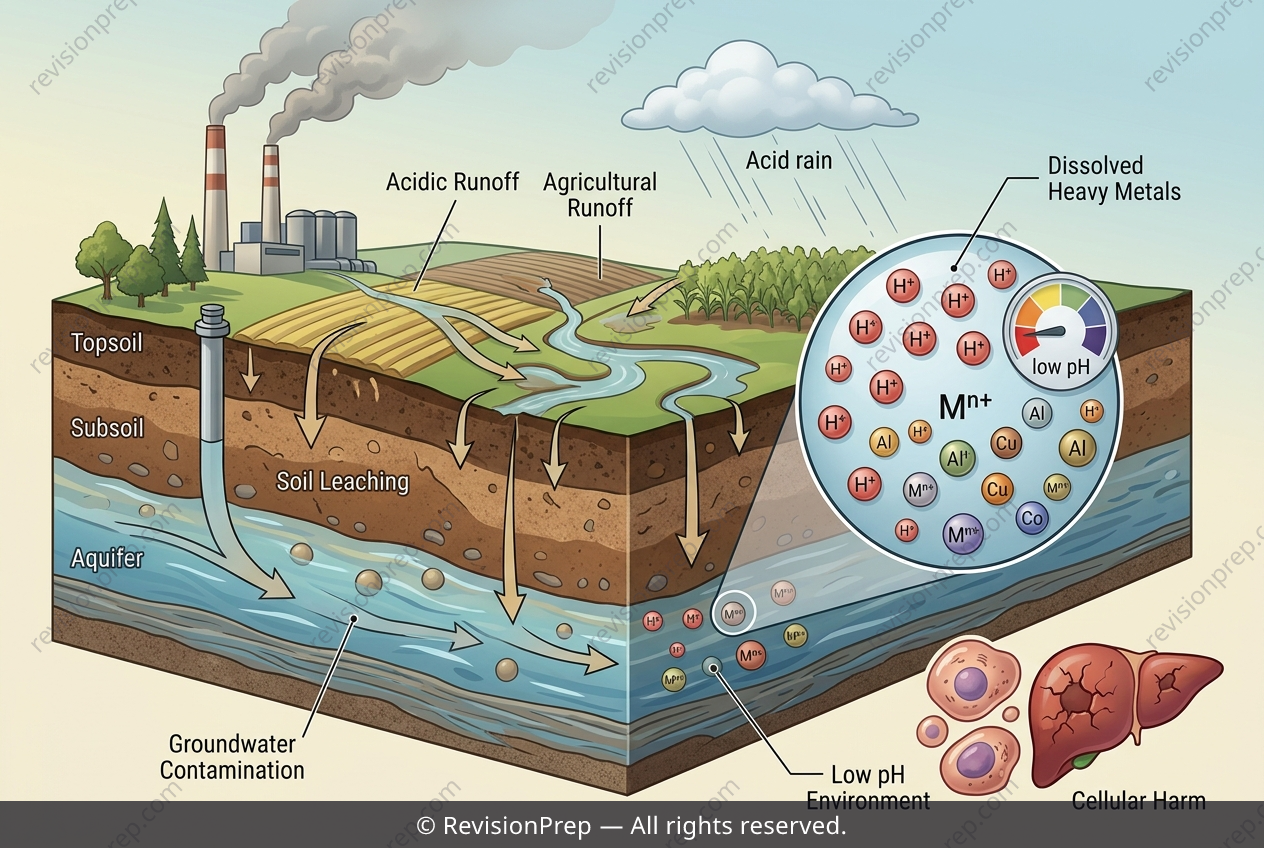
Water purification is rarely just about removing visible dirt—it is a chemical balancing act where invisible changes in pH can unlock a cascade of hidden dangers. In this topic, we explore how environmental pollution, water acidification, and heavy metal dissolution are deeply interconnected, ultimately determining whether a glass of water heals or harms. The core idea is simple: when water’s pH drops below the safe range of 6.5–8.5, it becomes chemically aggressive, and that aggression has a story rooted in the surrounding environment. Why does this matter? Because a shallow well in a developing region can silently turn toxic. Acid rain—formed when sulfur dioxide (SO₂) and nitrogen oxides (NOₓ) react with atmospheric moisture to create sulfuric and nitric acids—can infiltrate groundwater. Agricultural runoff carries acidic fertilisers, while decomposing organic matter produces humic and carbonic acids. Mining waste oxidises sulfides into sulfuric acid, and even natural minerals like iron pyrite can leach acidity. Once the pH falls below 5.5, the water becomes corrosive enough to dissolve heavy metals like lead, copper, and aluminium from pipes and soil. These metals then travel directly into the human body, where they can cause neurological and kidney damage—especially in children. The connection is a chain: pollution lowers pH, low pH mobilises metals, and metals compromise health. Understanding this chain is essential, because testing only pH misses the dissolved toxins that may already be present.
Start practising IB questions today
150,000+ IB-styled questions, criteria-mapped and instantly accessible.