
Chemistry: From Molarity to Marine Stress
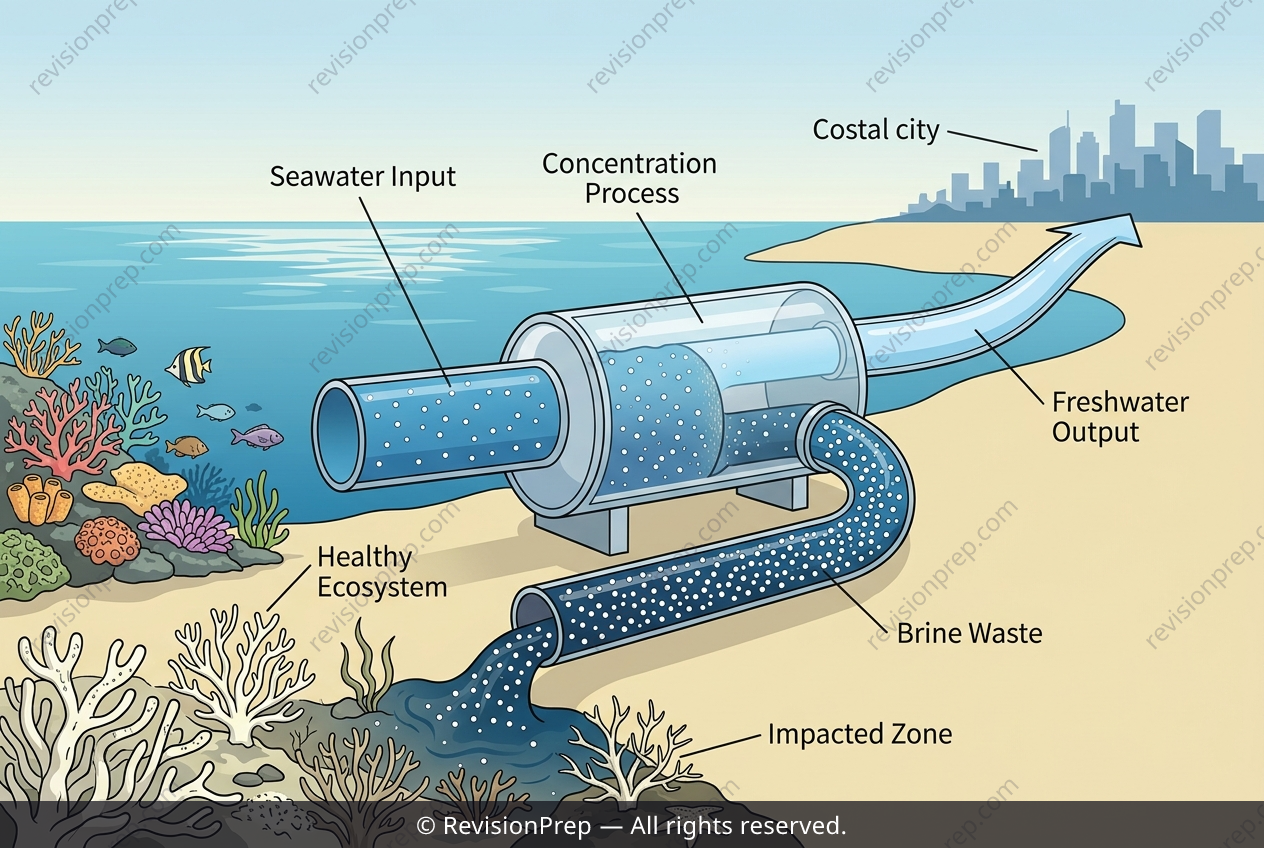
Concentration of solutions is the quantitative heart of chemistry—the bridge between the amount of solute dissolved and the volume of solvent that carries it. In environmental chemistry, this relationship becomes a tool for tracking matter through real-world systems, as expressed by the core formula n = c × V (moles = concentration × volume). When a reverse osmosis plant processes seawater, it doesn’t destroy salt; it simply redistributes it. The same moles of NaCl that enter in the feed water must exit in the freshwater and the concentrated brine, a conservation principle that lets us calculate the brine volume from its higher concentration. Why does this matter? Because the brine’s density—a direct physical consequence of its elevated NaCl concentration—dictates its fate in the ocean. Denser than the surrounding seawater, the brine sinks and forms a persistent, high-salinity layer near the seafloor. This layer disrupts osmotic balance in benthic organisms, drawing water out of their cells and causing dehydration and mortality. Thus, a simple concentration calculation reveals a chain of environmental consequences, linking molarity to density, density to stratification, and stratification to ecological stress. Understanding this connection is essential for designing sustainable desalination in water-scarce regions.
Start practising IB questions today
150,000+ IB-styled questions, criteria-mapped and instantly accessible.