
Chemistry: Heterogeneous Catalysis Through Catalytic Converters
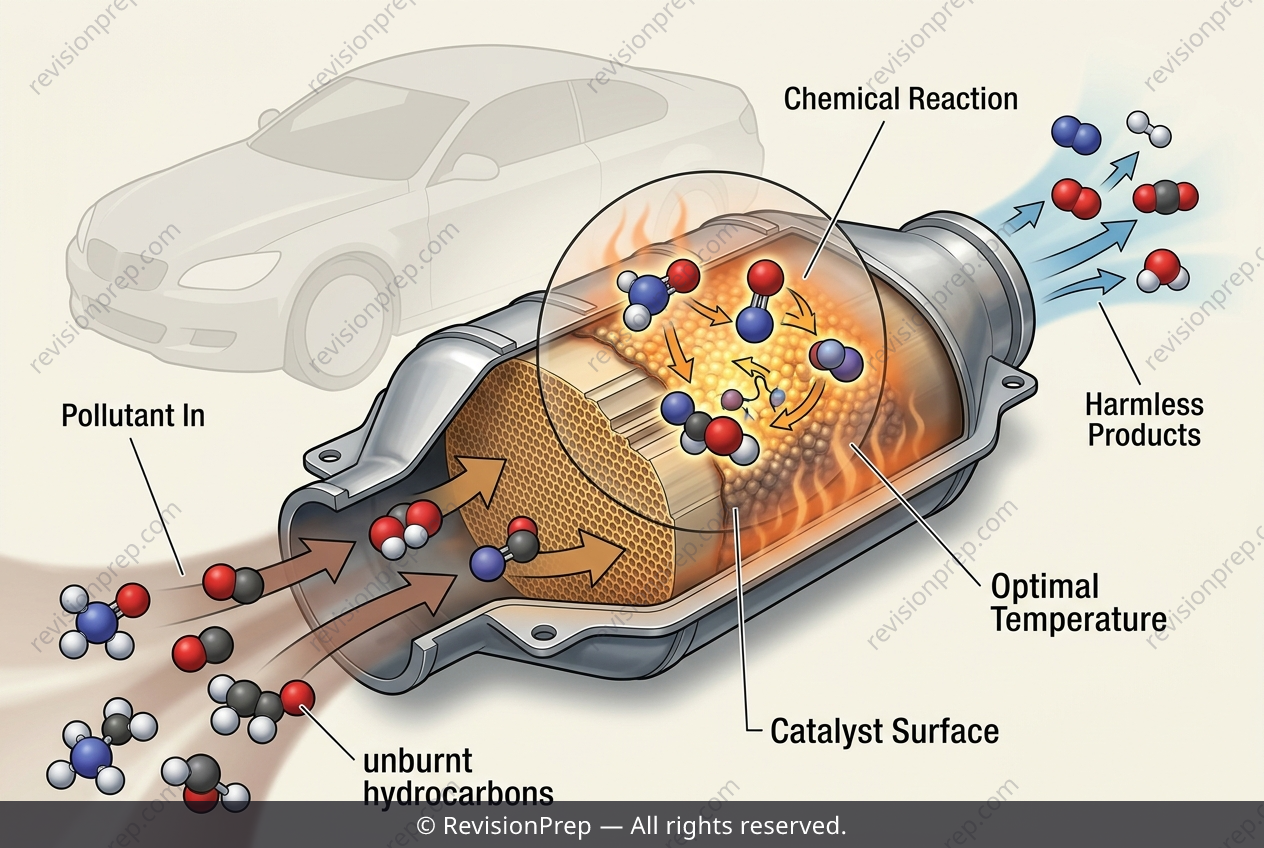
Catalytic converters are a cornerstone of environmental chemistry, showcasing how heterogeneous catalysis is applied on a global scale to mitigate air pollution. At their core, these devices use solid platinum-group metal catalysts to accelerate the breakdown of harmful gaseous pollutants from internal combustion engines, transforming them into less toxic substances before they enter the atmosphere. The chemistry hinges on surface reactions where reactant gases adsorb onto the metal catalyst, weakening their bonds and allowing for more efficient conversion. For nitrogen oxides (NOx), a primary contributor to acid rain and photochemical smog, the converter facilitates their reduction to harmless nitrogen gas (N₂) and water (H₂O). This process is highly effective, but it is not a universal solution. The technology has critical limitations: it cannot remove sulfur dioxide (SO₂), another major acid rain precursor, and its efficiency plummets below roughly 300 °C, meaning cold starts produce significant untreated emissions. Understanding these mechanisms and constraints reveals both the power and the boundaries of catalytic solutions in real-world environmental remediation.
Start practising IB questions today
150,000+ IB-styled questions, criteria-mapped and instantly accessible.