
Chemistry: Magnetic Separation and Eddy Currents for IB Chemistry
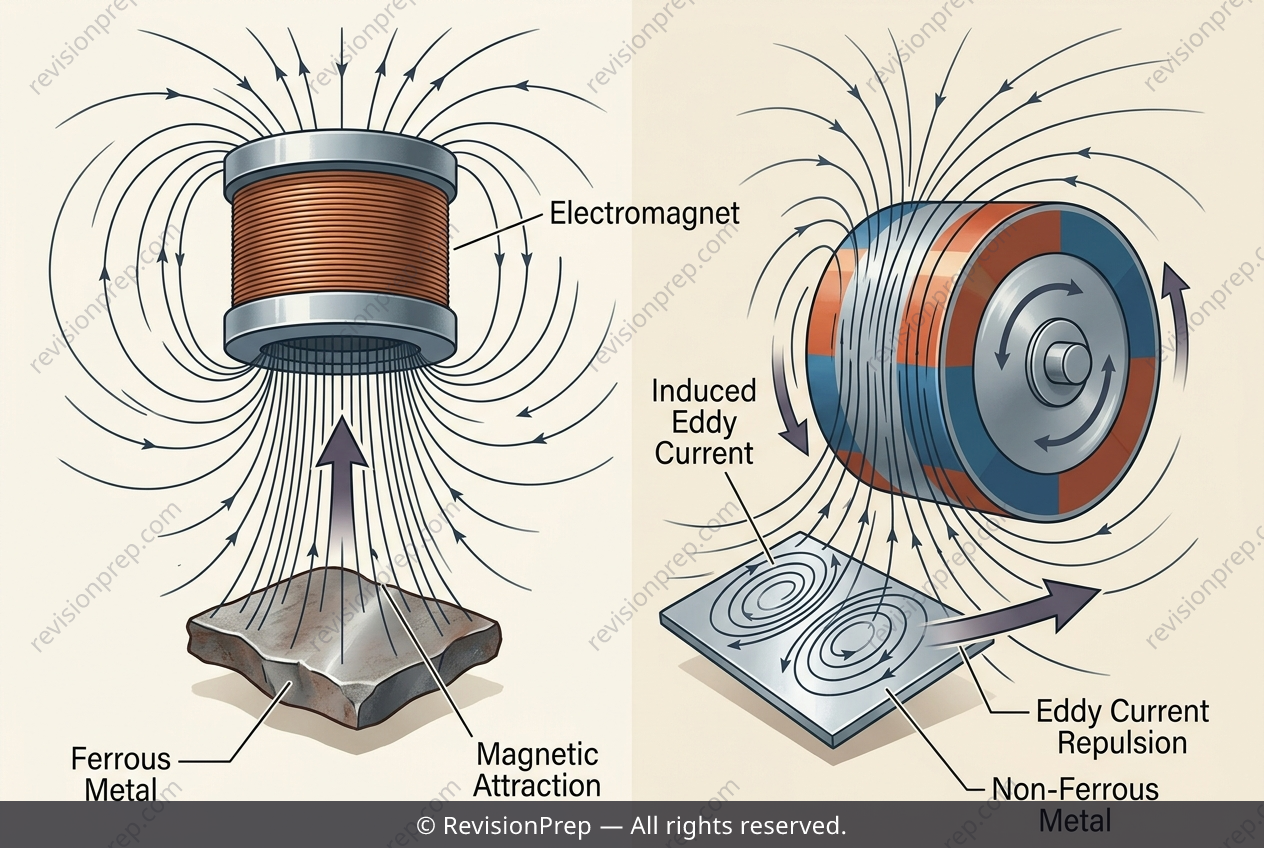
Recycling mixed waste isn’t just about sorting by hand—it’s a masterclass in applied physics. At the heart of modern material recovery lies electromagnetic induction, the process by which a changing magnetic field creates circulating electric currents in conductors. This principle, combined with the magnetic properties of different materials, allows recycling plants to automatically separate metals from plastics and glass at scale. The key distinction is between ferromagnetic materials like iron and steel, which are strongly attracted to magnets, and non-ferromagnetic conductors like aluminium, which are not. In a typical facility, a conveyor belt carries waste past two devices. The first is a magnetic separator—a powerful electromagnet that simply pulls ferrous metals out of the stream. The second is an eddy current separator, which uses a rapidly rotating drum with alternating magnetic poles. As the drum spins, its changing field induces eddy currents in nearby non-ferrous metals. These currents generate their own opposing magnetic field, repelling the metal away from the belt. Crucially, ferrous metals are too strongly attracted to the drum to be repelled, so the two systems work in complementary roles—one for attraction, one for repulsion—to efficiently sort mixed waste.
Start practising IB questions today
150,000+ IB-styled questions, criteria-mapped and instantly accessible.