
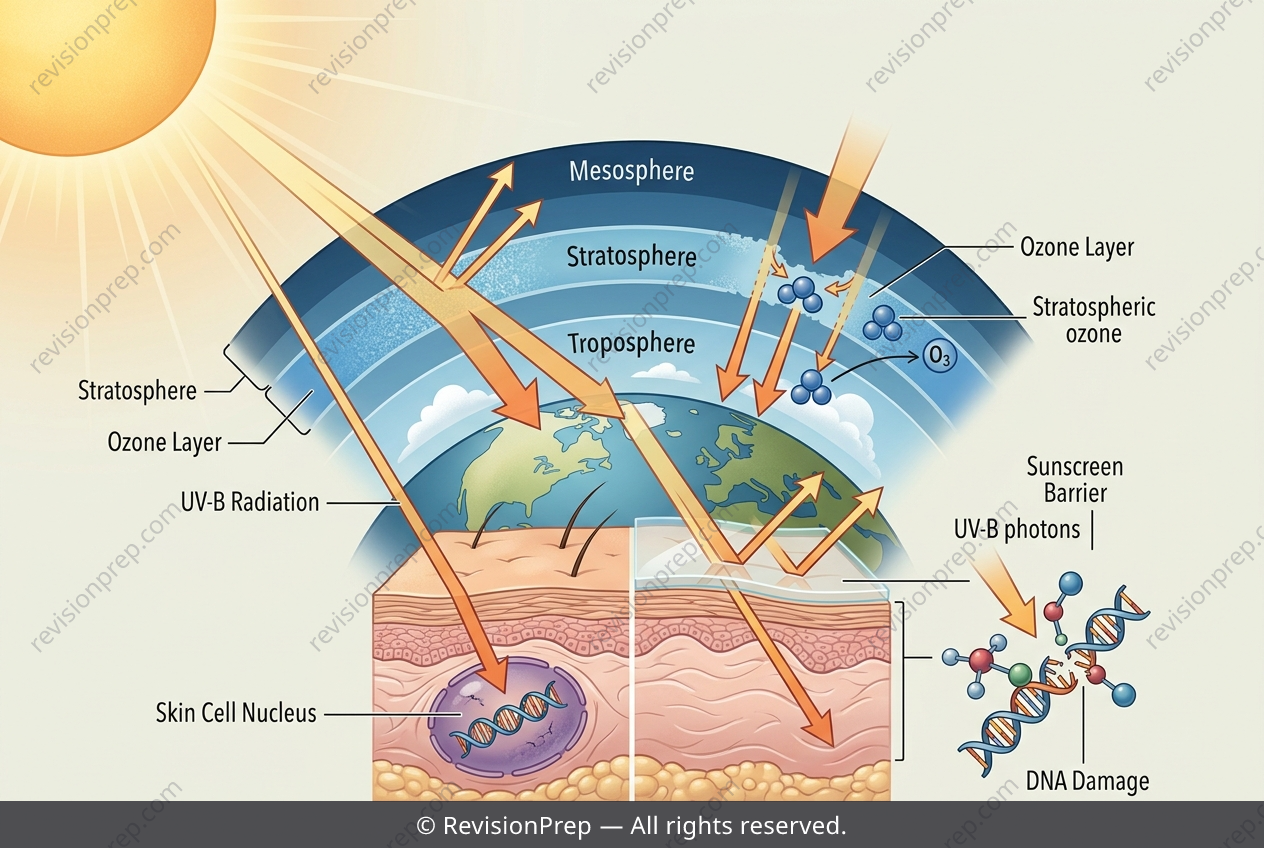
Chemistry: Ozone Depletion
The ozone layer is Earth’s natural sunscreen, a fragile shield of trioxygen molecules (O₃) in the stratosphere that absorbs the vast majority of the Sun’s harmful ultraviolet radiation. Without it, life as we know it would be bathed in dangerous energy. The core chemistry here is a delicate balance: UV-C breaks O₂ into oxygen atoms, which then combine with O₂ to form O₃, while UV-B and UV-C are absorbed in the process. However, human-made chlorofluorocarbons (CFCs) disrupt this cycle—when UV radiation strikes a CFC molecule, it releases a chlorine atom that catalytically destroys thousands of ozone molecules, thinning the shield. This depletion matters because it directly links atmospheric chemistry to human biology. As the ozone layer weakens, more UV-B reaches the ground, and that extra energy interacts with living tissue. The most critical effect is on DNA: UV-B photons can cause mutations in skin cells, leading to skin cancer, alongside cataracts and immune suppression. While sunscreen offers a first line of defence, it is not a perfect barrier—its active ingredients degrade under UV exposure and wash off with sweat or water, meaning protection fades unless reapplied. Understanding this mechanism—from CFCs to DNA damage—reveals why protecting the ozone layer is a matter of public health, not just atmospheric science.
Start practising IB questions today
150,000+ IB-styled questions, criteria-mapped and instantly accessible.