
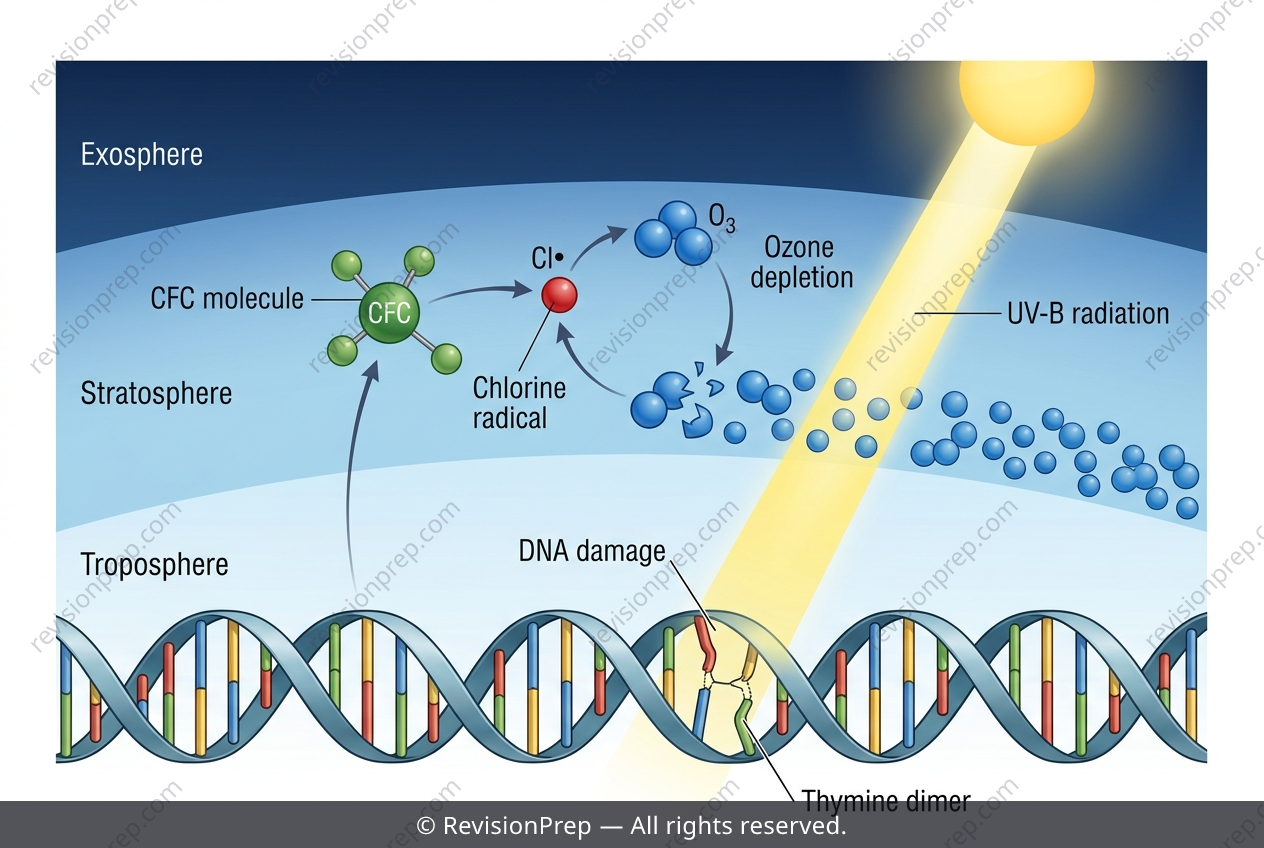
Chemistry: Ozone Depletion: From CFCs to Skin Cancer
The stratospheric ozone layer is Earth’s natural sunscreen, absorbing most of the sun’s harmful UV-B radiation (280–315 nm). But this delicate shield is under threat from chlorofluorocarbons (CFCs)—chemically stable compounds that drift upward and, once in the stratosphere, are split by UV light into chlorine radicals. These radicals then act as catalysts, destroying ozone in a two-step cycle: Cl + O₃ → ClO + O₂, followed by ClO + O → Cl + O₂. Because each chlorine atom can destroy thousands of ozone molecules before being deactivated, even small CFC emissions cause significant ozone loss, allowing more UV-B to reach the surface. The biological consequences are profound. UV-B penetrates skin cells and is absorbed by DNA, where it triggers the formation of thymine dimers—abnormal covalent bonds between adjacent thymine bases. These dimers distort the DNA helix, leading to replication errors. When cellular repair mechanisms fail, mutations accumulate in genes controlling cell division, potentially driving uncontrolled growth and skin cancers like melanoma. Yet, linking the CFC ban to reduced cancer rates is not straightforward: skin cancer trends are shaped by behavioural factors (sun exposure, sunscreen use, sunbeds) and improved diagnostics, making it difficult to isolate the ban’s true impact—a reminder that environmental policy benefits must be weighed against economic costs and complex real-world data.
Start practising IB questions today
150,000+ IB-styled questions, criteria-mapped and instantly accessible.