
Chemistry SL: Molar Mass and Energy Density
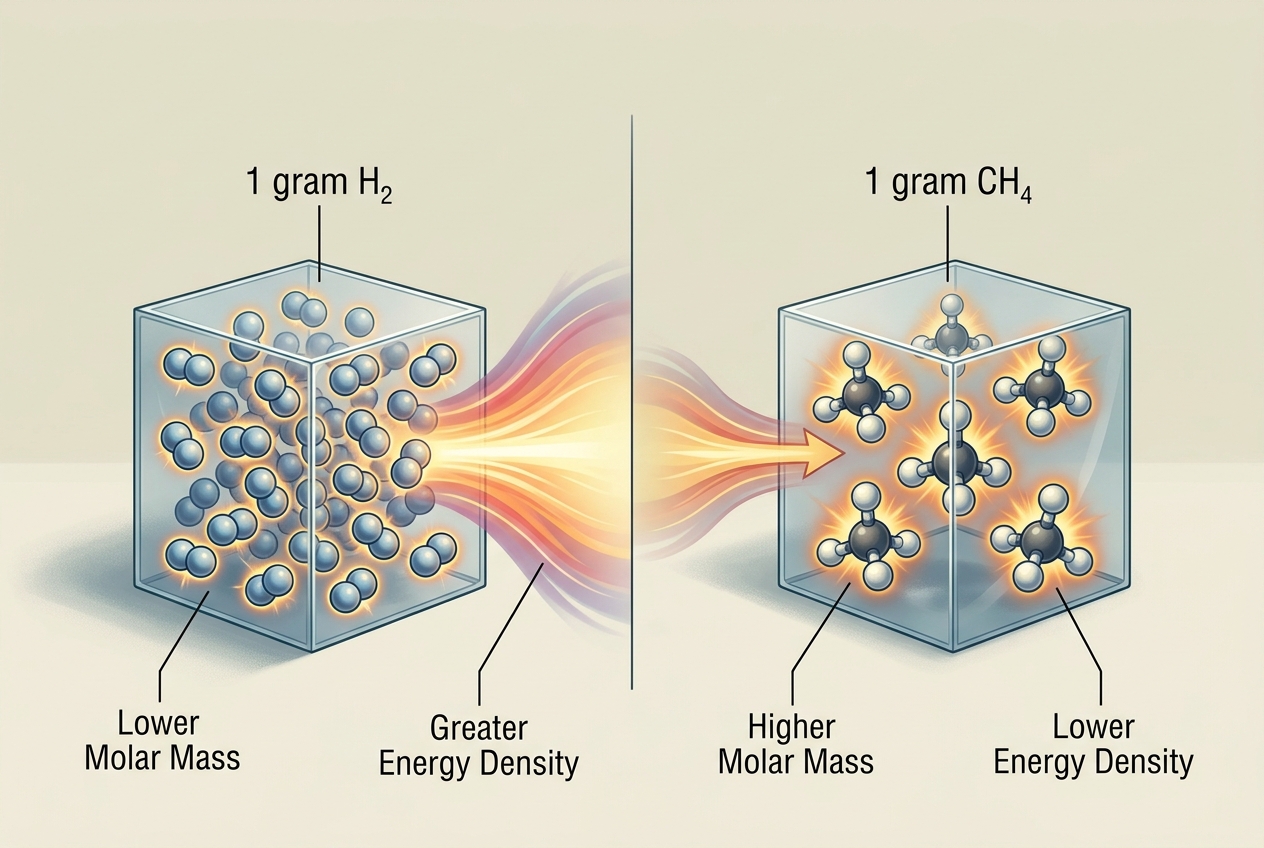
When comparing fuels, the raw energy released per mole is only half the story—what truly matters in real-world applications is how much energy you can extract from a given mass. This is where energy density comes in, defined as the enthalpy of combustion divided by molar mass (energy density = |ΔH_c| / M). While methane releases far more energy per mole than hydrogen, hydrogen’s molar mass is drastically smaller, meaning a single gram of hydrogen contains many more moles of fuel. This relationship between molar mass, moles per unit mass, and energy output is the key to understanding why lighter fuels often outperform heavier ones on a per-gram basis. The apparent paradox—a lower molar enthalpy yet a higher energy density—dissolves once you convert from moles to grams. Because hydrogen’s molar mass is roughly one-eighth that of methane, the number of moles in one gram of hydrogen is correspondingly larger, and this multiplicative effect more than compensates for the smaller energy release per mole. This concept underpins fuel selection in rocketry, automotive design, and energy storage, where mass is a premium. By linking the intensive property of molar enthalpy to the extensive reality of mass, you reveal the practical driver behind chemical reactivity.
Start practising IB questions today
150,000+ IB-styled questions, criteria-mapped and instantly accessible.