
Chemistry: What Dilution Math Can't Predict
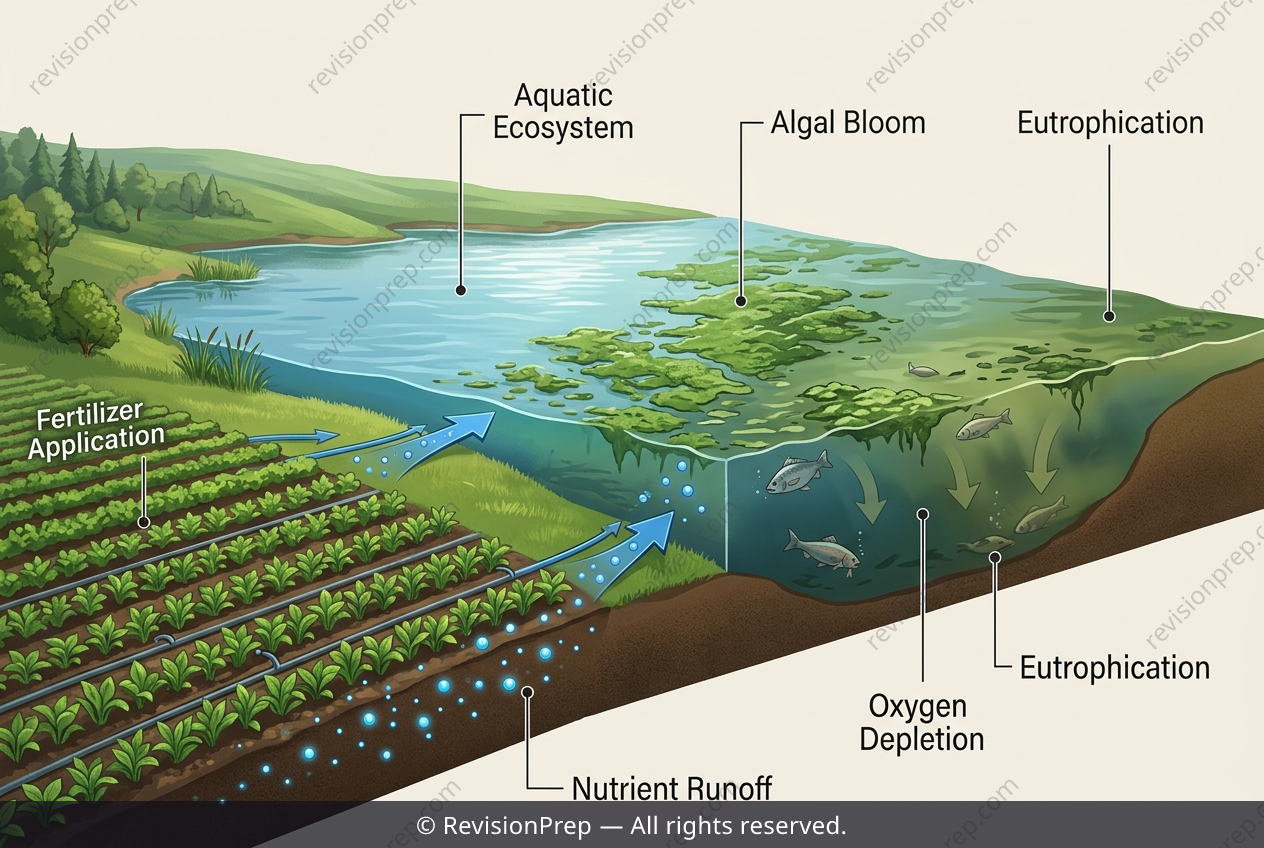
One of the most practical skills in chemistry is preparing a solution of exact concentration, yet the same calculation that helps a farmer mix fertilizer also reveals how human activity can disrupt an entire ecosystem. At its heart, this topic links the dilution formula C₁V₁ = C₂V₂ to the environmental consequences of nutrient runoff, showing how a simple lab equation scales up to real-world problems like eutrophication. The chemistry is straightforward: diluting a concentrated stock solution requires conserving the amount of solute, so the product of concentration and volume stays constant before and after mixing. But the biology and ecology that follow are far messier. When excess nitrate from agricultural runoff enters a lake, it acts as a nutrient spike, triggering rapid algal growth. As these algae die, decomposing bacteria consume dissolved oxygen, creating hypoxic conditions that suffocate fish and other aquatic life. The dilution calculation only predicts the concentration in the irrigation tank—not what actually reaches the lake. Real systems involve crop uptake, soil adsorption, denitrification, rainfall variability, and the lake’s own dilution and flow dynamics, all of which mean the true environmental impact depends on far more than the initial mixing ratio.
Start practising IB questions today
150,000+ IB-styled questions, criteria-mapped and instantly accessible.