
Chemistry: When a Small Mass Error Cascades
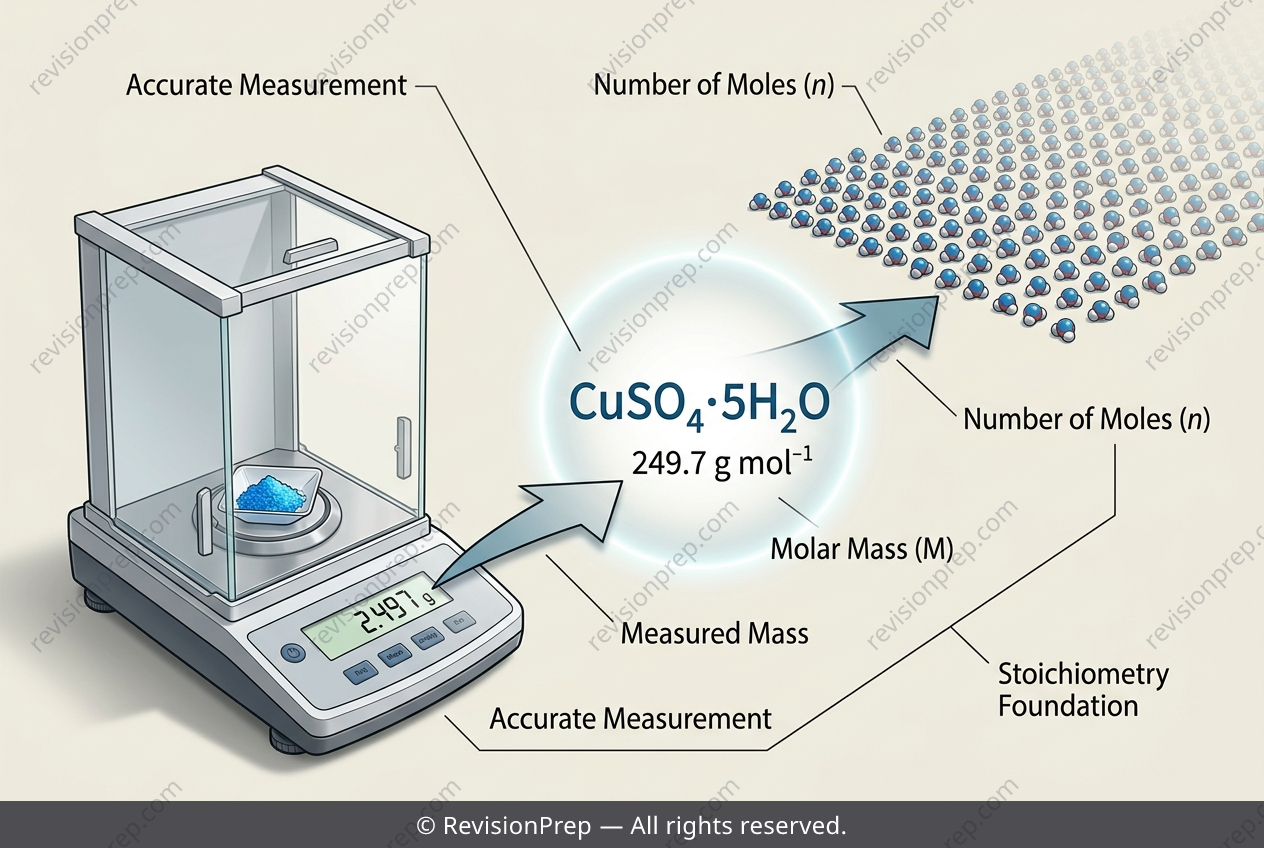
In chemistry, the mole is the bridge between the microscopic world of atoms and molecules and the macroscopic world we can measure in a lab. At its heart, the mole concept relies on a simple but powerful relationship: the number of moles (n) of a substance equals its measured mass (m) divided by its molar mass (M), or n = m/M. This single equation underpins nearly every quantitative calculation in chemistry, from preparing standard solutions to determining reaction yields. The accuracy of every subsequent calculation hinges on the precision of the initial mass measurement. When a student uses a digital balance to weigh a hydrated salt like copper(II) sulfate, that measured mass is the direct input for finding moles. Because the mole value is derived proportionally from mass, any error in the balance reading—whether from improper taring, spillage, or reading the scale too early—propagates directly into the calculated moles. This error then cascades into concentration calculations and stoichiometric ratios, meaning a tiny mass mistake can invalidate an entire experiment. Understanding this chain—mass to moles to concentration—is essential for mastering quantitative chemistry.
Start practising IB questions today
150,000+ IB-styled questions, criteria-mapped and instantly accessible.