
Chemistry: When Boiling Points Blur Purity
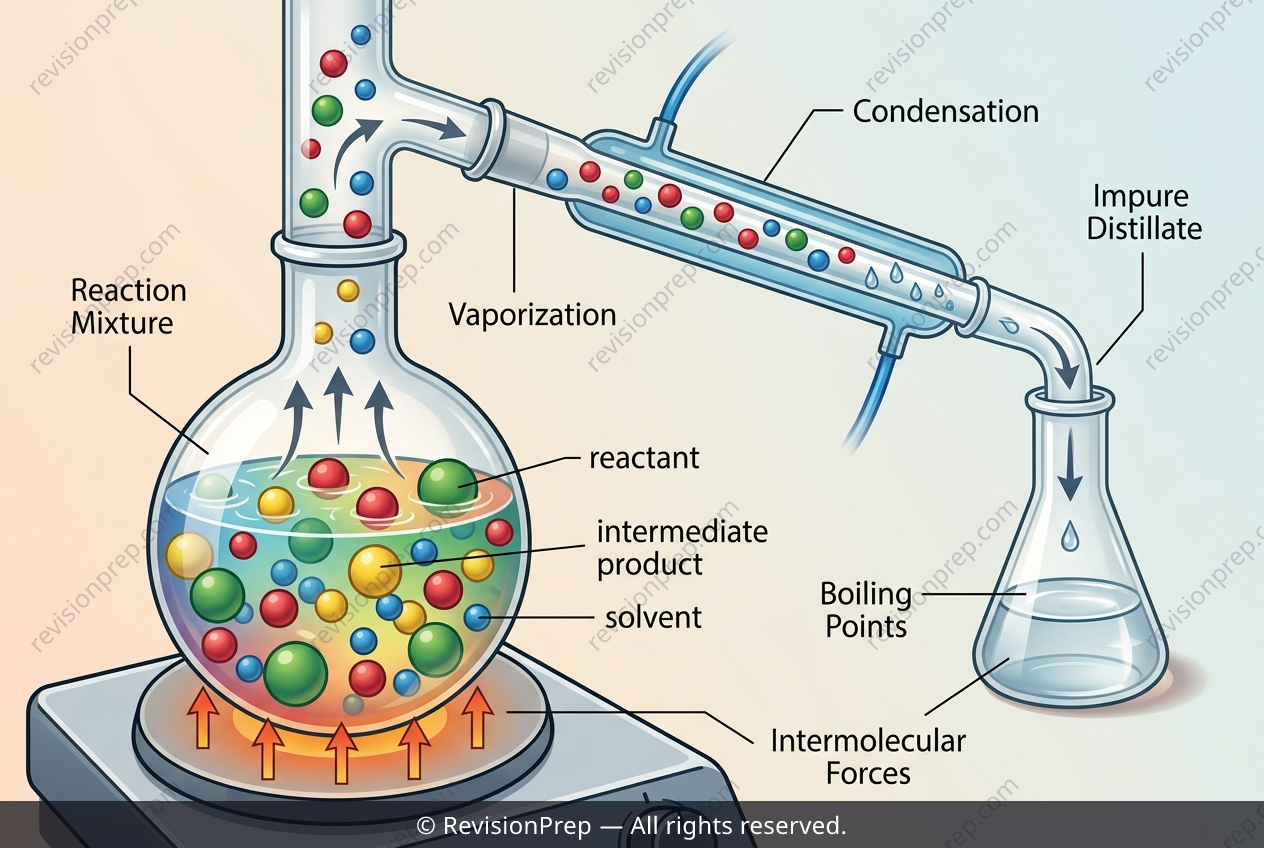
In the IB Chemistry SL syllabus, the classification of matter is a foundational idea that extends far beyond simple labels of elements, compounds, and mixtures. When we move into laboratory preparations, the distinction between a pure substance and a mixture becomes a practical challenge, particularly when a reaction produces multiple products or leaves unreacted starting materials behind. The oxidation of ethanol by acidified potassium dichromate(VI) is a classic example, where the intended product is ethanoic acid, but the reality of the reaction vessel is far more complex. The key to evaluating purity lies in understanding both the reaction’s selectivity and the physical properties of the components involved. While the dichromate oxidant can convert ethanol to ethanoic acid, the process is not perfectly efficient, leaving unreacted ethanol in the mixture. Furthermore, distillation, a common purification technique, is limited by boiling points: ethanol (78 °C), water (100 °C), and ethanoic acid (118 °C) are close enough that they co-distil, meaning the collected distillate is a mixture, not a single compound. A simple acidity test, such as blue litmus turning red, confirms the presence of an acid but cannot prove the absence of other volatile substances. Thus, purity is a claim that requires evidence beyond a single qualitative observation.
Start practising IB questions today
150,000+ IB-styled questions, criteria-mapped and instantly accessible.