
Chemistry: Why Fixed Sensors Miss the Full Picture of NO₂ Exposure
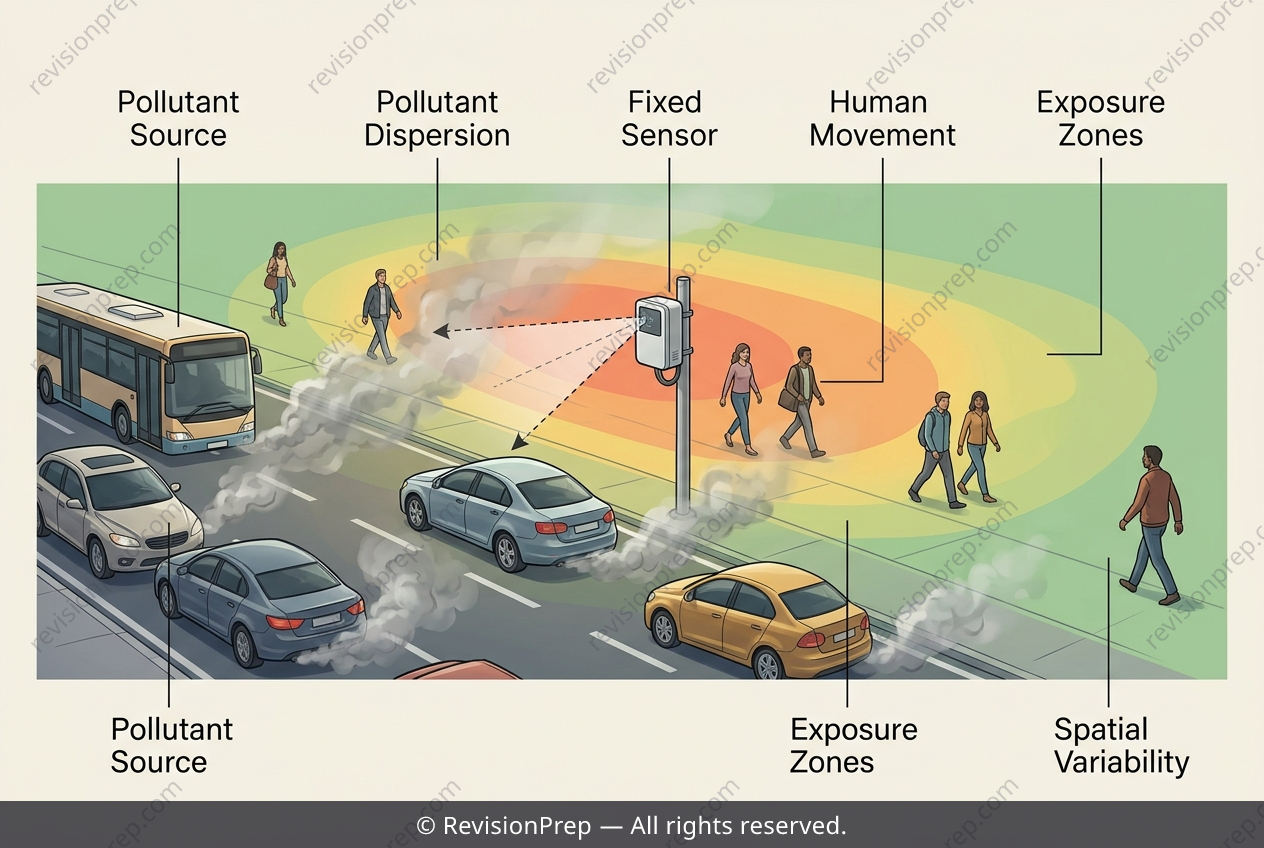
Nitrogen dioxide (NO₂) from vehicle exhaust is a major urban air pollutant, and cities rely on fixed roadside sensors to track its concentration and guide public health policy. These sensors provide the data behind practical measures such as low emission zones (LEZs), where the most polluting vehicles are restricted from entering areas that exceed safe NO₂ thresholds — a direct application of monitoring to reduce population exposure. But the story doesn’t end at the sensor. Fixed monitors measure NO₂ at one static point, capturing a snapshot of the air at that exact location. People, however, are mobile: they commute, move between indoor and outdoor spaces, and spend time far from the roadside. This creates a fundamental mismatch — the sensor’s data may overestimate exposure for someone who rarely passes that spot, or underestimate it for a pedestrian lingering beside a busy junction. Understanding this limitation is crucial: it reveals why static monitoring alone cannot represent true personal exposure, and why dynamic, individual-level assessment is needed for accurate public health decisions.
Start practising IB questions today
150,000+ IB-styled questions, criteria-mapped and instantly accessible.