
Biology: One Molecular Block, One Silent Alarm
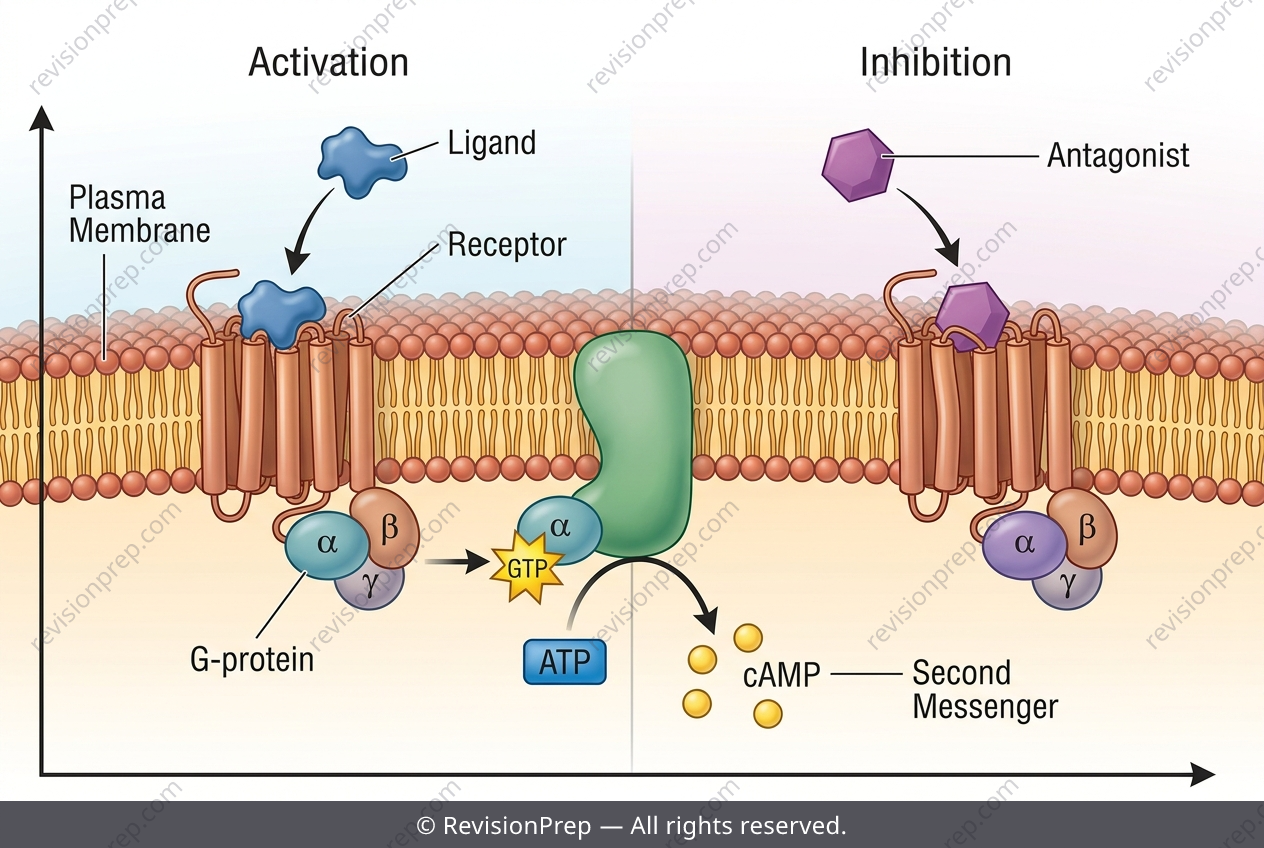
When your body faces a sudden threat, epinephrine—the “fight or flight” hormone—binds to β-adrenergic receptors on cardiac muscle cells, triggering a cascade that dramatically boosts heart rate and contraction strength. This process hinges on a G-protein coupled receptor (GPCR), a membrane-spanning protein that translates an extracellular signal into an intracellular response. The core of this mechanism lies in the G-protein’s activation: upon epinephrine binding, the α-subunit exchanges GDP for GTP, setting off a chain reaction that ultimately produces cyclic AMP (cAMP). What makes this system elegant is its division of labour between first and second messengers. Epinephrine, the first messenger, never enters the cell—it acts solely at the surface receptor. Instead, the signal is relayed inward by cAMP, the second messenger, which amplifies the original message. This is where receptor antagonism becomes clinically vital: drugs like propranolol competitively block the β-adrenergic receptor, preventing epinephrine from binding. With the receptor occupied, the G-protein remains inactive, no cAMP is generated, and the heart rate stays near its resting baseline—even during a stress response. Understanding this pathway reveals how a single molecular block can silence an entire physiological alarm.
Start practising IB questions today
150,000+ IB-styled questions, criteria-mapped and instantly accessible.