
Cell Wall Composition and Antimicrobial Specificity in IB Biology HL
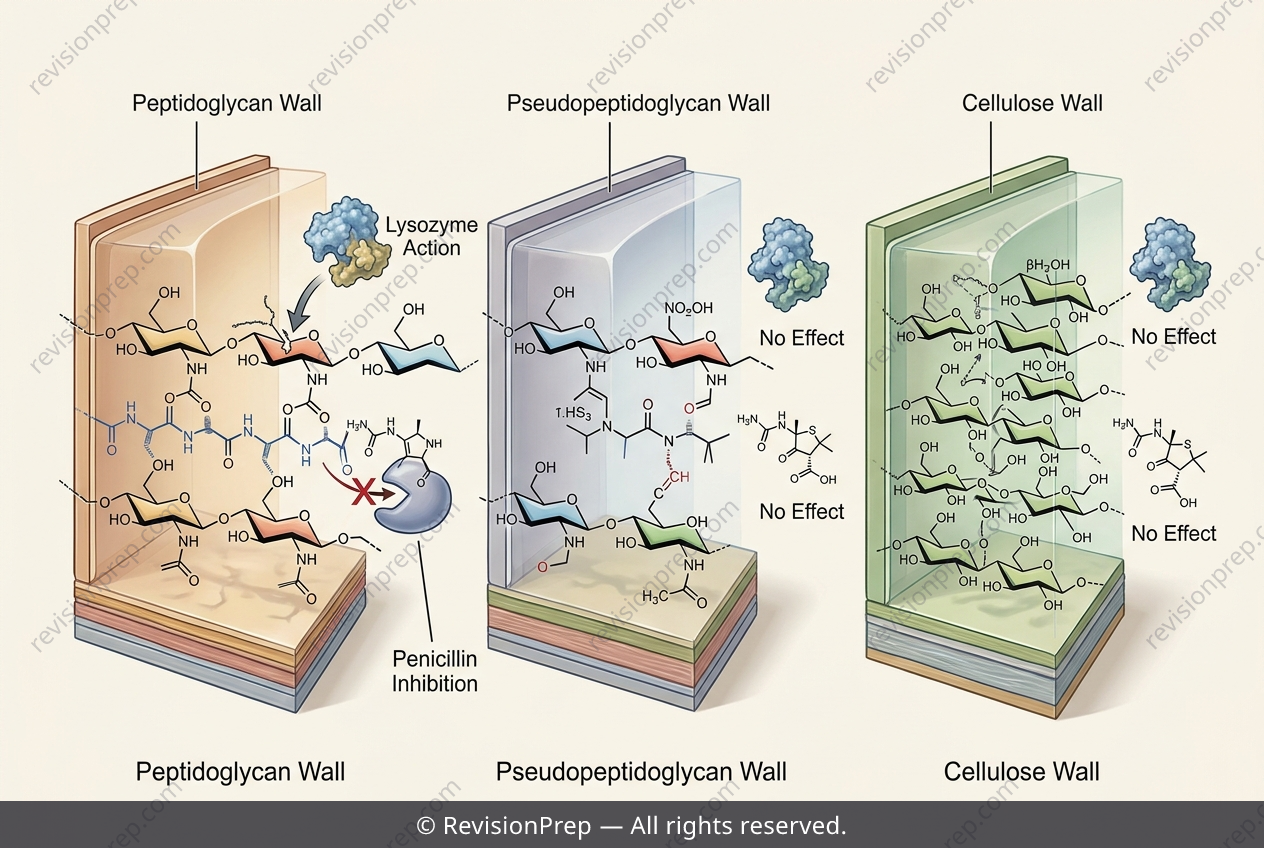
Cell walls are far more than rigid outer shells—they are molecular fingerprints that reveal an organism’s evolutionary domain. In the IB Biology HL topic of Unity and Diversity, the composition of these walls acts as a diagnostic key, distinguishing Bacteria, Archaea, and Eukarya through the presence or absence of specific polymers. Peptidoglycan, a mesh of glycan chains cross-linked by peptide bridges, is the hallmark of Domain Bacteria, while Archaea often use pseudopeptidoglycan with different sugar backbones, and Eukarya (like plants) build walls from cellulose, a β-1,4-glucan polymer. What makes this distinction powerful is how it links structure to function—and to medicine. Lysozyme, an enzyme that hydrolyses peptidoglycan, will lyse cells only if that polymer is present. Penicillin, meanwhile, blocks the transpeptidase enzyme that cross-links peptidoglycan, killing bacteria but leaving Archaea and Eukarya untouched. Thus, a simple set of tests—lysozyme lysis, penicillin sensitivity, and enzyme assays for pseudopeptidoglycan—can sort organisms into their correct domains. The relationships are direct: sensitivity to lysozyme and penicillin implies peptidoglycan with cross-linking; resistance implies an alternative wall chemistry, meaning the drug has no molecular target. This concept bridges evolutionary classification with antimicrobial specificity, showing why understanding molecular architecture is essential for both taxonomy and therapeutic design.
Start practising IB questions today
150,000+ IB-styled questions, criteria-mapped and instantly accessible.