
Chemistry: How Rate Data Reveals Reaction Order
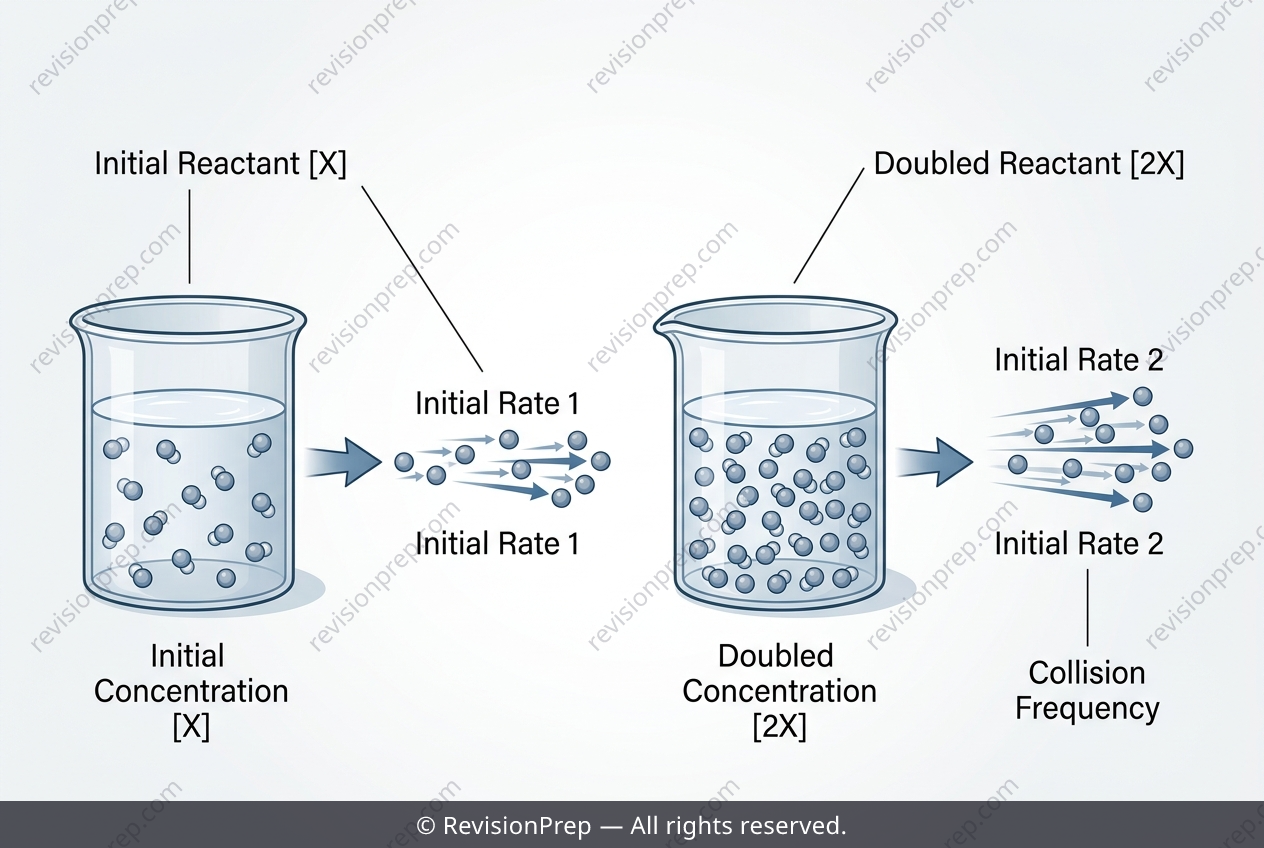
In chemistry, understanding how fast a reaction proceeds is just as important as knowing how far it will go. When studying reaction kinetics, the rate equation links the concentration of reactants to the speed of product formation, and the order of reaction with respect to each reactant tells you the precise mathematical relationship between them. For a reaction like magnesium reacting with hydrochloric acid, the initial rate—the instantaneous speed at the very start—is a powerful diagnostic tool. By systematically changing the concentration of one reactant while holding others constant, you can deduce the order. If a reaction is first order with respect to a reactant, the rate is directly proportional to its concentration: rate = k[A]¹. This means that if you double the concentration of that reactant, the initial rate will also double. This direct proportionality is the hallmark of first-order behaviour, distinguishing it from zero-order (where concentration has no effect) or second-order (where doubling concentration quadruples the rate). Recognising this pattern allows you to build the full rate law and predict how the reaction will behave under different conditions.
Start practising IB questions today
150,000+ IB-styled questions, criteria-mapped and instantly accessible.