
Chemistry: The One Electron That Defines Group 1
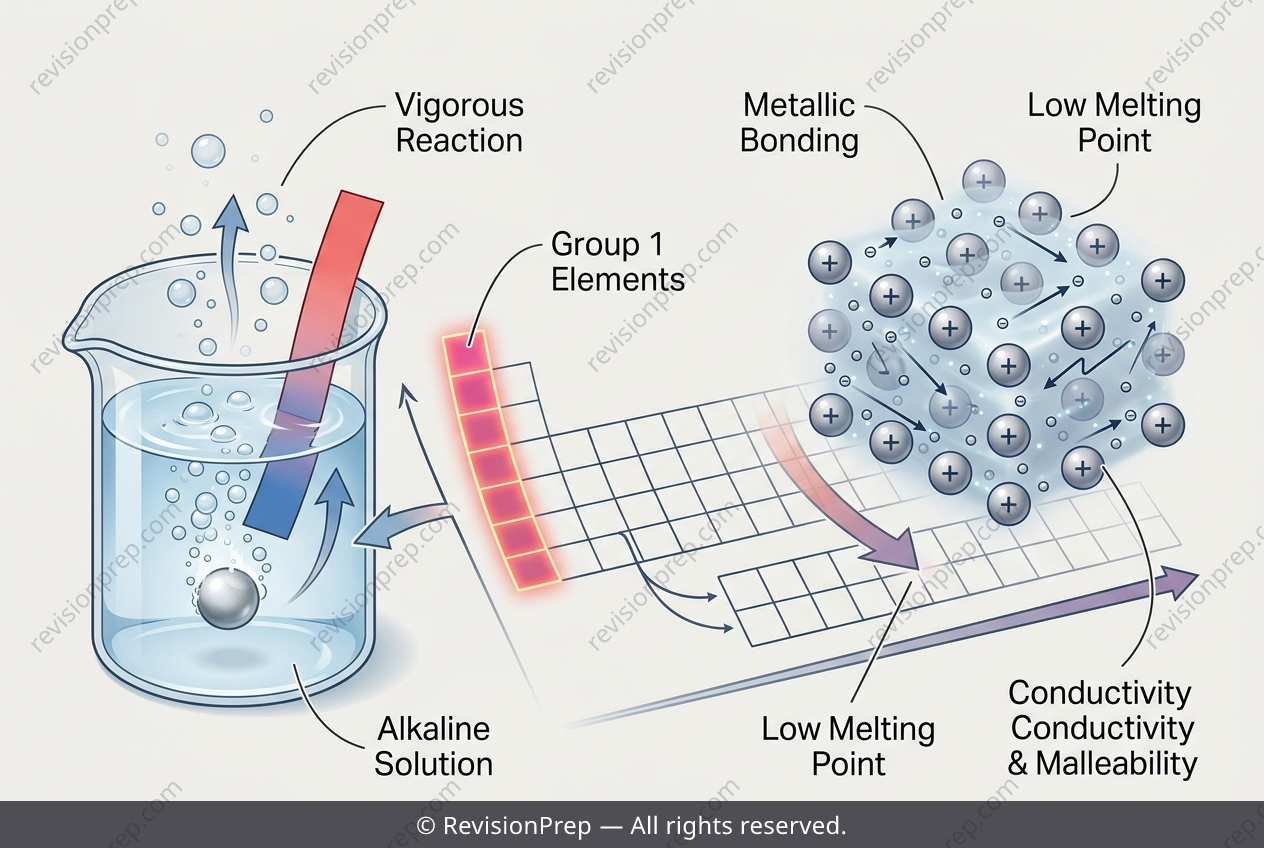
In the study of chemistry, matter is classified by its structure and the characteristic properties that arise from it. One of the most illuminating patterns in the periodic table is found in Group 1, the alkali metals—a family defined by a single valence electron, which dictates their physical and chemical behaviour. From lithium to caesium, these elements share a set of traits that make them instantly recognisable in a laboratory setting. Why does this matter? Because these properties are not random; they are direct consequences of atomic structure. The single outer electron is easily lost, making alkali metals highly reactive, especially with water. This reaction produces hydrogen gas and a metal hydroxide, which is alkaline—hence turning red litmus blue. Their metallic bonding, while strong enough to allow electrical conductivity and malleability, is relatively weak due to the large atomic radii, resulting in low melting points compared to most metals. Understanding how these traits interlock—reactivity, conductivity, malleability, and melting point—allows you to predict an element’s group identity from its behaviour alone, a core skill in classification.
Start practising IB questions today
150,000+ IB-styled questions, criteria-mapped and instantly accessible.