
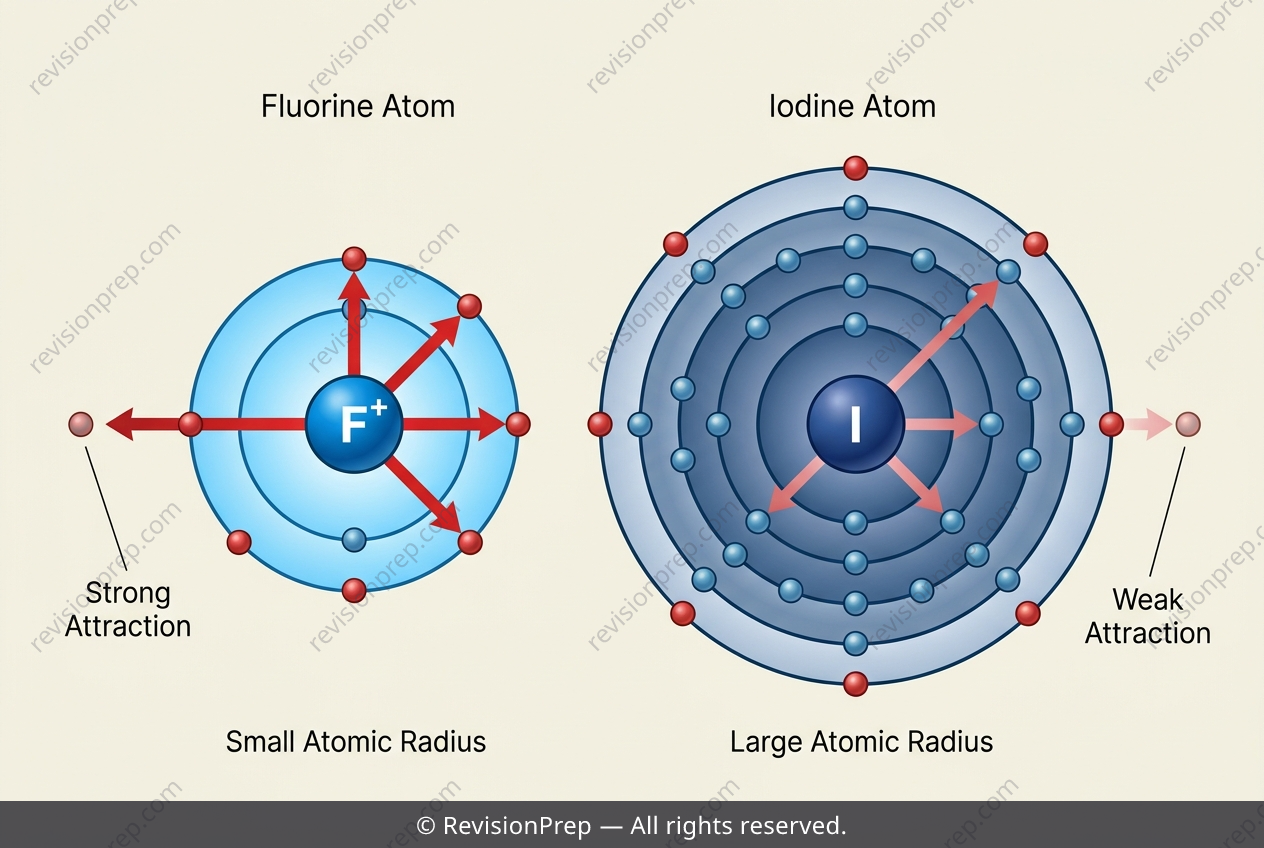
Chemistry: The Tug-of-War Behind Periodic Trends
Periodic trends are the predictable patterns in atomic properties—like atomic radius, electron shielding, and electronegativity—that emerge as you move across a period or down a group in the periodic table. These trends aren’t just abstract numbers; they explain real chemical behaviour, from why metals corrode to why some reactions are explosive while others need a nudge of heat. At the heart of these trends lies a tug-of-war between the positively charged nucleus and the negatively charged electrons. As you move down a group, each new element adds a full electron shell, increasing atomic radius and intensifying electron shielding—the way inner electrons block the pull of the nucleus on outer electrons. This weakens the effective nuclear charge felt by the outermost electrons. Conversely, moving across a period, electrons are added to the same shell while protons increase, shrinking the radius and strengthening the nucleus’s grip. Electronegativity—the ability to attract a shared electron pair—follows suit: it rises across a period and falls down a group. For halogens, all with seven valence electrons, the difference in reactivity with hydrogen comes down to this: a smaller radius means the nucleus can pull an incoming electron far more strongly, making fluorine far more reactive than iodine.
Start practising IB questions today
150,000+ IB-styled questions, criteria-mapped and instantly accessible.