
Chemistry: When Acids and Alcohols Make Scents
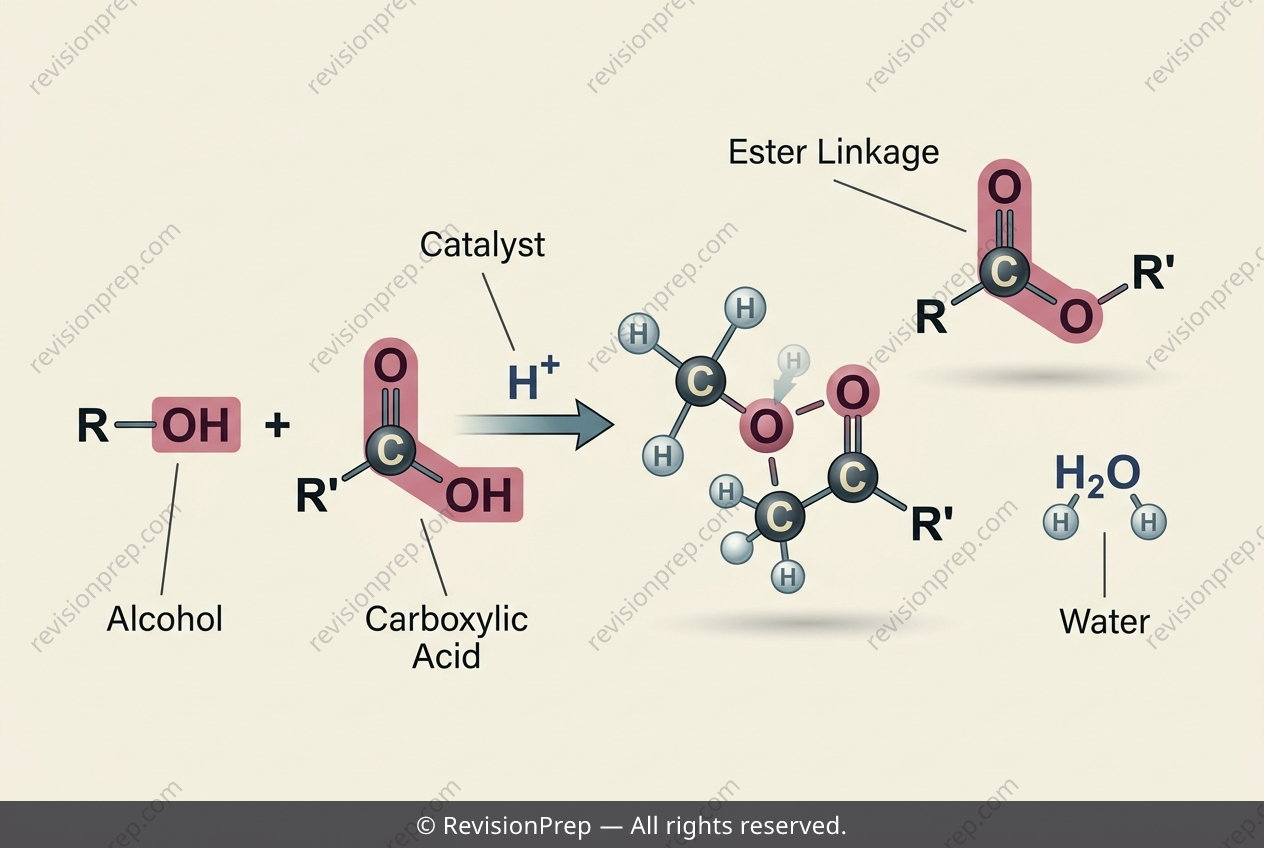
When ethanol meets ethanoic acid under the watchful eye of concentrated sulfuric acid, a quiet transformation occurs: the two molecules join hands, shedding a water molecule in the process. This is esterification, a condensation reaction that builds a new functional group—the ester linkage (–COO–)—from a carboxylic acid and an alcohol. The product, an ester, is the reason behind the sweet, fruity aromas found in nature, from ripe bananas to perfumes. The heart of this reaction lies in the functional group swap. The acid contributes its carboxyl group (–COOH), while the alcohol offers its hydroxyl group (–OH). Under acid catalysis, they combine, ejecting water and forming a molecule where the carbonyl (C=O) and single-bonded oxygen (–O–) sit adjacent. This specific arrangement—the ester linkage—is what defines the compound’s identity and its characteristic scent. Understanding this mechanism reveals how simple molecular parts rearrange into entirely new chemical personalities, a fundamental concept in organic chemistry that bridges laboratory synthesis and the everyday smells around us.
Start practising IB questions today
150,000+ IB-styled questions, criteria-mapped and instantly accessible.