
Chemistry: Why Heat Changes Ceramic Strength
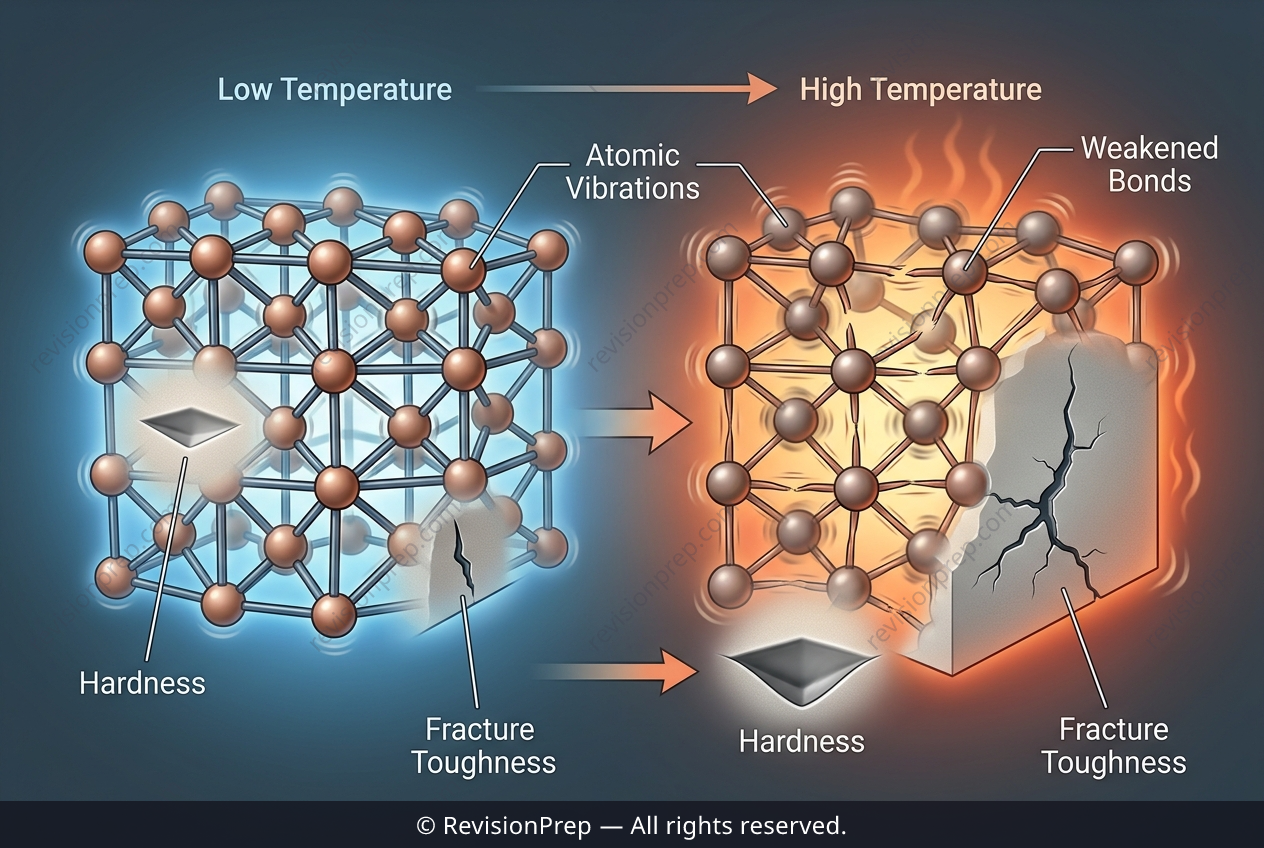
Ceramics are renowned for their exceptional hardness and resistance to deformation, making them indispensable in high-performance cutting tools. However, these mechanical properties are not immutable; they are profoundly sensitive to temperature. At the heart of this behaviour lies the relationship between atomic structure, thermal energy, and the material’s response to applied stress. When a ceramic is heated, the intensified vibration of its constituent atoms fundamentally alters how it interacts with external forces, shifting the balance between strength and brittleness. This thermal sensitivity directly governs two critical metrics: hardness and fracture toughness. Hardness, a measure of resistance to localised indentation, relies on strong, directional covalent or ionic bonds. Elevated temperatures weaken this resistance, as agitated atoms allow easier displacement under a load. Conversely, fracture toughness—the ability to resist crack propagation—depends on the material’s microstructure, particularly grain boundaries. At high temperatures, thermal expansion mismatches and microcrack formation become more pronounced, creating pathways for failure. Understanding this trade-off is essential for engineers, as it dictates safe operating limits and explains why a tool that performs flawlessly at room temperature may fail catastrophically in a hot machining process.
Start practising IB questions today
150,000+ IB-styled questions, criteria-mapped and instantly accessible.