
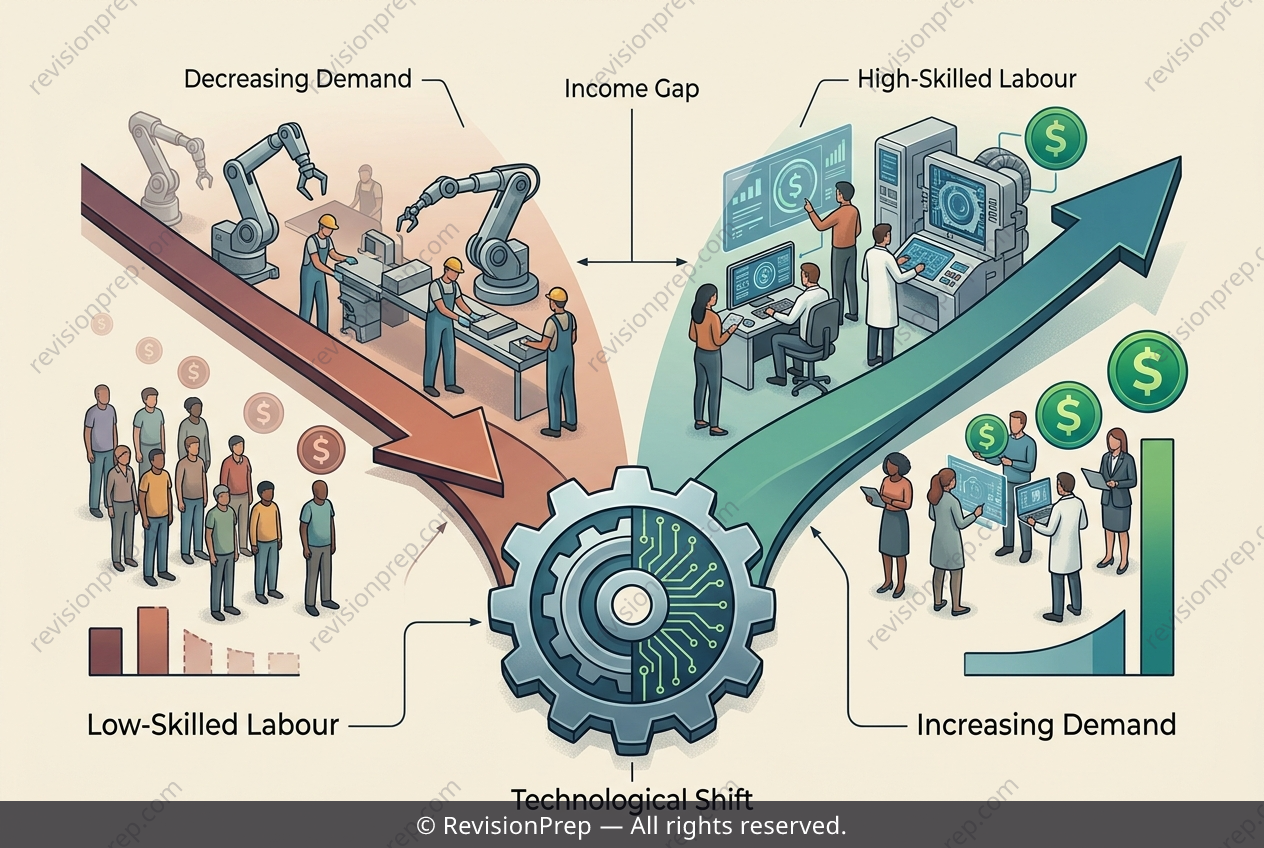
Economics: Automation Raises Some Wages, Cuts Others
Skill-biased technological change explains how automation can reshape labour markets by altering the demand for different types of workers. When new technology replaces routine tasks, the demand for low-skilled labour shifts left, from D1 to D2, pushing equilibrium wages and employment down. Meanwhile, demand for high-skilled workers who operate and maintain these systems shifts right, raising their wages and employment. This matters because it can widen wage differentials and deepen inequality. The mechanism runs through marginal revenue product: automation lowers it for low-skilled workers while raising it for high-skilled workers. In Country Beta, rapid automation of assembly-line jobs, reduced vocational training funding, and an eroded minimum wage compound this divide, concentrating wealth at the top and leaving the bottom 50% behind.
Start practising IB questions today
150,000+ IB-styled questions, criteria-mapped and instantly accessible.