
Economics: Can Policy Straighten the Lorenz Curve?
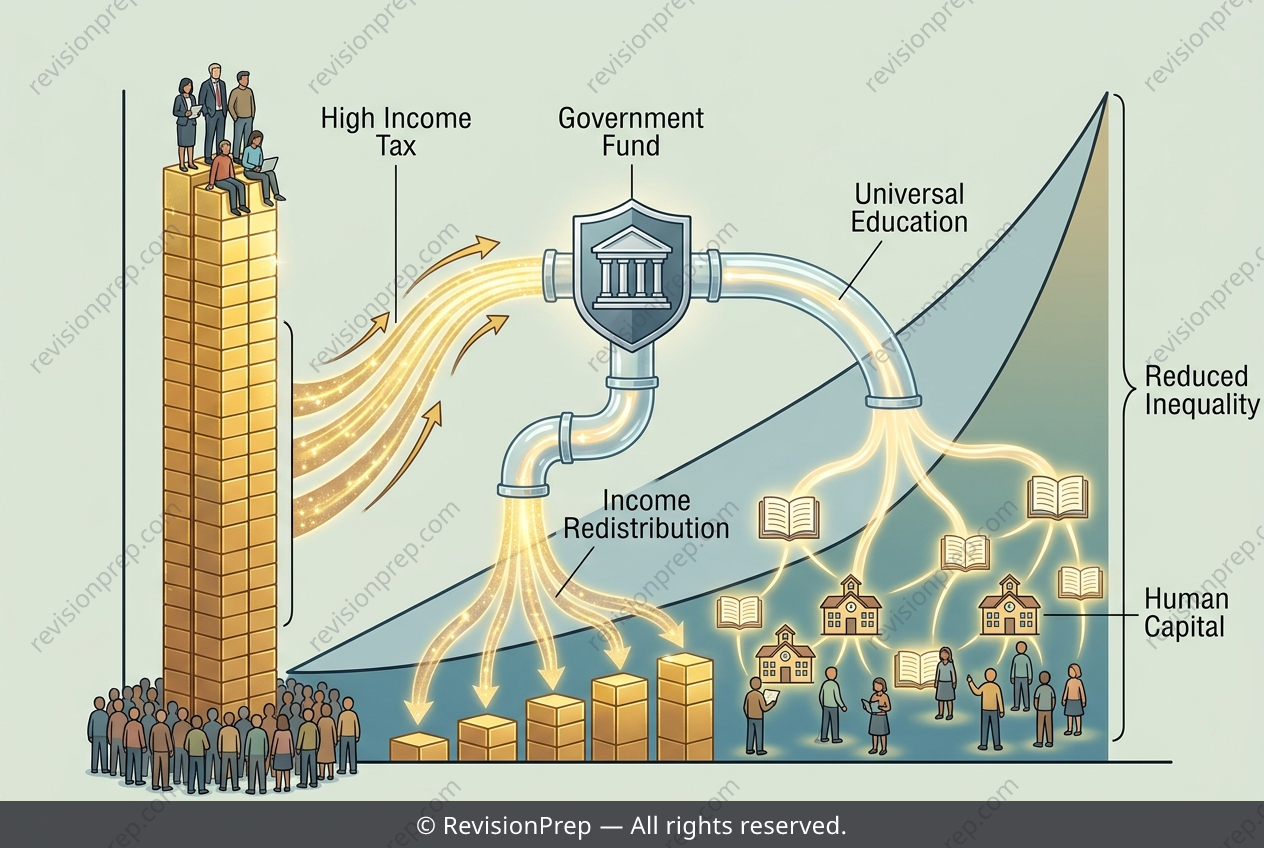
Inequality is one of the most persistent challenges in macroeconomics, and few tools capture it as vividly as the Lorenz curve. By plotting the cumulative percentage of population against the cumulative percentage of income, the curve reveals how unevenly national income is distributed. The further it bends from the 45° line of perfect equality, the higher the Gini coefficient — a value of 0.62, as in Country X, signals severe concentration, with the top 10% earning 45% of income while the bottom 40% receive just 12%. Understanding this matters because inequality shapes opportunity, mobility, and long-run growth. Governments can intervene through fiscal and social policy: progressive taxation shifts the burden toward higher earners, compressing disposable income, while universal primary education builds human capital among low-income households, raising their future earning potential. Together, these policies push the Lorenz curve toward the diagonal, shrinking the area that represents inequality.
Start practising IB questions today
150,000+ IB-styled questions, criteria-mapped and instantly accessible.