
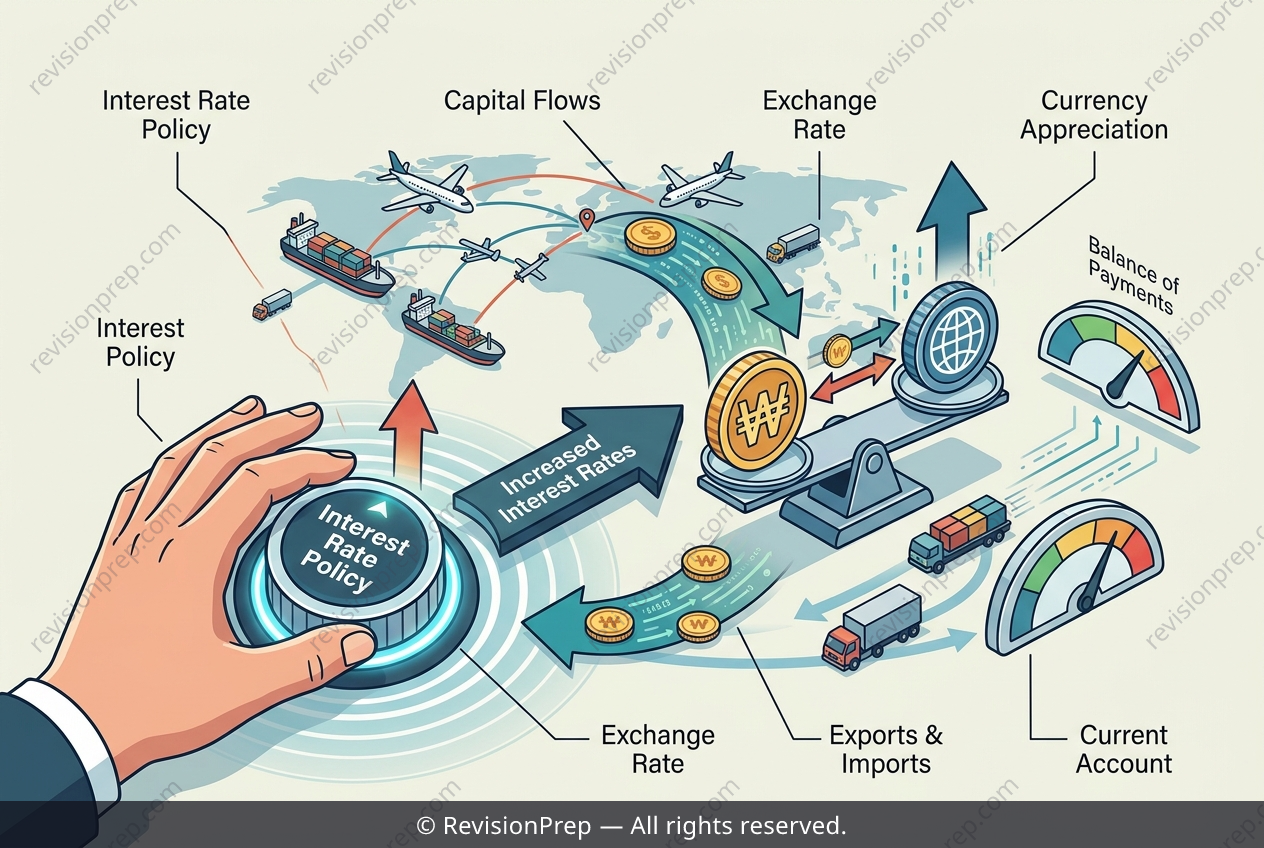
Economics: How Interest Rates Shape the Current Account
When a central bank raises interest rates unexpectedly, it sets off a chain reaction across currency markets and the balance of payments. Higher returns attract foreign capital inflows, shifting demand for the domestic currency to the right, from D₁ to D₂, and pushing the exchange rate up from e₁ to e₂. This appreciation is the visible signal that monetary policy and exchange rates are tightly interlinked. That currency movement then feeds into the current account. A stronger exchange rate raises the foreign-currency price of exports and lowers the domestic-currency price of imports, so export volumes fall while import volumes rise, reducing net exports (X − M). Whether the current account actually deteriorates depends on the Marshall-Lerner condition: the sum of the price elasticities of demand for exports and imports must exceed 1. Where elasticities are low, the effect may be muted, and the J-curve suggests the balance could worsen before adjusting.
Start practising IB questions today
150,000+ IB-styled questions, criteria-mapped and instantly accessible.