
Economics: How Monetary Policy Tackles Inflation
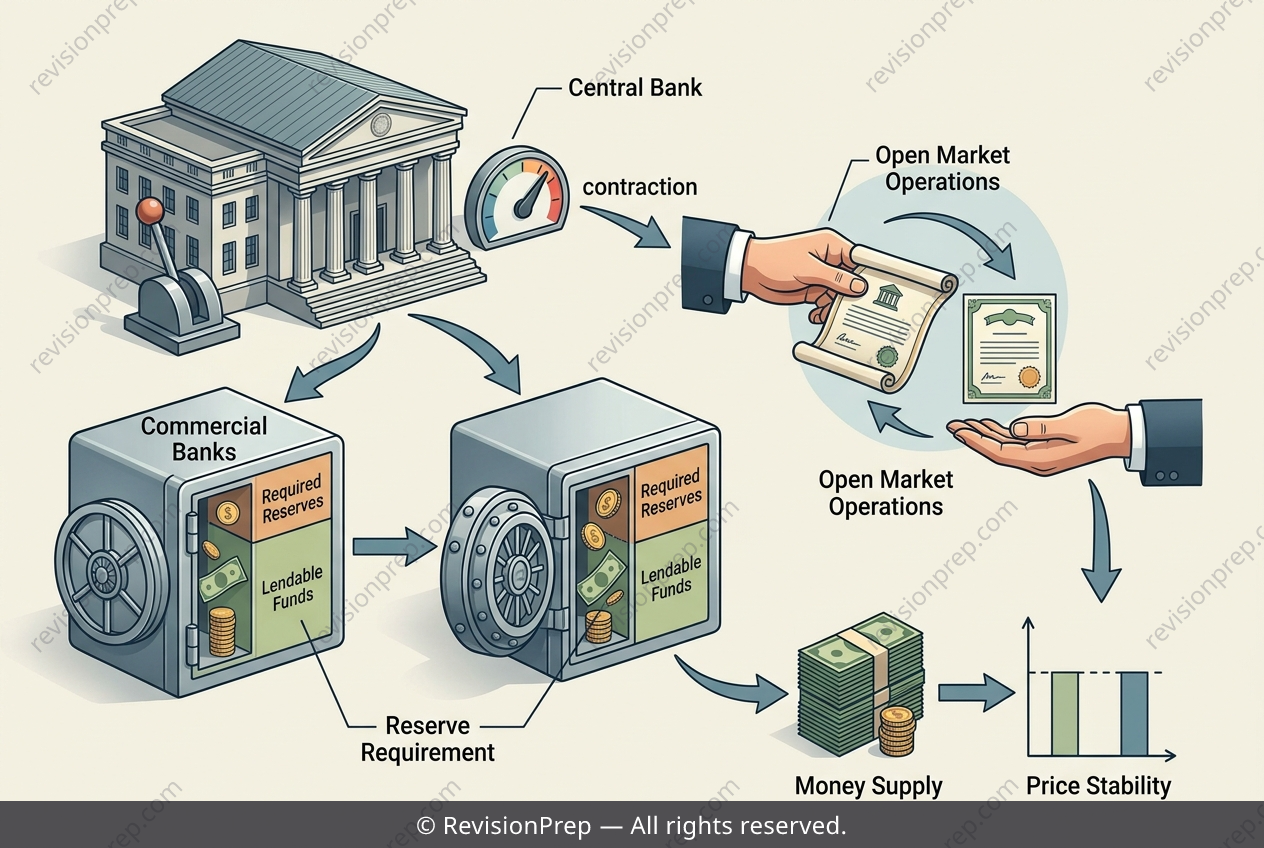
Contractionary monetary policy describes how a central bank deliberately shrinks the money supply to cool an overheating economy and defend price stability. In an emerging market like Country Y, where a 15% peso depreciation has driven imported food prices up 12%, this matters enormously: unchecked inflation erodes purchasing power, worsens inequality, and can spiral into a currency crisis. The two tools here work through connected mechanisms. Raising the reserve requirement forces commercial banks to hold a larger fraction of deposits with the central bank, reducing funds available for lending and shrinking the money multiplier, so the money supply contracts. Selling government bonds through open market operations has a similar effect: buyers transfer money to the central bank, draining bank reserves and cutting lending capacity. Both channels push domestic interest rates higher, which can attract foreign capital, support the peso, and dampen aggregate demand — though in emerging markets, hot money flows and dollar-denominated debt complicate the story.
Start practising IB questions today
150,000+ IB-styled questions, criteria-mapped and instantly accessible.