
Economics: How Price Ceilings Hide the Cost of Scarcity
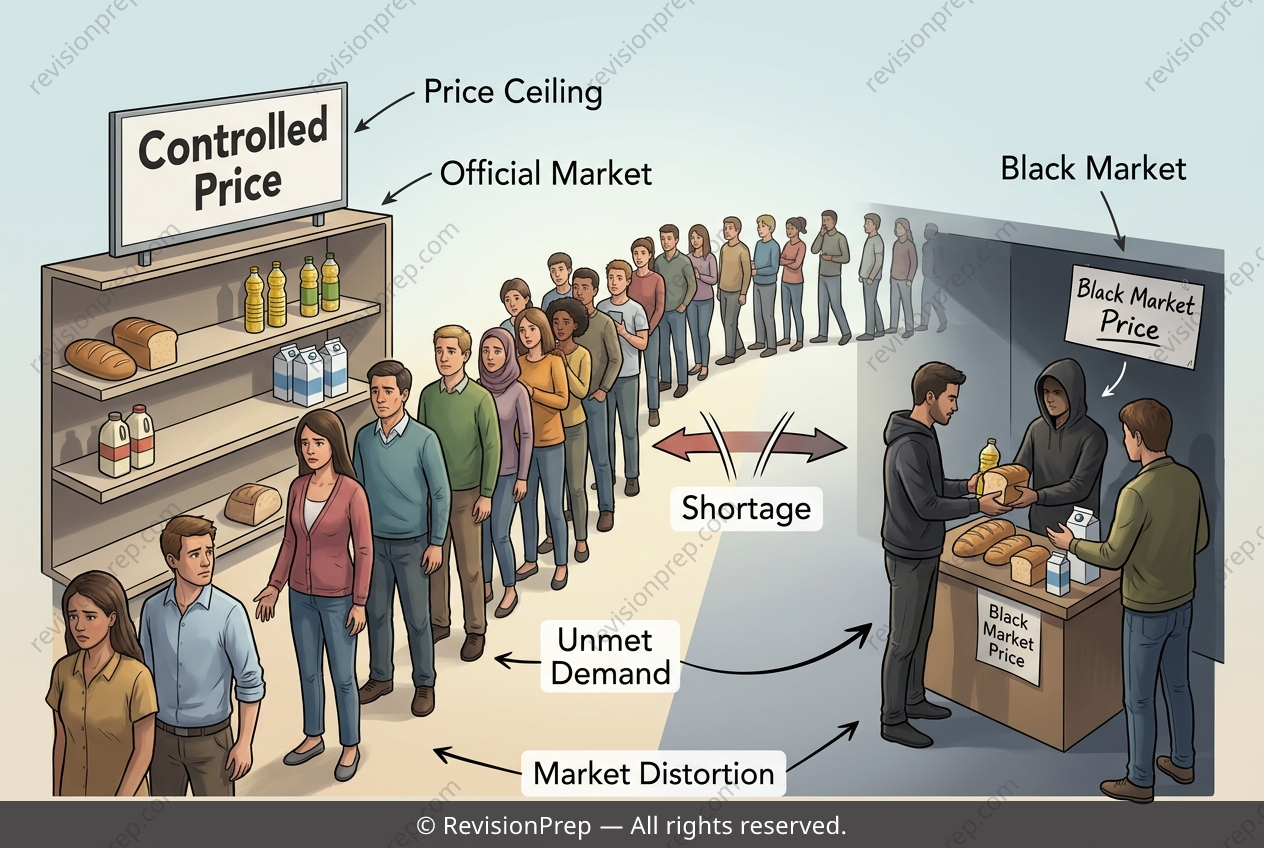
When a government caps the price of bread, cooking oil, or milk below what the market would charge, it is not simply making food cheaper — it is creating a shortage by design. This is the world of market disequilibrium and price controls, where a legal maximum price (a price ceiling) set below the equilibrium price Pe forces quantity supplied Qs below quantity demanded Qd, opening a gap known as a shortage. The concept matters because it explains why well-intentioned policies to fight inflation, such as Country Z's attempt to hold prices 30% below market levels, often produce empty shelves and black markets instead of affordable goods. The mechanism connects several ideas: a price ceiling distorts the signals that normally coordinate buyers and sellers, so suppressed prices reappear elsewhere — in queues, rationing, or illegal trading above the ceiling. Meanwhile, the CPI, built from a weighted basket of goods, compares current costs to a base period, and its percentage change measures inflation — but capping basket prices can mechanically lower the index while hiding the true scarcity.
Start practising IB questions today
150,000+ IB-styled questions, criteria-mapped and instantly accessible.