
Economics: How Rate Cuts Ripple Through an Economy
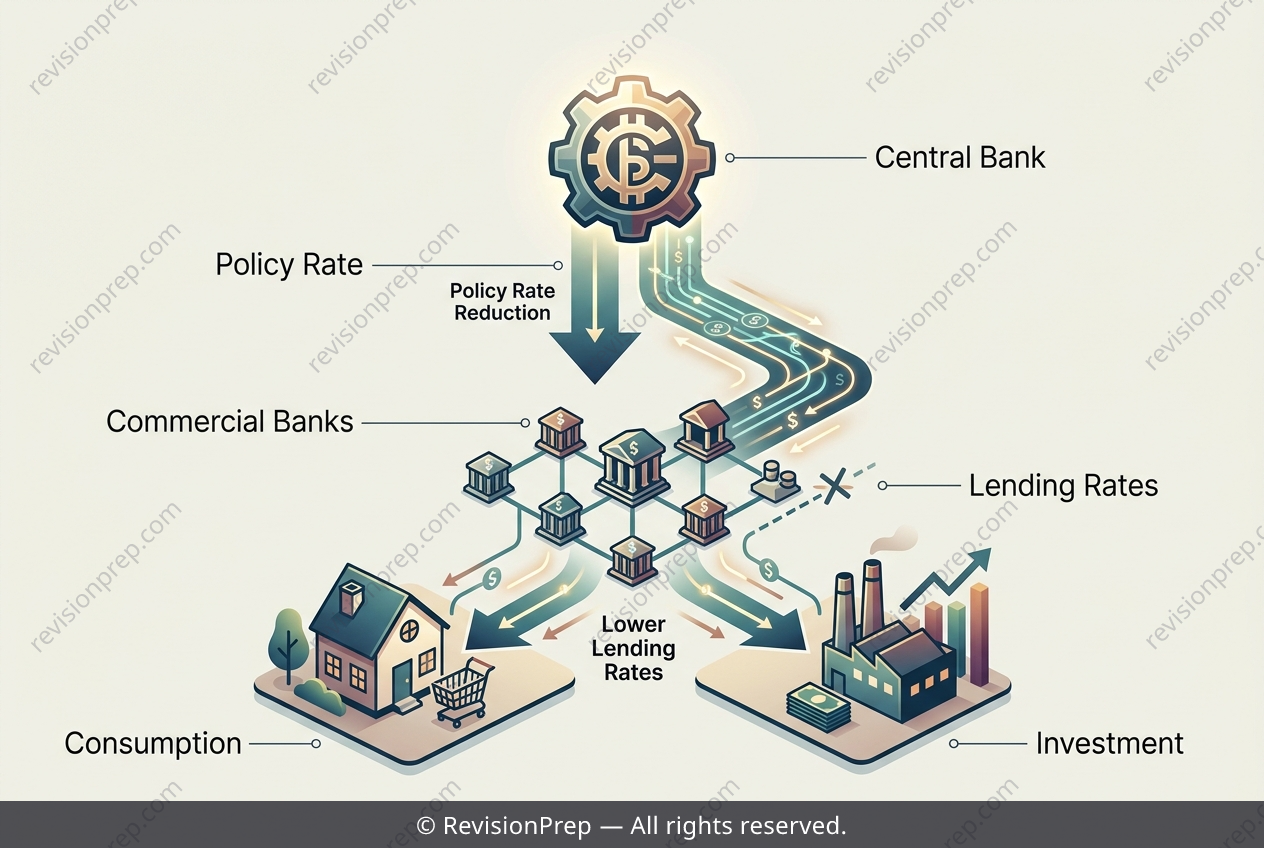
When a central bank cuts its policy rate, it sets off a chain of decisions that ripple through households, firms, and financial markets. In an advanced economy facing recession, falling aggregate demand, and inflation below target, expansionary monetary policy aims to lower borrowing costs and stimulate spending. A reduction in the policy rate typically feeds through to commercial lending rates, reducing the cost of financing durable goods and capital projects. Lower deposit returns also reduce the opportunity cost of spending, discouraging saving and encouraging current consumption. These transmission channels connect to the broader macroeconomic picture through aggregate demand. As consumption and investment rise, AD shifts rightward, raising real GDP and the price level. Quantitative easing reinforces this by purchasing government bonds, injecting liquidity and pressuring yields downward. Yet the mechanism is not guaranteed: liquidity traps, cautious banks, and time lags can weaken or delay the intended effects, meaning the ultimate impact on output, employment, and inflation depends on how smoothly each link in the chain operates.
Start practising IB questions today
150,000+ IB-styled questions, criteria-mapped and instantly accessible.