
Economics: How Real GDP Reveals If Stimulus Worked
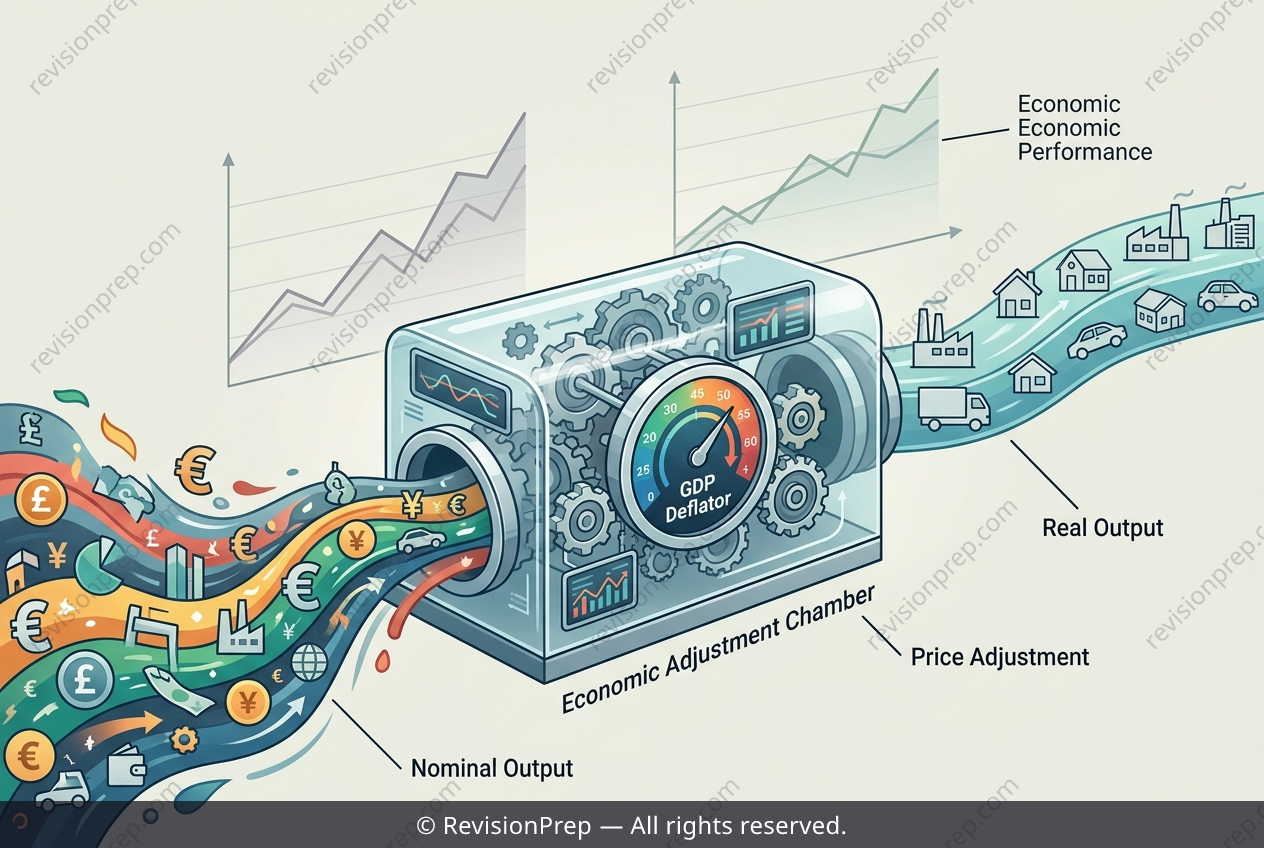
Distinguishing real from nominal economic indicators is central to macroeconomics, because it determines whether a change in GDP reflects genuine output or merely shifting prices. Nominal GDP measures output at current prices, while the GDP deflator captures the average price level, allowing real GDP to be derived as (Nominal GDP ÷ GDP Deflator) × 100. This relationship matters enormously during recessions and deflationary episodes, when falling prices can shrink nominal GDP even if actual production barely moves. The concept connects several ideas: price-level changes, output measurement, and the evaluation of policy. A falling deflator signals deflation, so part of any nominal decline is purely a price effect rather than lost output. Comparing real GDP across years therefore reveals the true severity of a contraction, and provides the basis for judging whether fiscal stimulus — such as infrastructure spending or cash transfers — genuinely stabilised aggregate demand or fell short.
Start practising IB questions today
150,000+ IB-styled questions, criteria-mapped and instantly accessible.