
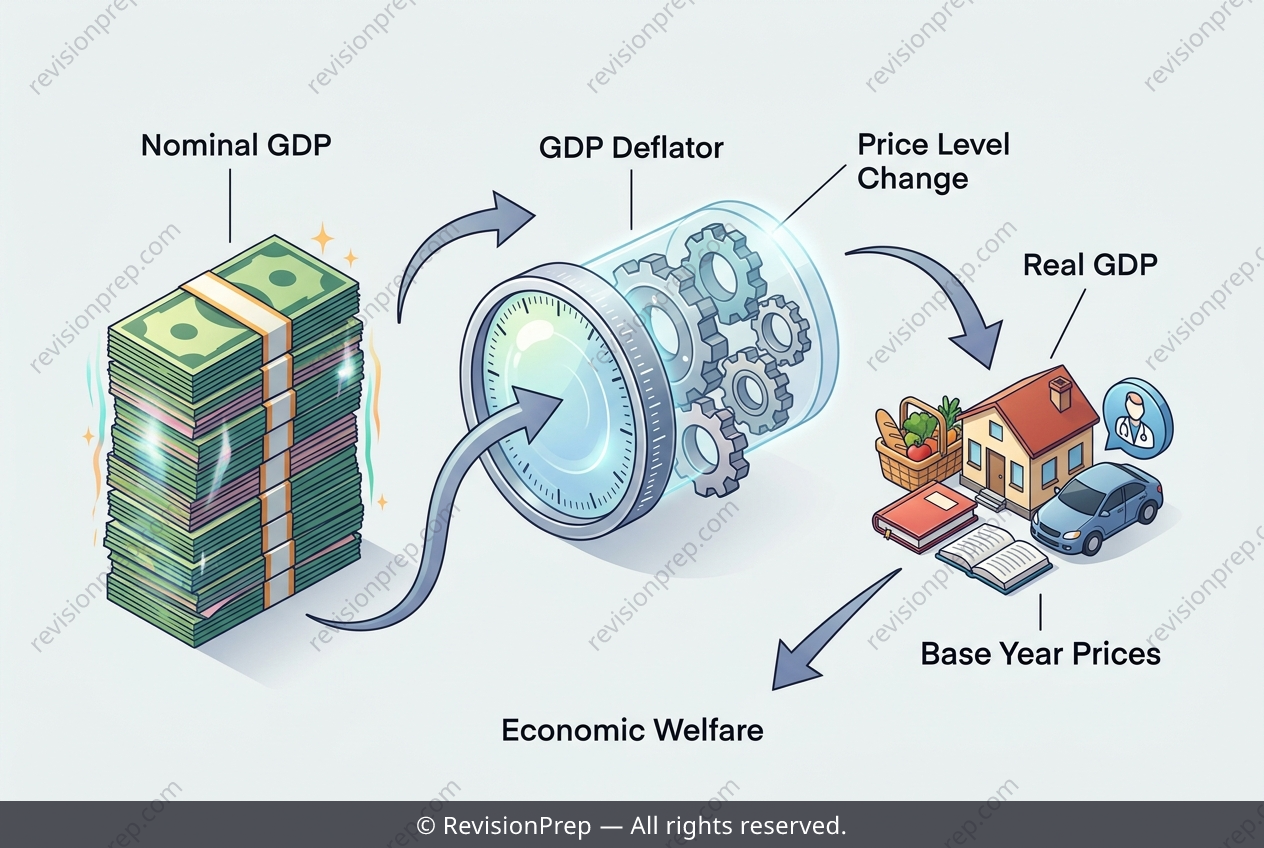
Economics: Why Nominal GDP Can Mislead Living Standards
Nominal GDP measures the total value of output at current prices, while real GDP strips out price changes to reveal the true volume of goods and services produced. The bridge between them is the GDP deflator: Real GDP = (Nominal GDP ÷ GDP deflator) × 100. This distinction matters because a rising nominal figure can flatter an economy — part of the increase may simply reflect inflation rather than genuine growth. The Maldives data illustrate how these pieces connect. Nominal GDP climbs, but once the deflator is applied, real output expands far more modestly, since inflation of roughly (145 − 138) ÷ 138 × 100 absorbs much of the gain. Dividing real GDP by population then gives real GDP per capita, a sharper welfare indicator: it adjusts for both price distortion and population size, so comparisons of living standards over time rest on purchasing power rather than misleading headline numbers.
Start practising IB questions today
150,000+ IB-styled questions, criteria-mapped and instantly accessible.