
Economics: How Rising Incomes Reshape Consumer Demand
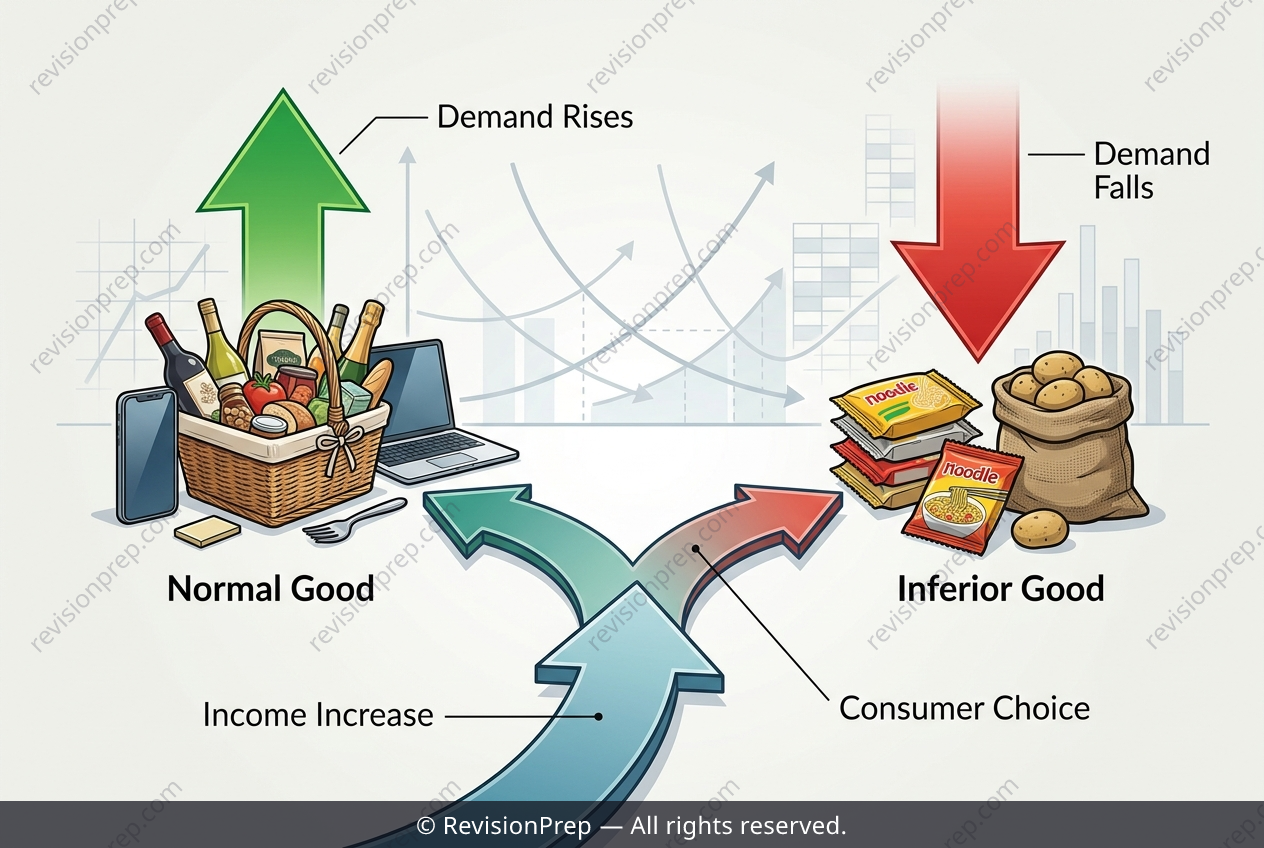
Income elasticity of demand (YED) measures how responsive the quantity demanded of a good is to a change in real income, calculated as the percentage change in quantity demanded divided by the percentage change in income. At its core, YED tells us whether a product is a necessity, a luxury, or an inferior good—and by extension, how consumer spending patterns evolve as an economy grows. This concept matters because it links individual choices to broader structural shifts in development. When real GDP per capita rises, as it did in Indonesia between 2019 and 2023, the income change (from USD 4,200 to USD 5,100) triggers different responses across goods. A positive YED greater than 1 (like for premium imported coffee) signals a luxury—demand grows faster than income. A negative YED (like for locally produced instant coffee sachets) reveals an inferior good, where rising incomes push consumers toward higher-quality substitutes. Together, these values illustrate a key mechanism: as living standards improve, households reallocate spending away from basic staples and toward premium, income-elastic products. Understanding YED therefore helps economists predict demand shifts, guide business strategy, and evaluate whether government policies—such as subsidies on inferior goods—remain effective as incomes climb.
Start practising IB questions today
150,000+ IB-styled questions, criteria-mapped and instantly accessible.